
London, United Kingdom – Three months into his term as prime minister, Andy Burnham is being judged as much on how he makes people feel as on what he has delivered. One of the most talked-about moments came at the Labour conference in Liverpool, where he stopped speaking for about 20 seconds during a passage about his father, who had died only a couple of weeks earlier.
Burnham had struggled to get through that section in rehearsals without crying. When he finally reached it, the audience rose to its feet, applauded and urged him on with shouts of “Come on, lad!” and “Come on, Andy!” He composed himself and carried on.
Polling lead rests on a relatable, emotional style
Conference speeches are a form of theatre, and British political culture expects leaders to seem relatable. Still, many observers felt that Burnham’s emotional delivery in Liverpool came across as genuine. That contrasts with his predecessor, Keir Starmer, who was often seen as stiff and uncomfortable in front of cameras.
Burnham is the seventh prime minister in 10 years. He speaks in big terms about ideas and solutions, and he appears to enjoy communicating with the public. In the current climate of political debate, where image and mood carry significant weight, that style matters.
The polls have so far been favourable. Politico’s Poll of Polls put the Labour Party back in first place shortly after Burnham became prime minister, and it has remained there since. Ipsos found at the end of September that he was the only politician with a positive net favourability rating. YouGov polling also ranks him as the most popular politician in the UK at present.
Keeping that support will require tangible results before the next general election, which is due in 2029 unless Burnham calls one earlier. Political analyst Sam Freedman said that many in Westminster keep returning to the idea of an early election, even though Burnham has ruled it out. Freedman added that no one can quite work out how Burnham will maintain the “hope vibe” for three more years with relatively little visible progress.
Early domestic measures and plans for devolution
In his first weeks in office, Burnham introduced a series of eye-catching domestic policies focused on the cost of living. He moved to:
- cap bus fares
- cut value-added tax (VAT) on electricity bills
- cut business rates for pubs
He also said he would end street homelessness, reindustrialise the country, bring services back under public control and begin the largest programme of social housing construction since World War II.
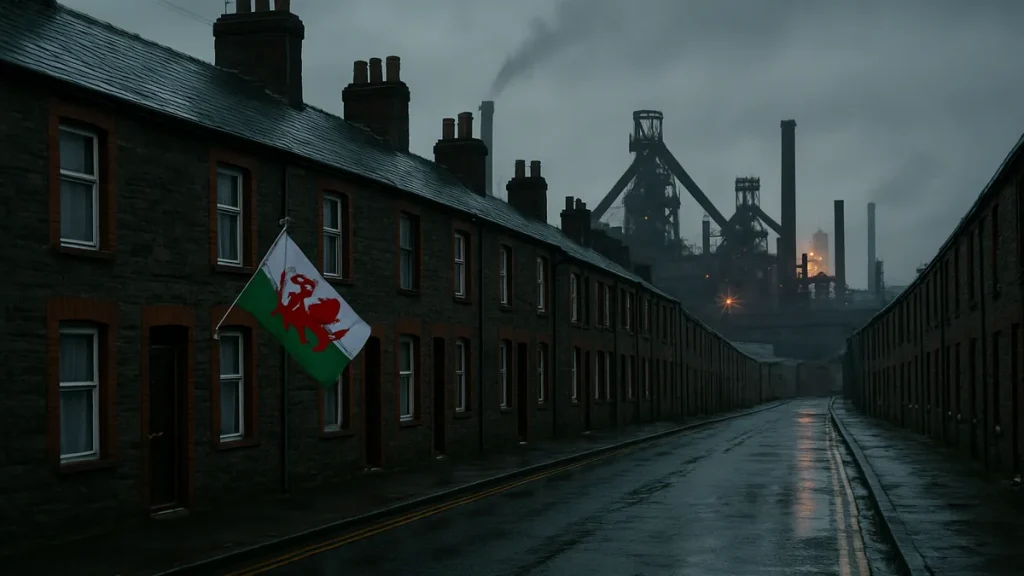
In the Welsh town of Port Talbot, where terraces of workers’ cottages sit beside the UK’s largest steelworks, many residents once voted Labour for a century. That changed at the Senedd Cymru, or Welsh Parliament, elections in May, when Labour finished in an unprecedented third place, behind Plaid Cymru and the anti-immigration Reform UK. That result came before Burnham took over.
Myles Lewis, who organises social walks for the town’s elderly, told reporters that Labour had failed to convince people on immigration and that Starmer’s communication was not good enough. He said that Labour under Burnham was returning to the approach of the 1950s and 1960s, when the party looked after working-class people, and that he believed Burnham could achieve this because he had their interests at heart.
Burnham, who was mayor of Greater Manchester for nine years, supports devolving powers from Westminster to the UK’s nations and regions. In July he announced that mayors could keep a share of business rates from April 2027 and of income tax from 2028.
His conference speech in September set out several major political battles ahead. He proposed a national social care service, free at the point of use, to be paid for by changing the pensions triple lock from 2030, with the service arriving in the next parliament. He also called for a national commission on electoral reform, with a manifesto commitment to overhaul the voting system. On Brexit, he said it “has done more harm than good”. He did not rule out an in-out referendum or a pledge in Labour’s next manifesto for the UK to rejoin the European Union.
Foreign policy and the defence spending gap
On foreign affairs, Burnham’s approach is not dramatically different from that of his predecessors. During a visit to Ukraine in August, he brought British know-how for building the long-range SCALP missile. He became the fourth British prime minister to visit Kyiv since Russia’s full-scale invasion of Ukraine, pledging steadfast support.
On Gaza, Burnham has said the Labour government “didn’t get it right” and should have called for a ceasefire sooner. In September, his government announced a sanctions package against illegal West Bank settlements. However, there has been no genocide declaration and no full arms embargo against Israel. Burnham has also not overturned the Starmer government’s decision to proscribe the Palestine Action protest group as a “terrorist” organisation.
Defence spending is another pressing issue. The government’s formal pledge is to reach 3.5 percent of gross domestic product (GDP) by 2035. Burnham has declined to say whether he would fund this through tax rises or welfare cuts. John Healey, who resigned as defence secretary in June over underfunding, is now chancellor of the exchequer. He has not committed to the 3-percent-by-2030 target he had set himself.
Burnham’s first budget is due at the end of this month, with a full spending review to follow next year. Those two events will clarify much of the picture. His largest pledges, including reindustrialisation, public control of services and a new social care system, are costly. For now, Burnham has the public’s goodwill, but the budget will show whether he can pay for his promises.