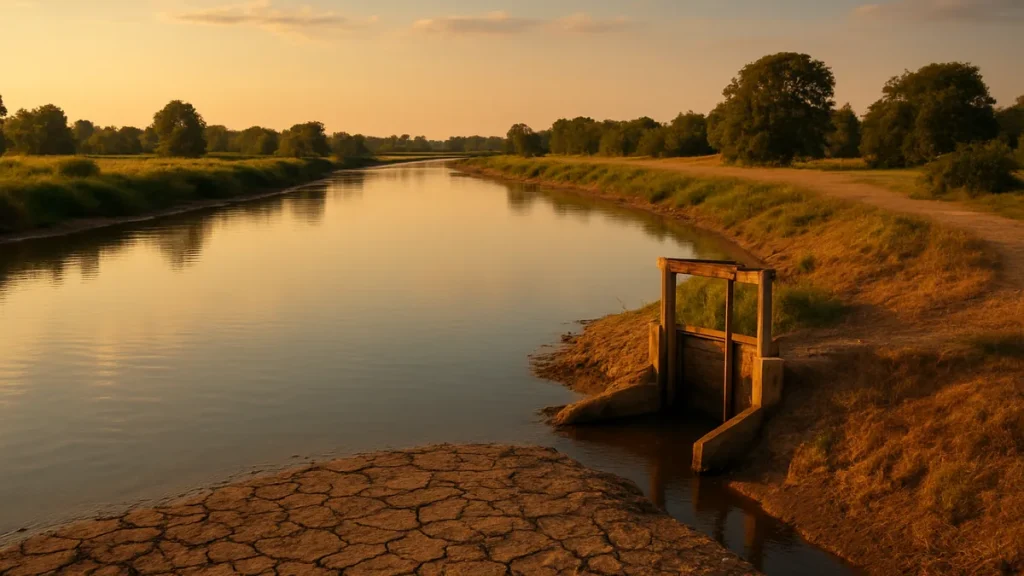

A new study suggests that flexible river water-sharing plans can help stretch limited supplies during droughts while also raising the overall economic value of a river basin. The research, published in Water Resources Research, was led by Jiheun Kim, a Ph.D. researcher at North Carolina State University. Kim’s team examined almost three decades of water data from the Yeongsan River Basin in southwestern South Korea.
Rivers supply households, factories and farms, but severe droughts often put heavy pressure on them. Upstream communities have first access to flowing water, so their regular withdrawals can leave downstream areas short during dry spells. Downstream users often face serious shortages because of their location, even when everyone follows the rules.
How the flexible water-sharing system was tested
Instead of applying the same conservation cuts to everyone, the team tested a system in which limits on upstream and midstream users become stricter as droughts worsen. In the most severe cases, withdrawals would stop completely. The approach was designed to help downstream communities, although it could hurt upstream farmers and factory workers.
Economic gains and the trade-offs for upstream users
The researchers’ computer models showed that working together under these restrictions raised the total economic value of the basin by about 4 million USD. According to the study, water managers could use part of that gain to encourage upstream cooperation, either by lowering utility fees or by providing financial help during droughts.
The study also found that dividing water exactly equally can create problems. If some groups are asked to give up too much, they may refuse to take part.
Weaker results under higher demand and study limits
The team also tested scenarios in which water demand rose and less water was released from farm reservoirs. In these tougher conditions, the system performed less well. The economic benefits shrank, leaving too little money to fully compensate upstream users for what they gave up.
The researchers noted that the findings come from computer models rather than real-world trials. Putting them into practice would require careful tracking of water use, clear laws and agreement from local residents to accept payments. The study concludes that overcoming water shortages requires more than saving water, and calls for smart, cooperative sharing so every community gets what it needs.