French President Emmanuel Macron will meet high school student representatives on Friday, as the country prepares for another round of protests over the weekend. The talks will be the first time the president has sat down with student groups that have been pressing for an overhaul of the education system since September.
Students have said they intend to keep up demonstrations to sustain pressure on the government. Jean-Didier Berger, minister delegate to the interior minister, said police numbers on the streets would rise by 20 percent. The moves follow last weekend, when largely peaceful marches turned into violent riots, and authorities have faced accusations that they did not prepare adequately.
Police reinforcements and curfew measures in Paris and beyond
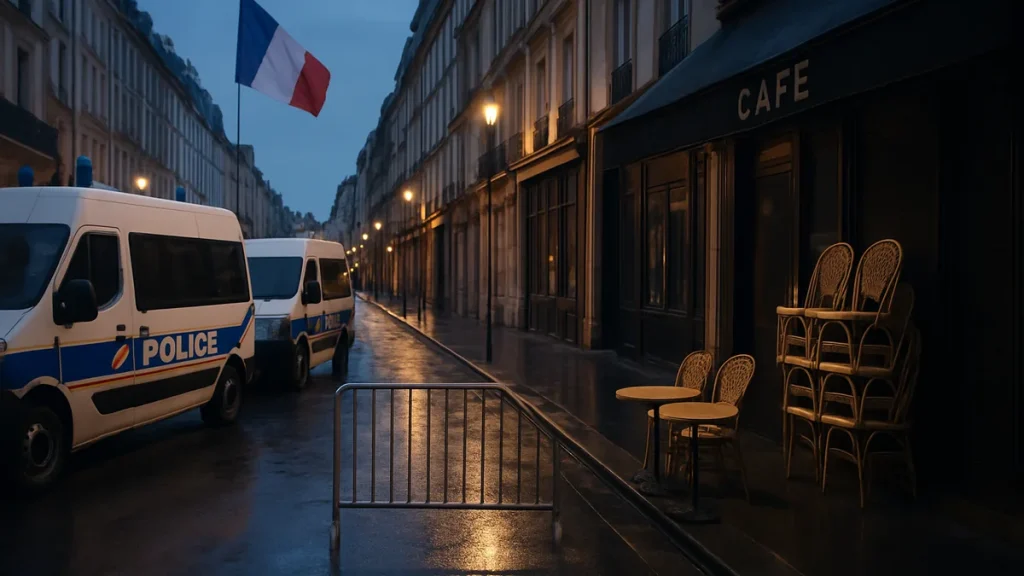
Authorities are taking no chances before protests expected on Saturday. A curfew in Paris will restrict movement, while bans on protests are in place in Marseille and Lyon.
Also read: France bans protests in major cities as Macron blames far left
With demonstrations showing little sign of fading, a government already weakened by political deadlock and mounting debt faces a hard question: what can it do to draw young people off the streets?
What high school students want from the state
High school students have set out their demands clearly: better-funded schools, more teachers and a bigger role in decisions that shape their future. Since mid-September, they have protested against teacher shortages, overcrowded classrooms, sometimes with more than 40 students, and crumbling school buildings.
Soumaya Sarre, an 18-year-old student and a leading figure in the Federation of High School Students from Working-Class Neighbourhoods, said years of pledges had never been delivered. “For years, we’ve been given promises that were never kept,” she said. She added that the group wants commitments backed by visible results in its schools.
Nathanael Combary, 18, president of the board of directors of the student organisation Renouveau Lyceen, said “Our demands are not all impossible to meet.” He named two priorities: a comprehensive overhaul of Parcoursup, the university admissions system that many students consider discriminatory, and a 1.5-billion-euro ($1.7bn) emergency plan to improve school infrastructure before winter and summer.
Other student organisations and unions have called for a number of additional measures, including:
- An extra 10 billion euros ($11.2bn) for education
- More teachers on permanent contracts rather than precarious ones
- 250,000 additional university places
Government steps and Macron’s talks with students
So far, the government has announced 3,000 additional substitute teachers and an online consultation. Its 2027 budget also allocates an extra 1.1 billion euros ($1.2bn) to national education.
Beyond these practical demands, students repeatedly told interviewers that they want to be heard. Combary said the crisis reflected a breakdown in dialogue between the government, politicians in general and young people. “We need a government that listens to us and is capable of responding to our demands,” he said.
Higher Education Minister Philippe Baptiste is not considering abolishing Parcoursup, calling the idea “pure demagogy”, but said he was ready for “profound changes”. After a meeting with student organisations on October 7, the Union etudiante, a national student federation, said the minister could not give them any guarantees. A further meeting is scheduled for Monday, where the government said it will present a first set of decisions on staffing, teacher replacements and Parcoursup.
Why observers doubt quick fixes will end the unrest
Some observers doubt that these steps alone can tackle the deeper causes of the unrest. They point to anxiety that a diploma no longer guarantees a job, a rising cost of living and a sense that the state can no longer deliver services.
Jacques Reland, a senior research fellow at the Global Policy Institute, argued that young people’s prospects depend on their family’s social status and wealth. He said the problem could not be fixed with a few measures, such as improving heating in schools and toilets. “The wealthy family has replaced the welfare state,” he said.
Finances and a minority in parliament limit Macron’s options
Students and unions are asking for a level of support the government cannot provide, even if it wanted to. Macron holds only a minority in parliament, which makes it impossible to pass any meaningful reforms. The biggest obstacle, however, is money, as France has long spent heavily on a generous welfare system.
Macron once offered 10 billion euros ($11.2bn) in tax cuts to quell the ‘yellow vest’ movement that swept France in 2018, and a similar response may be harder to deliver this time. Public debt is projected to reach 121.7 percent of gross domestic product in 2027, up from 119.3 percent this year, according to the government’s budget bill.
Reland warned that meeting the protesters’ demands would mean either widening the deficit or cutting into social security, and both steps could push more people onto the streets.