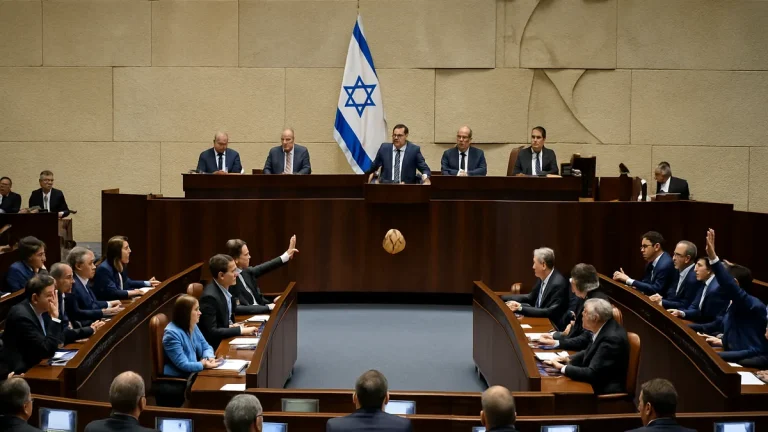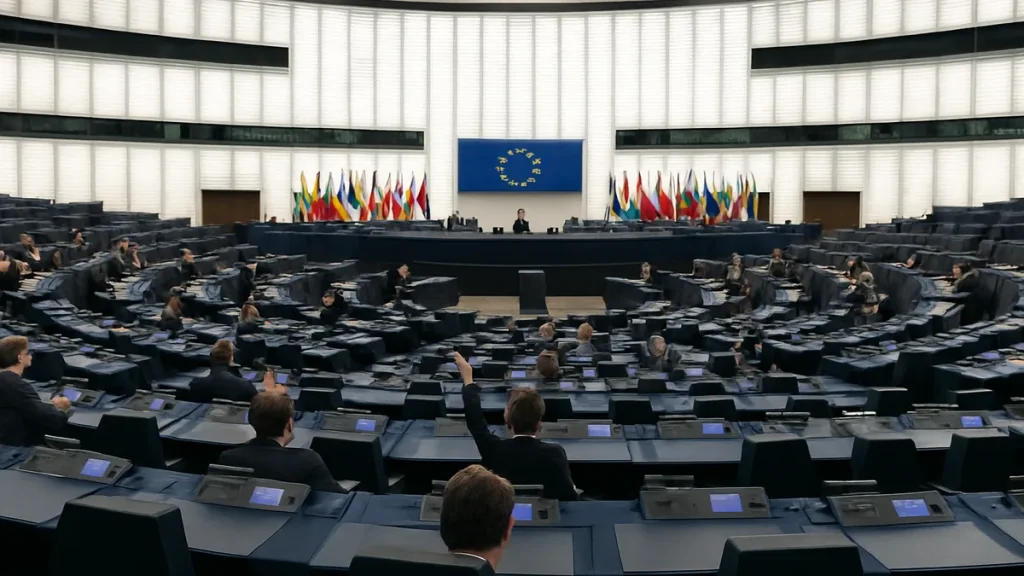

The European Parliament has passed a non-binding resolution calling for an EU strategy to counter “Islamist entryism” and the influence of the Muslim Brotherhood network. The text was adopted by 381 votes in favour, 167 against and 15 abstentions, and it has drawn sharp criticism from commentators who say it casts suspicion on Muslim communities across Europe.
The resolution was tabled by the centre-right European People’s Party (EPP), the largest group in the parliament. European Commission President Ursula von der Leyen comes from the same party. The vote came as student protests were escalating in France, and the author of the critical commentary argues that the timing mattered, though the resolution itself was not linked to those protests in the text.
How the resolution was passed and what it says
Four other political groups backed the EPP almost unanimously: the far-right Patriots for Europe, the Europe of Sovereign Nations, the liberal Renew Europe and the European Conservatives and Reformists. The Social Democrats, the Left and the Greens mostly voted against, but they could not block the text.
The resolution draws on a report by the French government on “political Islamism”, which the author describes as highly problematic. It defines “Islamist entryism” as a political strategy of influence, progressive structuring, institutional penetration and ideological legitimisation. It also claims that Islamist influence works through a broad network of associations, foundations and cultural, educational, religious, charitable, youth and social action bodies.
The text goes further in its language on anti-discrimination work. It says that diversity, equity, inclusion and anti-discrimination frameworks could be diverted to legitimise institutions by linking a politicised religious identity to the protection of minorities. The author reads this as a claim that networks such as the Muslim Brotherhood infiltrate European societies through anti-Islamophobia initiatives.

Concerns over Muslim groups and anti-racism organisations
The resolution is not binding, and EU member states are not obliged to implement it. Its call to place the Muslim Brotherhood and affiliated people and entities on a terror list is unlikely to be carried out across Europe, the author notes, because the movement has renounced violence as a political tool.
Even so, the author argues that the resolution gives legitimacy to a framework that could have serious consequences for Muslim communities. It casts suspicion on Muslim institutions and organisations that operate independently of the state, and it treats the involvement of Muslim civil society in public life as a form of infiltration.
The text names several organisations as showing this kind of “Islamist” behaviour, including the Brussels-based European Network Against Racism (ENAR). It calls for blocking their access to EU funding and for restricting any EU-funded body from working with them. The author warns that the vague concept of a “Muslim Brotherhood network” could make guilt by association possible for almost anyone.
The author also says outside actors could exploit such a framework, and that some already have. The United Arab Emirates, according to the commentary, has funded a wide campaign in Europe and elsewhere to label individuals and groups as Muslim Brotherhood affiliates. A few months before the resolution was tabled, an Emirati ambassador took part in a conference titled “Muslim Brotherhood: A real threat to Europe” held at the European Parliament. The resolution itself refers to “foreign funding” that allegedly supports Islamist entryism from Qatar or Turkiye.
Political context in France and across Europe
The author places the resolution alongside events in France and Spain. Protests in France turned violent late last week, and the French far right, the author says, quickly used racist language to blame Muslim youth. Weeks earlier, thousands of migrants tried to enter the Spanish enclave of Ceuta from neighbouring Morocco, and the Spanish far right spoke of an organised “invasion” by Moroccans. United States President Donald Trump has also said the issue concerns “Islam wanting to take over”.
In the author’s view, the resolution signals that the European Parliament is moving away from a firewall against the far right, as the centre right moves closer to it. The EPP, the commentary argues, has largely taken on the far-right agenda while presenting it in the language of national security. The author also says that Islamophobia in Europe has shifted from portraying immigrants as people who fail to integrate to targeting Muslims who speak for themselves and defend their civil liberties.
The author further claims that the framework offers political benefits to the centre right, both by drawing electoral support from anti-Muslim sentiment and by targeting left-wing politicians who oppose racism and defend Muslim communities. In France, the author notes, the term “Islamo-leftism” is being promoted in politics. Jean-Luc Melenchon, leader of the left-wing La France Insoumise, is described as popular among marginalised communities and a strong contender for the presidency. He has been accused of encouraging the “rioters”, who, the author says, are implied to be Muslim.
The author sees these moves as a continuing effort by conservatives, liberals and the far right to roll back progress on racism and inequality made in the West since the 1960s. The author concludes that further legally questionable steps by conservative alliances in individual member states are likely, and calls for a firm defence of civil liberties for everyone in response.