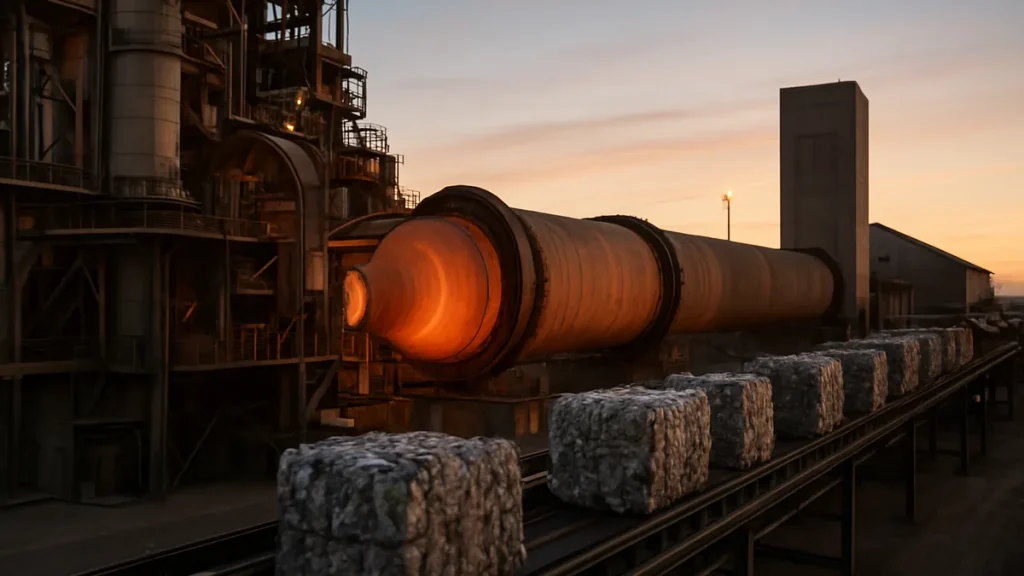

Waste that cannot be recycled and is normally buried in landfill could lower emissions in the construction sector by taking the place of fossil fuels in cement manufacturing. This is according to a review by researchers at Adelaide University.
The team examined how refuse-derived fuel, or RDF, could address both waste disposal and pollution from cement plants. Cement is vital for roads, bridges and buildings, yet its production accounts for about 8% of the world’s carbon dioxide emissions.
How waste-derived fuel could replace coal in kilns
Cement making requires intense heat inside industrial kilns, which is usually supplied by burning coal and other fossil fuels. Meanwhile, large quantities of burnable, non-recyclable rubbish are sent to landfill every day.
Through a process called co-processing, that waste can be converted into fuel and burned alongside conventional energy sources, allowing factories to use less coal. The review was led by Ph.D. candidate Geethmi Thisakya of the School of Civil Engineering and Construction, with Dr. Navodana Rodrigo, Dr. Chamitha Wijewickrama and Professor George Zillante.
Review highlights fuel quality and unclear terminology
The team analysed 211 academic papers published between 1991 and July 2025, focusing on 48 articles and seven regulatory documents. Thisakya said that linking waste management to lower industrial emissions involves more than substituting trash for coal. It also requires consistent fuel quality, strong regulations and clear evidence of economic and environmental benefits.
The study found that many people confuse RDF with solid recovered fuel (SRF), a more strictly defined category of waste fuel. Inconsistent terms and quality standards make it difficult for the industry to compare studies, follow laws and keep kilns operating safely. Better quality control and clearer rules, the researchers suggest, would give cement makers more confidence in waste-based fuels.
The researchers stress that reuse and recycling should still come first, with RDF serving as an option for burnable waste that cannot be recycled. They recommend future studies refine how fuels are classified and test how these alternatives perform in different industries and regions.