
Punjab Chief Minister Maryam Nawaz has urged the country to reach a shared national position on tapping its mineral, oil and gas resources. She argued that the revenue could pay for development, particularly in education and healthcare, but said exploration must not leave local communities worse off.
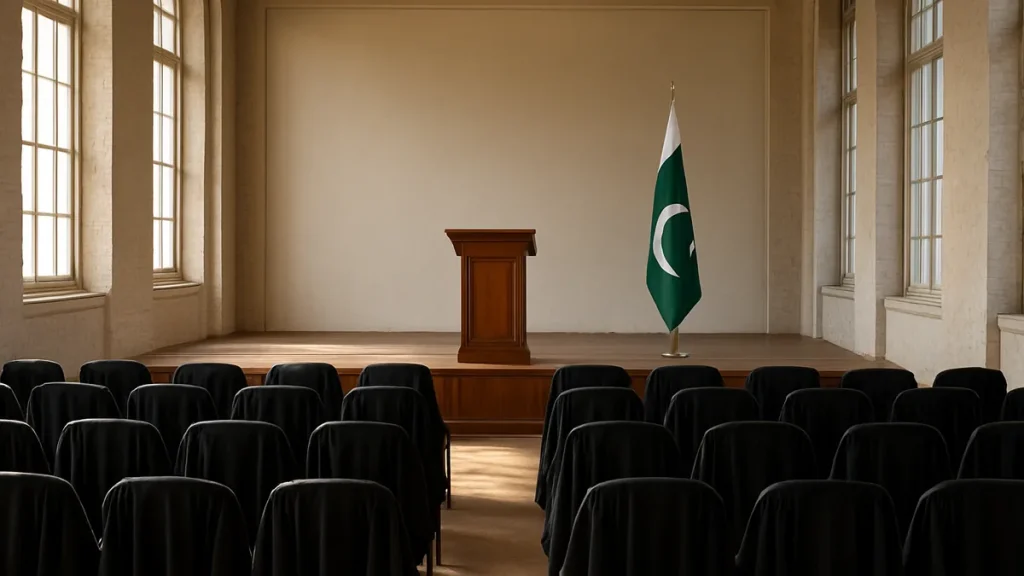
Speaking at the 89th convocation of Kinnaird College for Women in Lahore, she said all four provinces needed to do more to improve schooling and medical care. She added that the nation’s natural resources could help raise the money needed for that work.
Resource revenue must benefit local communities
Nawaz said an enabling environment and broad consensus were needed so that resource extraction helps local people rather than creating hardship for them. Her remarks focused on making sure the benefits of exploration reach the areas where it takes place.
She also called on political leaders to put their differences aside. In her view, Pakistan can no longer afford instability driven by political rivalry, and the country’s development should not be jeopardised for political advantage or an atmosphere of hatred.
Khyber Pakhtunkhwa emergency and governor’s rule
Nawaz said the federal government intends to keep governor’s rule in Khyber Pakhtunkhwa for six months. The emergency, she said, will stay in force until lasting peace is established and terrorism is completely eliminated.
According to the chief minister, restoring peace and developing the province are the two main goals of the federal government, which she said has no option but to succeed. She stressed that the government could not afford to fail in its effort to promote development there.
The federal government imposed the emergency and governor’s rule in Khyber Pakhtunkhwa on October 11, citing the security situation and disagreements with the provincial administration over counterterrorism. Parliament later endorsed the measures amid protests from the opposition. A joint sitting approved the governor’s rule proclamation for an initial two months, subject to the constitutional process for any extension.
Talks with PTI and the rejected draft
Nawaz said the government remained willing to negotiate with Pakistan Tehreek-e-Insaf (PTI). She recalled that Prime Minister Shehbaz Sharif had recently renewed his offer of dialogue with the opposition, and she pointed to his recent interaction with the opposition leader in parliament as evidence that the offer stands.
She alleged that the PTI leadership rejected a draft agreement prepared during negotiations with the government. The draft included proposals for cooperation against terrorism in 12 districts of Khyber Pakhtunkhwa. According to Nawaz, the government later narrowed the proposal to five districts, but the arrangement was still not accepted.
Nawaz said government representatives remained at the negotiating table until late at night and prepared several drafts that incorporated the opposition’s proposals. She named the following PTI figures as having taken part in the talks:
- Barrister Gohar Ali Khan
- Asad Qaiser
- Aamir Dogar
- Salman Akram Raja
- Raja Nasir Abbas
She said the opposition representatives who took part were not to blame for the rejection. She instead alleged that the PTI leadership in Khyber Pakhtunkhwa was responsible, adding that the federal government had sought cooperation to address the security situation.
Under the proposed measures, the provincial government would cooperate with law enforcement agencies in operations against militants, and the arrangements were meant to facilitate cooperation between provincial and federal governments. Nawaz questioned why the federal government had to repeatedly seek the provincial government’s cooperation. She said provincial governments generally ask the Centre for additional security personnel, resources and intelligence-based operations when they face terrorism.