
The Ministry of Finance has rejected reports that Pakistan’s government debt is rising by Rs20 billion every day, saying such figures do not give an accurate picture of the country’s debt situation.
In its clarification, the ministry said government debt should be judged against the size of the economy, measured by gross domestic product (GDP), rather than through daily borrowing figures alone.
Finance Ministry cites lower debt ratio and slower growth
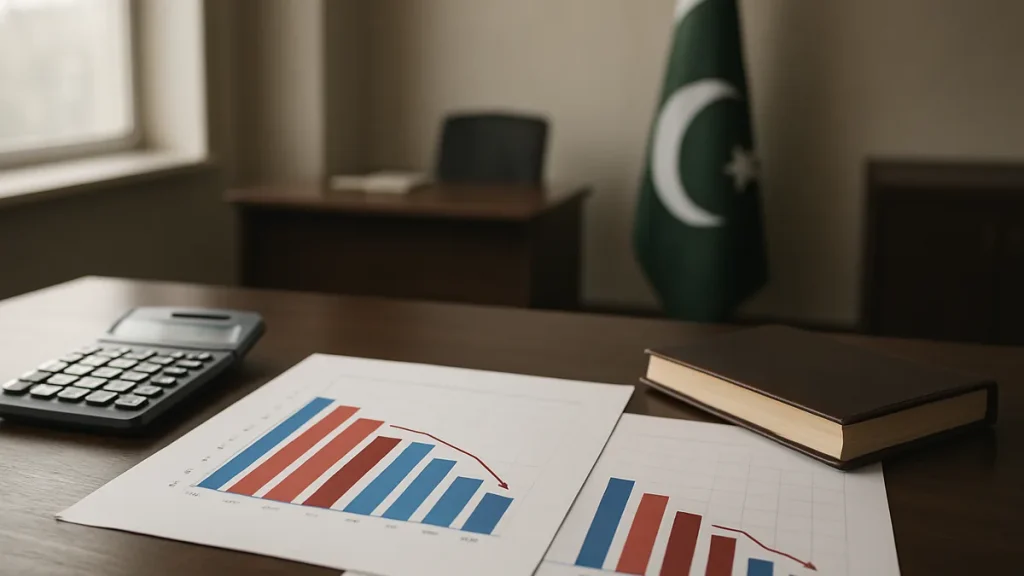
According to the ministry, the debt-to-GDP ratio has fallen from 75 percent to below 68 percent, while the rate of debt growth has dropped from 26 percent to 7.7 percent. It said debt growth in fiscal year 2026 was the lowest in the past two decades.
Between fiscal years 2007 and 2026, the average annual growth rate of debt stood at 16.7 percent, the ministry added. It also reported that central government debt fell by Rs689 billion in August 2026.
The ministry said the external debt-to-GDP ratio had declined from 33 percent to 23 percent. External debt rose by an average of $1.7 billion a year between fiscal years 2022 and 2026, compared with $6.4 billion a year between 2015 and 2022.
Debt servicing, repayments and reserves
Debt servicing costs fell from Rs8,900 billion to Rs6,900 billion, according to the ministry. The ratio of debt servicing costs to federal revenue also dropped, from 64 percent to 38 percent.
The government had repaid more than Rs5,920 billion in expensive debt before maturity, the ministry said. It added that the average maturity of domestic debt had increased from 2.7 years to approximately four years.
Foreign exchange reserves reached $21.5 billion by September 2026, the ministry said. It maintained that the debt ratio had declined, debt growth had slowed, servicing costs had decreased and reserves had strengthened, and repeated that describing borrowing as a daily Rs20 billion increase did not accurately reflect the overall position.