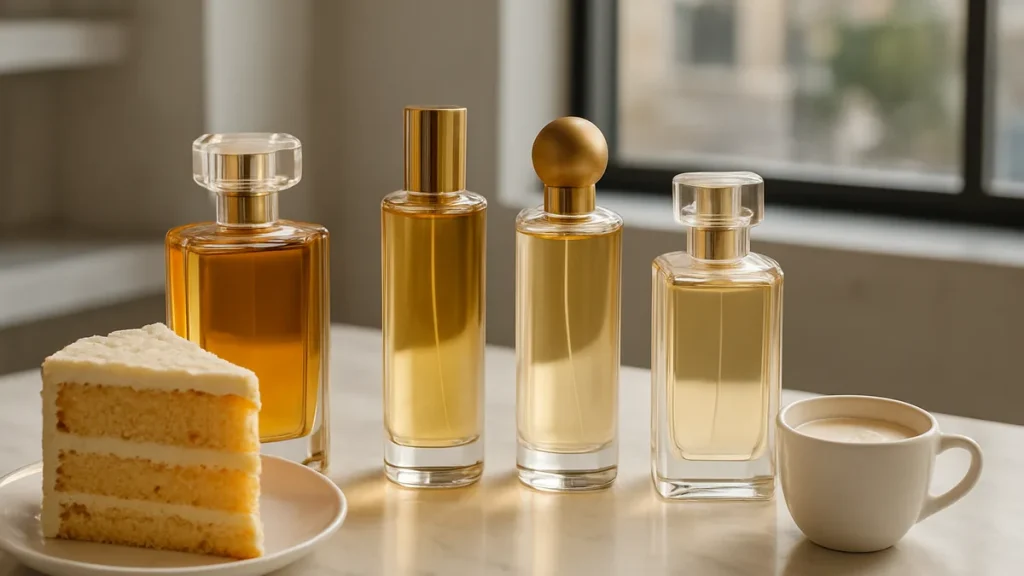

From cherry and banoffee pie to tabasco and sesame, food aromas keep appearing in luxury perfumes. Now some fragrance makers are asking whether weight-loss drugs could be reshaping what consumers want to smell. The question was raised in London and Versoix, Switzerland, on Oct 19.
Gourmand fragrances, which use sweet or edible notes, are not new. Thierry Mugler’s cotton candy-inspired Angel and Nina Ricci’s toffee apple scent Nina have been on sale for decades. The segment’s more recent growth has been linked to the online retail boom during the pandemic, when familiar food associations helped sell perfumes that shoppers cannot smell before buying, as well as to the rising influence of Gen Z consumers.
As scent makers test more unusual flavour aromas, they are also examining how users of GLP-1 drugs respond to food-linked smells. In interviews with eight fragrance manufacturers and top perfume brands, several companies described work on this question.
Fragrance makers probe the link with GLP-1 drugs
Givaudan and IFF, two of the world’s largest flavour and fragrance houses, along with British-owned scent maker CPL Aromas and the French cosmetics group L’Oreal, all said they had explored the connection between the increasingly popular drugs and scent preferences. All four companies, as well as four scientists interviewed, stressed that more research was needed.
Common side effects of GLP-1 weight-loss drugs, such as Novo Nordisk’s Wegovy and Eli Lilly’s Mounjaro, include nausea and gastrointestinal problems. Researchers are also studying other possible effects, some of them unexpected. These include a reduction in alcohol cravings or urges to gamble and impulse-shop, as well as changes to smell and taste.
Paule Joseph, co-director of the National Smell and Taste Center at the US National Institutes of Health, said that a chemosensory effect from the drugs was “not a far-fetched idea”. She noted that GLP-1 drugs also affect tissue in the olfactory bulb, which processes odour. However, she said it was too early to predict how, or even whether, this would change odour perception.
Celine Manetta, health and wellness director for research and development at IFF Scent, said the company’s research suggests GLP-1 therapies may increase interest in scent as a source of sensory pleasure. IFF is already using these insights to identify notes and create fragrances that evoke emotional responses. L’Oreal has reached similar conclusions after observing findings that GLP-1 users crave pleasure, fragrances and scents.
“They compensate for the pleasure of food, or pleasure of taste, with other forms of enjoyment,” said Laetitia Toupet, global brand president of L’Oreal Paris.

Givaudan expands cake-style gourmand fragrances
Givaudan has been studying the possible link for about a year, according to Arnaud Guggenbuhl, the Swiss firm’s global head of marketing for fine fragrance. He said GLP-1 use can change fragrance preferences, with some familiar smells suddenly becoming unpleasant while others grow appealing. The company found an overall rise in interest in fragrance and perfume.
Givaudan is now widening its gourmand range with scents that reproduce the layered aroma of cakes such as banoffee, panettone and cupcakes. “You can have the crispy part, the tarty part, the milky part and the creamy part,” Guggenbuhl said. “The full fragrance smells like a true cake.”
Fragrance brand owners such as Puig and Coty are generally not researching a possible GLP-1 link, unlike the manufacturers that develop the scents used as ingredients. However, both companies are closely watching market growth and shifts in taste, and are taking steps to adapt.
Both expect traditional vanilla-based scents, such as Burberry’s Goddess and Yves Saint Laurent’s Libre Eau de Parfum, to stay popular. Other edible notes are becoming more prominent, they told Reuters. Gregorio Sola, senior perfumer and creative director at Puig, described a more mature shift in the market.
“There has been a more sophisticated, more adult evolution,” Sola said. “There are now many different notes available on the market: boozy, whisky, rum, tequila.”
Perfumers are also adding spicy components such as tabasco and bitter cocoa notes. Nelly Di Mercurio, global marketing and communications director at CPL Aromas, said Gen Z consumers in particular are seeking savoury, salty, fermented and roasted aromas rather than sweetness. She said other emerging options include:
- Sesame
- Miso
- Rice
- Truffle
- Matcha-based blends
Jean Holtzmann, chief brands officer for Coty’s prestige division, pointed to new combinations of vanilla with nuts such as pistachio. “The next generation of gourmand is … about taste and texture rather than just being sweet,” he said.
Guggenbuhl believes creamy notes, including banana, whipped cream and warm milk, will be the next trend. Regardless of flavour, he sees no slowdown in the growth of gourmand fragrances, given that GLP-1 users are set to remain a driving force.
Market size points to a larger perfume business
The World Health Organization says more than 1 billion people worldwide are now obese. That gives weight-loss drugs a large pool of potential customers. Pharmaceutical companies and analysts predict the GLP-1 market could be worth up to $150 billion by 2030, which could also mean a bigger perfume market.
Clotilde Drape, global beauty analyst at market analysis agency Mintel, said gourmet and edible fragrances are now the second-largest group for product innovation, behind floral scents. Their share has risen to 24% over the last year, up from 9% two years earlier.
A study of GLP-1 users in the US by market researcher NIQ found they spent 26% more on fragrances than the typical person. Anna Mayo, NIQ’s vice president of beauty and personal care thought leadership, said, “GLP-1 users are overall more invested in beauty, as they spend more across most categories.”