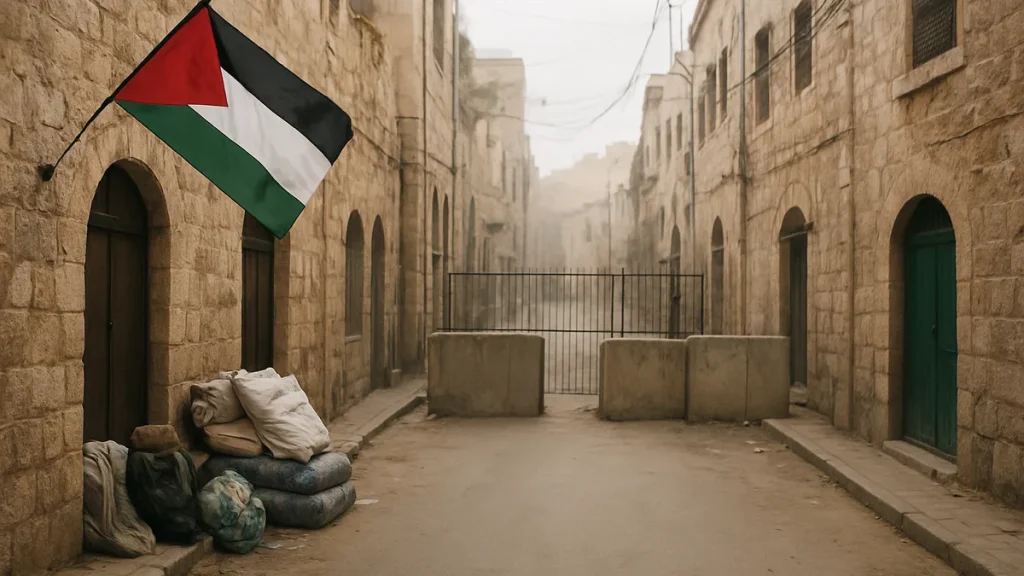
More than 3,000 Palestinians have been pushed out of their homes in Hebron, a city in the occupied West Bank, as the Israeli army widens a far-reaching military operation. Human rights experts describe the campaign as a deliberate effort to permanently displace the Palestinian population.
Israel has placed the city under lockdown and detained at least 71 people over the past four days, according to the Palestinian Prisoner’s Society. Hebron Governor Khaled Dudin said on Monday that 488 families, totalling 3,171 people, had been displaced across the wider governorate. Mayor Yousef al-Jabari said 3,043 of those affected were from within Hebron city limits alone.
Lockdown, demolitions and arrests across Hebron
The Israeli military is also carrying out a demolition campaign that has destroyed residential buildings, factories and roads. Troops have blocked roads, raided homes and assaulted Palestinians, according to the reports cited.
The crackdown began on Friday, after two soldiers were killed in a shooting near the city. Israeli Prime Minister Benjamin Netanyahu defended the response by promising an operation of a scale he described as “unseen” since the 1967 war.
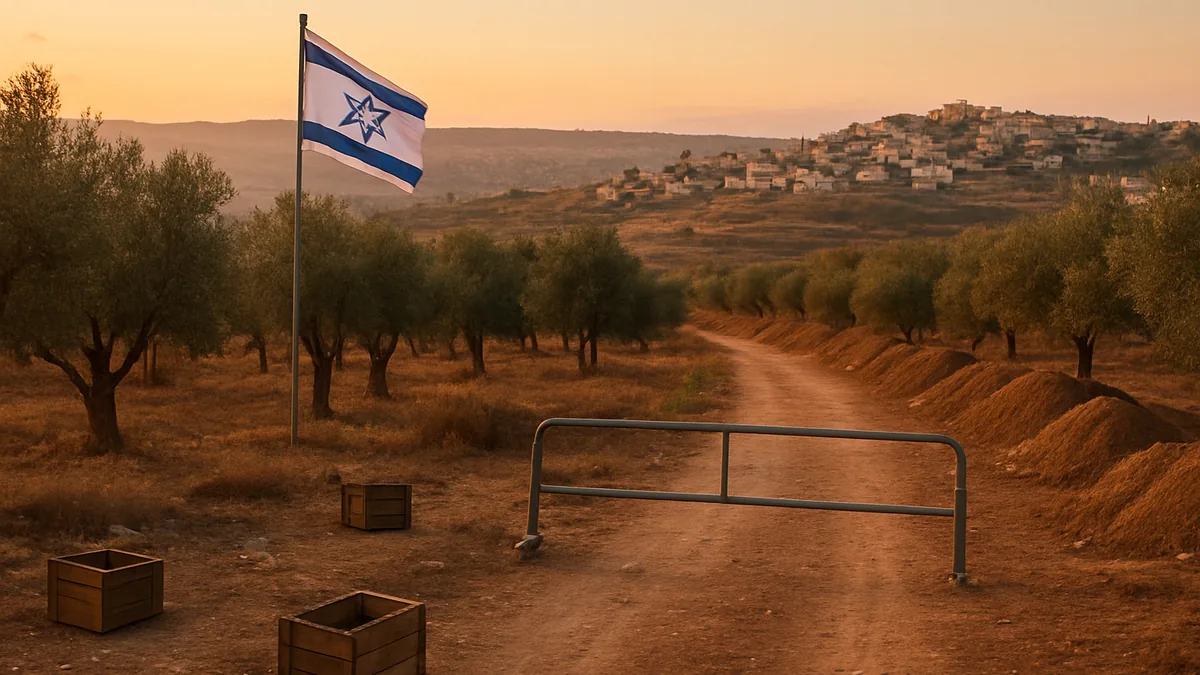
The move comes amid rising tensions across the occupied West Bank, where attacks by Israeli settlers and soldiers have increased. Attacks on olive harvesters have been widespread, and the violence has intensified ahead of Israel’s general election on Tuesday, in which Netanyahu is seeking re-election. According to municipal authorities in Hebron, most of the displaced are women, children and elderly people.
Homes turned into barracks and interrogation centres
Israeli soldiers have also converted dozens of homes belonging to the displaced families into military barracks and field interrogation centres, according to the reports.
Noman Amr, a professor of contemporary history at al-Quds Open University’s Dura branch in Hebron, said the measures go well beyond temporary evacuation or deportation. He divided the displacement into three categories: evacuations for demolition, evacuations as revenge and collective punishment, and evacuations for military use.
Amr also described the psychological pressure involved. He said the behaviour was designed to create panic, fear and instability in Palestinian society. He cited displaced residents who said soldiers had told them, “You will return to your homes on Judgement Day”.
According to Amr, the ultimate goal is “to impose a new reality”, which he summed up as “more land, fewer Arabs”.
Officials tie Hebron plan to Jenin and Iron Wall operations
Israeli officials have openly linked the Hebron operation to earlier campaigns in the occupied West Bank. Netanyahu and Defence Minister Israel Katz said they intended to apply the “Jenin camp model” to Hebron. That model involves forced evacuation of residents, inspecting homes, confiscating weapons and bulldozing roads.
Rights groups have compared the Hebron operation with the “Iron Wall” operation carried out in early 2025 in the Jenin, Nur Shams and Tulkarem refugee camps. That operation killed at least 102 people, displaced more than 33,000 and destroyed over half of the residential buildings there.
Katz had earlier described the tactics used in Jenin as the first lesson drawn from repeated raids in Gaza, where a three-year war has killed more than 74,000 people and left most of the territory in ruins. The United Nations agency for Palestinian refugees, UNRWA, said the destruction left the Jenin camp “nearly uninhabitable”.
A UN Human Rights Office (OHCHR) report published last month warned that Israeli military actions at the three camps appeared to amount to collective punishment and raised concerns of ethnic cleansing. Displaced Palestinians told investigators that Israeli officers had said there would be no more refugee camps and that they should all go to Jordan. Israeli forces killed at least 21 children during that operation, including a 10-year-old boy shot while waiting for his father and a two-year-old girl killed while having dinner with her family.
Water wells, settler militias and new barriers in Hebron
Analysts say the Hebron operation has also involved the systematic destruction of vital infrastructure, with the aim of making displacement permanent. Amr said attacks on key infrastructure threaten the lives and stability of Palestinians, and that targeting water wells affects far more than their material value, touching on existence and continuity.
Amr also pointed to close coordination between the Israeli army and armed settler groups. He said settlers in Hebron and elsewhere have a militia of more than 150,000 people, heavily armed with automatic weapons and four-wheel drive vehicles, and that some wear army uniforms. He said the army closes areas, empties homes and demolishes them, while settlers continue repeated attacks on residents, released prisoners and businesses.
The Colonization and Wall Resistance Commission (CRRC) said on Sunday that the Israeli military had set up 220 barriers across Hebron. The CRRC said these cut Palestinian communities off from their land while keeping routes open for illegal settlements, and that they form part of a wider network of new outposts meant to extend control.
The Israeli army also said on Sunday that it would bar Palestinian workers from entering most areas of the West Bank through Monday. It said crossings into and out of the territory would be fully closed on Tuesday, the day of the parliamentary election.
Mayor al-Jabari accused Netanyahu and his hard-right government of using the military operation to win settler votes. Amr made a similar claim, saying, “The Palestinian pays this price as electoral propaganda for the right wing.” He added that the aim goes further than removing Palestinians from their homes, and is intended to reverse the history that allowed Palestinians to remain after the 1967 setback or even after the 1948 Nakba, the Arabic word for “catastrophe” that he used to describe the ethnic cleansing of Palestine nearly 80 years ago.