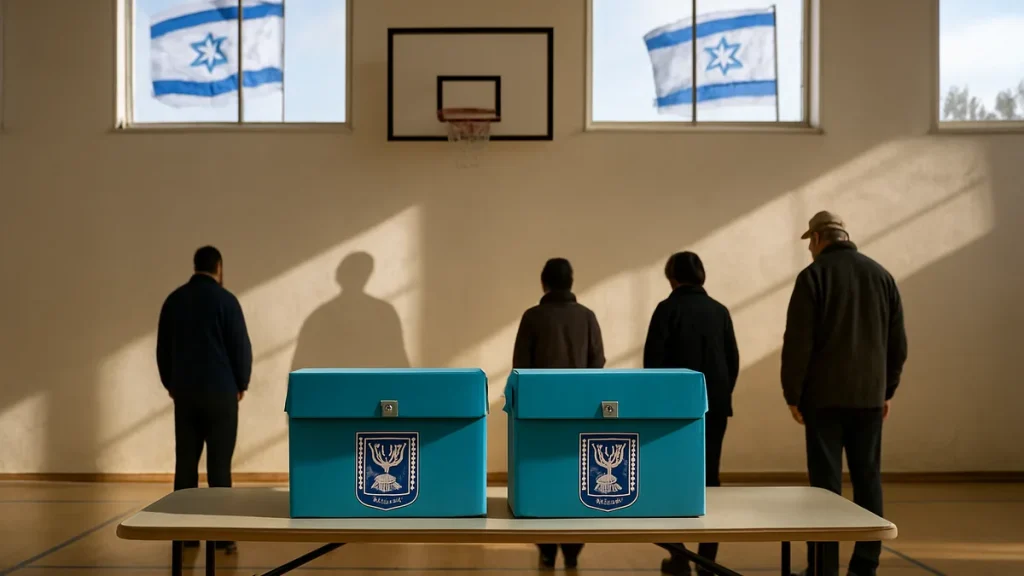
Israelis go to the polls on Tuesday in a general election that polls suggest is too close to call. Surveys published on Friday put the governing coalition and the main opposition bloc almost level. Around half a million first-time voters are due to cast ballots, and some 70,000 Israelis have reportedly flown in from abroad to vote.
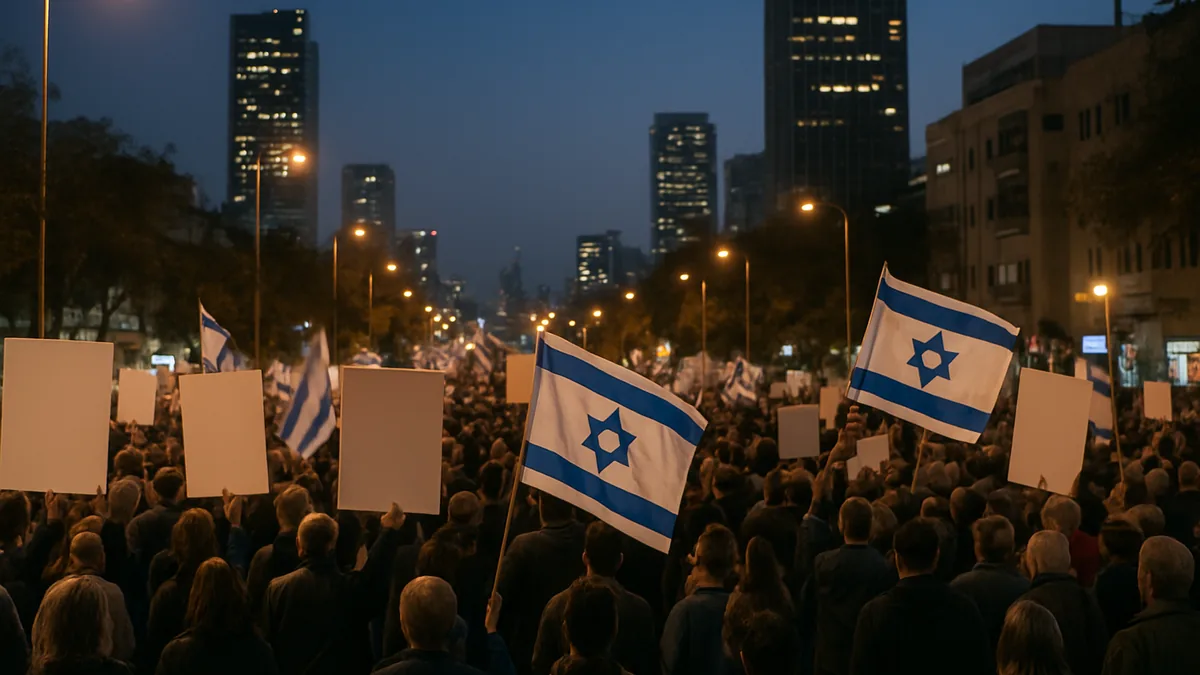
The vote takes place in a country described as deeply divided. On Saturday night, large crowds of opposition supporters gathered in central Tel Aviv to call for a change of government. The campaign has been shaped by new tactics, including AI-generated videos designed to attract attention, and by the rise of opposition leader Gadi Eisenkot, who is challenging Benjamin Netanyahu, Israel’s longest-serving prime minister.
A close race shaped by young voters and street protests
Opposition supporters at the Tel Aviv rally expressed hope for change. One 21-year-old, Omri, said he wanted peace and security, and wanted to end corruption and see religious extremists removed from government.
Also read: Israel election may change leader, not Iran war policy · Palestinian voters in Israel's election weigh fear and doubt
Polls have repeatedly shown Eisenkot’s centrist Yashar party pipping Netanyahu’s Likud party to the top spot. Israeli politics is built around coalition-building rather than a single party winning outright, so the outcome depends on how seats are divided. With the predicted result so tight, many Israelis see the contest as existential for the country’s future.
Far-right parties are also seeking younger voters. A poll for the Yedioth Ahronoth newspaper, published on 9 October, suggested that more than 16% of first-time voters would back far-right parties. Among a group of 18-year-olds from a Jewish religious college in Sderot, all four said they planned to vote for Religious Zionism, led by Finance Minister Bezalel Smotrich. One of them said the attacks of 7 October had affected his generation’s politics far more than their parents’ views.
Eisenkot’s low-key style and his Moroccan background
Eisenkot, a former military chief of staff, is not the flashy, media-savvy figure that many might expect to challenge Netanyahu. He is known for a calm manner and a low-drama approach, and some have dubbed him a “non-politician”. He has presented himself as coming from the periphery rather than Israel’s wealthy urban elite. His son was killed during the Gaza war.
His Moroccan background became an election issue earlier this month, when a pro-Netanyahu speaker used a racist slur to refer to him during a television debate. Eisenkot has spoken to voters about what he sees as the central questions of the election. He told a crowd at a community centre in Ramle that the vote concerns security, the economy and education, but above all the identity of the state of Israel.
Supporters say his manner sets him apart. One man who had met Eisenkot described him as someone who looks people in the eye and listens. Opposition voters in the area said they were drawn to his promise to enforce court rulings on drafting ultra-Orthodox Jews into national military service, a measure that also appeals to some right-wing voters.
Netanyahu’s security pitch and a thinning base
Netanyahu has responded with a campaign focused on security, using the slogan “No Surrender”. He has repeatedly described his rivals as soft on security, and has warned that Jewish opposition parties could ally with Arab parties to secure a majority, which he says could compromise national security. Around one-fifth of Israel’s population is Arab, and many describe themselves as Palestinian citizens of Israel.
Netanyahu has argued that Israel’s wars in Gaza, Lebanon and Iran have reduced existential threats to the country. One long-time supporter in Jerusalem said he believed the prime minister bore some responsibility for the 7 October failure, but said Netanyahu had changed the Middle East. Another said the prime minister was one of the best leaders in the world.
The prime minister has traditionally relied on a stable base of right-wing voters, but he is projected to lose some support. Some voters appear to be moving to opposition parties, while others have shifted further right. A regional civil defence chief in Sderot, who lost friends and colleagues in the attacks, said his family had always voted Likud but would now back Itamar Ben Gvir’s Jewish Power party.
The 7 October attacks remain central to the campaign. Hamas-led gunmen stormed through Gaza’s border fence, killing almost 1,200 people and taking 251 hostage. In Nir Oz, a kibbutz where 47 people were killed and 76 taken hostage that day, residents are returning. Some residents said they wanted a change of government, with one saying the country could not live with the current administration any longer.
Deadlock fears, Gaza and the West Bank
Eisenkot has pledged to end Hamas rule of Gaza within 18 months, either through a US-led peace plan or through what he called “military and operational capabilities”. On the West Bank, opposition leaders have voiced support for some form of Israeli settlement, although none have openly backed full Palestinian statehood, which Netanyahu has vowed to block. Eisenkot has spoken about creating conditions for “autonomy or state-minus” under ultimate Israeli security control.
Opposition leaders have pointed to Netanyahu’s efforts to curb the judiciary and his refusal to set up a state inquiry into the 7 October attacks, which he has said would be biased because the Supreme Court would be against him. A recent survey suggests more than 70% of Jewish Israelis support such an inquiry.
The result could end in deadlock. Neither the government nor the opposition may be able to form a majority without Arab parties, which polls suggest could win enough seats to decide the outcome. All but one of Israel’s Jewish opposition parties have so far rejected working with either of the two Arab party blocs.
Netanyahu has warned of fresh threats from Iran, opposition voices have warned of possible disruption to the ballot, and rights activists have warned of a further rise in settler violence in the occupied West Bank. Whatever the outcome, political instability could leave Israelis facing a fresh test of their democracy as well as new security threats.