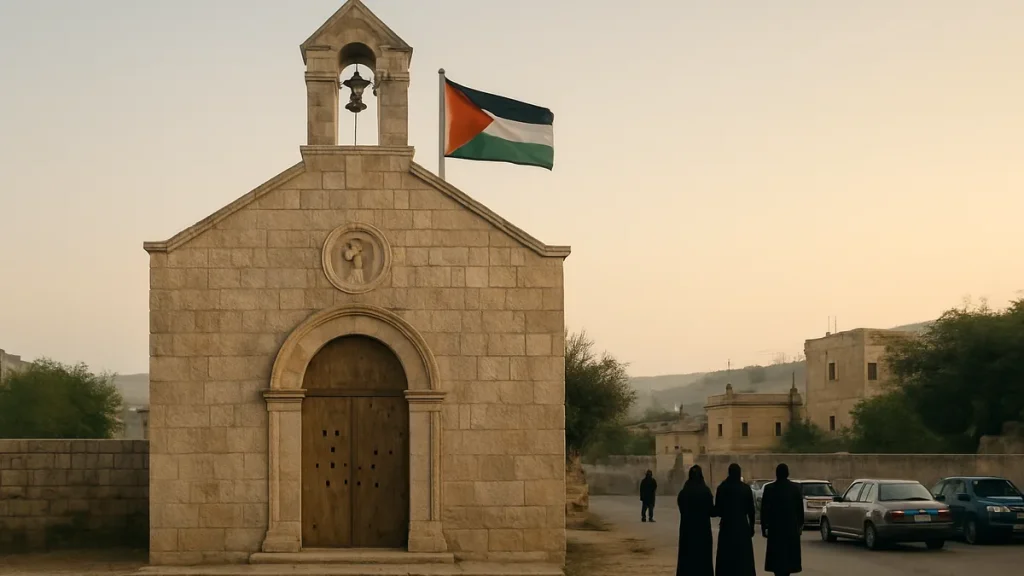
Crowds gathered on Sunday for the funerals of eight of the nine people killed in a shooting at a church in southern Jordan, and Prime Minister Jafar Hassan attended the service. The burials took place beside St George’s Greek Orthodox Church in the village of Hamoud, southwest of the capital, Amman. They came two days after gunmen opened fire during a funeral at the same church.
The attack left nine people dead and dozens wounded. It was a rare assault on Jordan’s Christian minority and prompted three days of national mourning. The family of the ninth victim, Mohammed al-Qasous, told AFP that he is due to be buried on Monday.
Funeral procession moves through Hamoud
Coffins draped in Jordanian flags were carried through crowds around the church in Karak province. Priests led prayers while security personnel stood guard nearby.
Jordan’s state news agency, Petra, said Hassan attended the service with government ministers and senior military and civilian officials. Petra also reported that thousands of citizens joined the funeral procession.
Survivors describe the moments of the shooting
Sahar al-Halsa, who was caught up in Friday’s shooting, told Reuters from her nearby home that she took cover behind a pillar when gunfire broke out and people began screaming. When she ran outside, she found her cousin Assem badly wounded. She recalled calling out to him, “Assem, Assem, my darling, answer me.” She said he opened his eyes briefly before he died.
Father Yohanna Hamati told AFP that roughly 170 to 200 people were inside the church for Friday’s funeral when the firing started outside. He said those present first struggled to grasp what was happening before rushing into the building to escape.
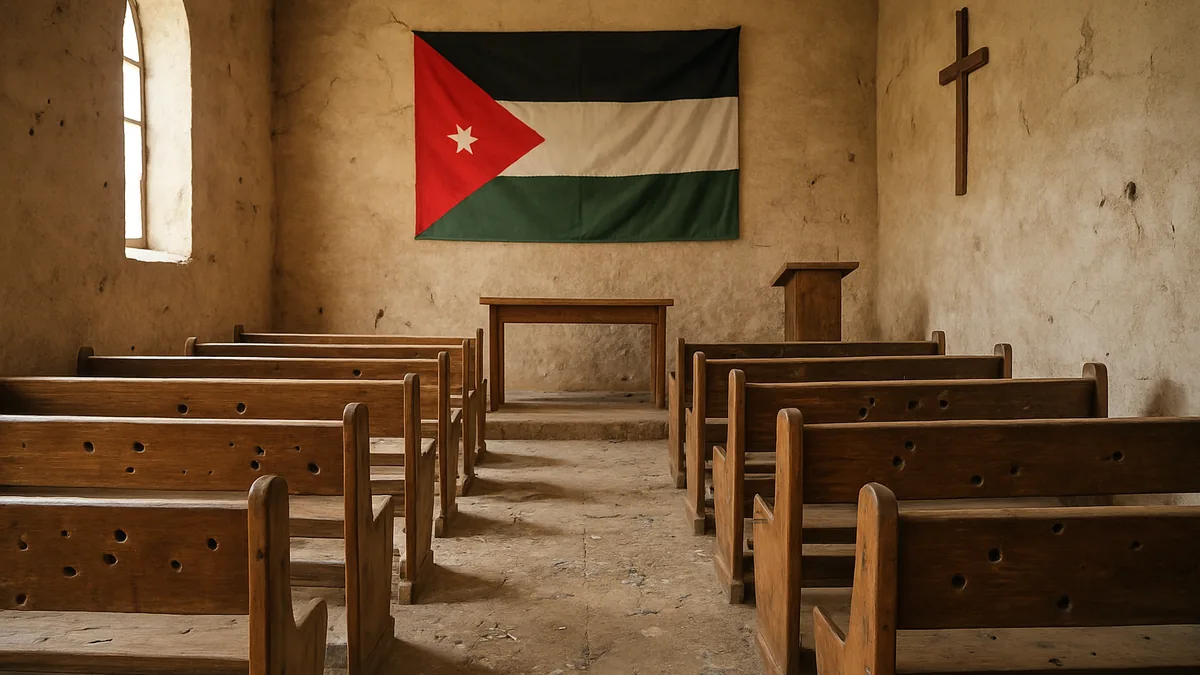
By Saturday, bullet holes could still be seen in the walls and wooden pews, and several windows had been shattered. Church workers were scrubbing away blood as villagers made preparations to bury the dead.
Authorities pursue attackers as communities show solidarity
Jordanian authorities have described the attack as “extremist terrorism”. King Abdullah visited some of the wounded in hospital on Friday and promised a forceful response. The assailants are still being sought.
Officials said they have not yet determined whether the attackers had links to an armed group, and no organisation has claimed responsibility. Christians make up about 3 percent of Jordan’s largely Muslim population, and AFP reported that Muslims were among those wounded.
Young volunteers took flowers and a message reading “Our loss is one” to a hospital in Karak. In Washington, DC, members of the Jordanian community lit candles outside their country’s embassy on Sunday. Jordan’s ambassador to the United States, Dina Kawar, told those gathered that efforts to stir religious division were “bound to fail”. Back in Hamoud, Father Hamati appealed for unity and stressed that Muslims had also suffered in the attack. “We make no distinction between Muslim and Christian,” he told AFP.