A pastor in Adamawa State, northeastern Nigeria, says a volunteer vigilante group saved his life after he was kidnapped from his home in May 2023. The pastor, whose name has been changed to protect his identity, was taken by armed men who forced their way into his property. He was held for three days before members of Pulaku, a predominantly Fulani vigilante organisation, freed him and other captives in a dawn operation.
The rescue highlights the complicated role Pulaku plays in a region where kidnapping and cattle theft are widespread. While some residents credit its members with saving lives, others accuse them of serious abuses. The group’s growing influence has drawn scrutiny as formal security forces struggle to contain the violence.
A night abduction and a three-day captivity
According to the pastor’s account, the intruders arrived at about 11:30 pm on May 23, 2023. He watched from a window as the men, all dressed in black, cut through his fence and drove his dogs back into their cage. They then broke a padlock on a smaller gate and used a digger to force the main door.
Rather than wait for the door to give way, he opened it himself. The men entered, pointed a gun at him and ordered him to sit on the floor. One of them took money and phones from a bedroom, while another helped himself to food and drink from the fridge. He said he went with them without resistance because he feared they would take his wife or daughter instead.
He walked blindfolded for six hours through bushland and across shallow streams until they reached the mountains. There he recognised the voice of a neighbour, who had also been abducted. The captives were held for three days.
During that time, the kidnappers demanded 15 million naira, about $11,256 at the time, for his release. After contacting his relatives, the kidnappers switched off their phones, and the family could only reach them when the abductors chose to call. The pastor said he stayed blindfolded throughout and was given river water only in small sips, whenever his captors allowed it.
Early on a Friday, around 4am, gunfire broke out near the camp and continued for roughly 15 minutes. The pastor said he lay on the rocky ground between two other captives and told them not to move. They could not tell whether the approaching voices belonged to their abductors or to rescuers.
“We were confused. We didn’t know who was coming, so I told the others not to move,” he said.
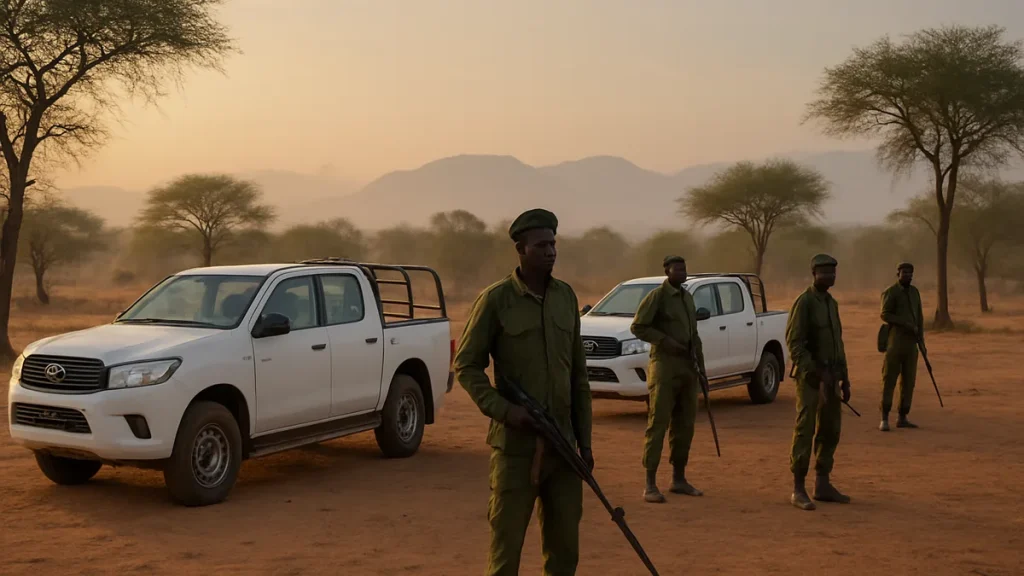
The voices told them not to be afraid and removed their blindfolds. He said several men in olive-green uniforms stood before them. The kidnappers had fled, leaving behind food, phones and other belongings, and the rescuers also found what appeared to be a national identity card belonging to one of the suspects.
The captives walked down the mountain with their rescuers and were then taken by police to headquarters in Yola, the Adamawa State capital. There the pastor was reunited with his wife and daughter. He credits Pulaku with making that reunion possible, saying, “They saved my life.” His church later presented the group with an award for its work in the community.
Mixed views on Pulaku’s conduct
Not everyone shares that view. While some residents credit the group with saving lives, others have accused its members of serious abuses. One man said they held him for more than two months and beat him so badly that he lost consciousness.
The two accounts reflect the uneasy position of armed community vigilantes in a region where formal security forces have had difficulty containing kidnapping and cattle rustling. The report describes a training exercise near Yola in which about 30 men in olive-green uniforms carried locally made firearms, machetes and long wooden sticks.
Among the trainees was Mahmud, who gave only his first name. A former cattle herder and farmer in his late 20s, he is one of the group’s newer recruits and has yet to confront kidnappers himself. He said simply, “We are ready to fight day in, day out.”
The group says it now has more than 500 members across parts of Adamawa and neighbouring Taraba State. Although most are Fulani, its ranks include members of other ethnic groups, including Verre and Chamba. Pulaku is not part of Nigeria’s formal security establishment.
“The group is not on the government payroll,” said its grand commander, Musa Usman Malkohi. He said members fund themselves partly, with additional help from communities and local authorities. Local government chairmen have contributed to running costs, and the Adamawa State government has provided vehicles, including one donated by the governor, whose name is painted on a truck.
Cattle theft, kidnapping and the stigma facing Fulani communities
Analysts say armed groups have preyed on communities across Adamawa and Taraba for years, abducting residents for ransom and stealing livestock. Mountains and forests in the region give kidnappers places to hide, making them hard for security forces to reach.
SBM Intelligence, a Nigerian research and market intelligence firm, recorded 21 kidnapping incidents in Adamawa involving 77 abducted people between July 2025 and June 2026. It also recorded four incidents in Taraba involving 14 people over the same period.
Cattle theft has also caused heavy losses. A 2024 study published in the University of Jos Journal of Political Science estimated that 134,182 cattle were stolen in Taraba between 1999 and 2022. Researchers reported that more than 113,000 stolen cattle were recovered in Adamawa over the same period.
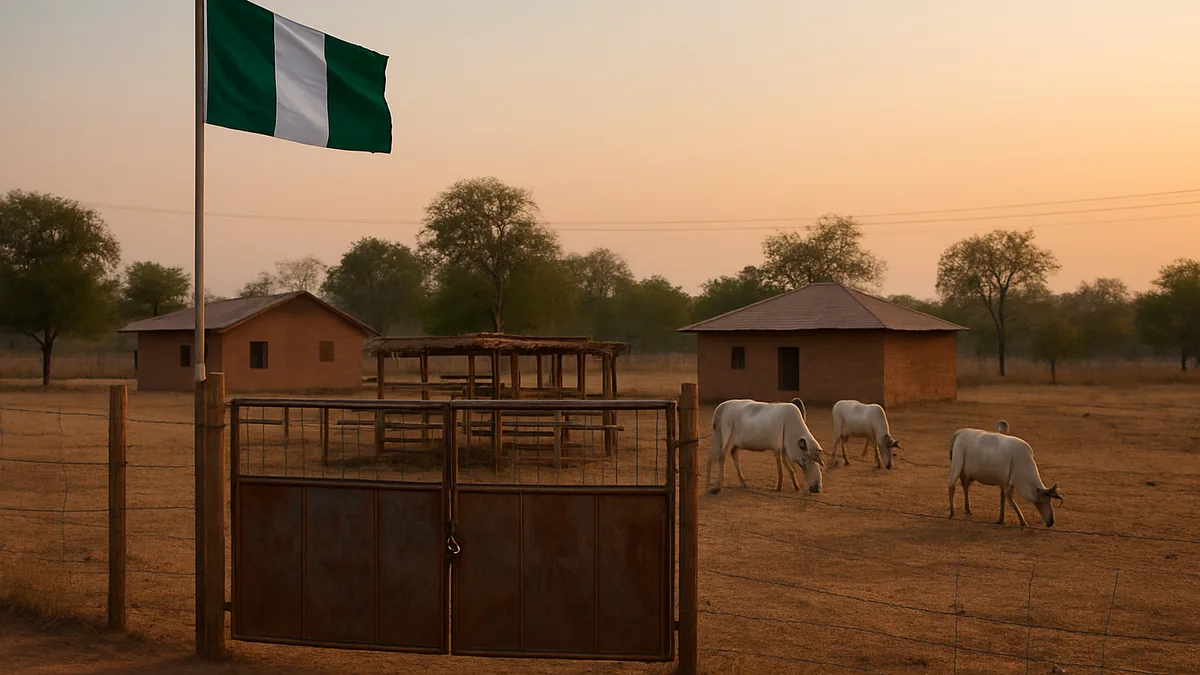
For Fulani pastoralists, the loss of livestock can mean far more than the loss of animals. At an estimated 700,000 naira ($525) per head, a herd of 50 cattle could be worth about 35 million naira ($26,254), a major investment for a family that depends on its animals.
Fulani communities also say their ethnic identity has been linked unfairly to kidnapping, banditry and farmer-herder violence in parts of the Nigerian media. A 2021 study in African Journalism Studies examined 598 articles from three Nigerian newspapers. It found that reports sometimes used “herdsmen” and “Fulani herdsmen” interchangeably, along with labels such as “Fulani terrorists”.
Alhaji Bello Ardo, a Fulani community leader in Adamawa State, said such portrayals fuel suspicion against people who have no connection to crime. “It’s painful to see an entire ethnic group being stereotyped,” he said. “Every ethnic group has individuals involved in crime, but in our case, people make accusations without confirmation.”
Ardo also said Fulani pastoralists are themselves victims. “We are also not safe. Our cattle are being stolen, and we are also being killed,” he said.
Pulaaku, the cultural ideal behind the group’s name
According to its leaders, Pulaku began to take shape more than a decade ago, when Fulani community members organised against cattle theft and kidnapping. The group is based in Malkohi, in Yola South Local Government Area, and was founded by the late Alhaji Abdu Bali, Musa Usman Malkohi, the current commander, and other community leaders.
The name draws on pulaaku, a cultural concept that encompasses dignity, patience, self-control, modesty, courage and respect for others. Professor Abubakar Abba Tahir, a mass communication scholar and spokesperson for the Adamawa Emirate, said the concept is not fixed but shaped by different communities’ experiences.
He said the idea can encourage collective responsibility and community protection, but it also stresses restraint and respect for human life. He drew a distinction between pulaaku as a cultural ideal and Pulaku as an organisation. “The mere use of pulaaku in an organisation’s name does not, by itself, establish that its activities fully reflect the broader cultural ideal,” he said.
Whether a group lives up to those values, Tahir argued, depends on its conduct, accountability and respect for human rights.