
Jean Claude Hategekimana, a former member of the Democratic Forces for the Liberation of Rwanda (FDLR), returned to Rwanda after years with the armed group in the Democratic Republic of the Congo (DRC). He is now undergoing rehabilitation at the Mutobo Demobilisation and Reintegration Centre in Rwanda’s Northern Province, preparing to reintegrate into civilian life.
Hategekimana, born in 1996 in Rutsiro District, western Rwanda, joined the FDLR in 2018 after growing up in an area controlled by the group in the DRC. He rose to the rank of captain but decided to leave following military defeats and disillusionment with the cause. He arrived at Mutobo on February 24 and described his return as initially feeling like a “suicide mission” due to the FDLR’s warnings that returnees would be killed.
Mutobo centre supports reintegration of former fighters
The Mutobo Demobilisation and Reintegration Centre was established in 2001 to assist members of the FDLR and other Rwandan armed groups returning from the DRC. Francis Musoni, secretary-general of the Rwanda Demobilisation and Reintegration Commission, explained that the centre provides medical care, psychosocial support, civic education, and helps returnees reconnect with their families.
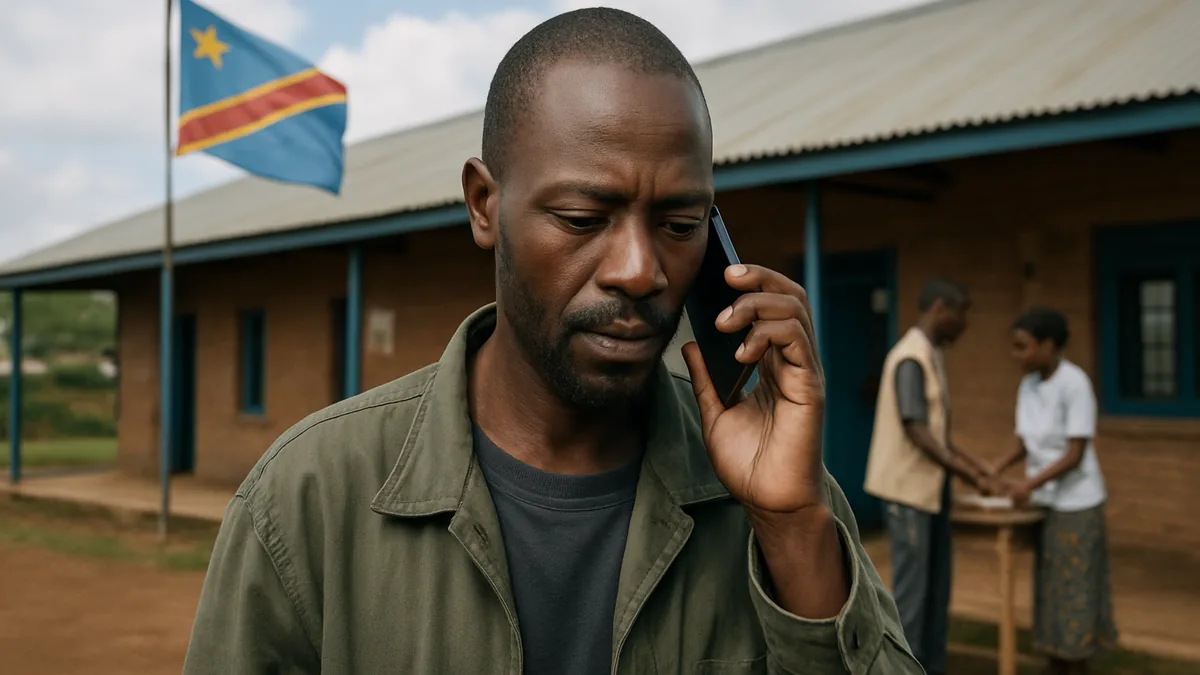
Returnees can use a telephone service to contact relatives and are encouraged to rebuild trust and confidence to reintegrate into their communities. The centre also permits short visits to home communities during rehabilitation, with written permission and transport facilitated by the commission.
Former commanders cite family ties and disillusionment
Several former FDLR commanders interviewed at Mutobo described their decisions to leave the group as influenced by family connections, doubts about the armed struggle, and concerns for their safety.
Major-General Anastase Munyaneza, who commanded the FDLR’s South Kivu sector, said regular news from his family in Rwanda made him question his situation in the forest. He noted that seeing others return safely encouraged his own decision to come home. Munyaneza contacted the United Nations Organisation Stabilisation Mission in the Democratic Republic of the Congo (MONUSCO), which helped transport him to the Rwandan border and then to Mutobo.
Lieutenant-Colonel Idrissa Bizimana, responsible for ideology and recruitment in the FDLR, stated that a shift in his beliefs and verified information about Rwanda prompted his return. He coordinated with a MONUSCO general who arranged for a helicopter extraction after Bizimana sent his location via satellite phone.
Lieutenant-Colonel Emilien Mpakaniye, who managed economic affairs for the FDLR, said he became disillusioned with the group’s falsehoods. Colonel Augustin Nshimiyimana, a former intelligence commander, left after being accused of collaborating with Rwanda, an allegation he said put his life at risk.
Education and support tailored for former fighters
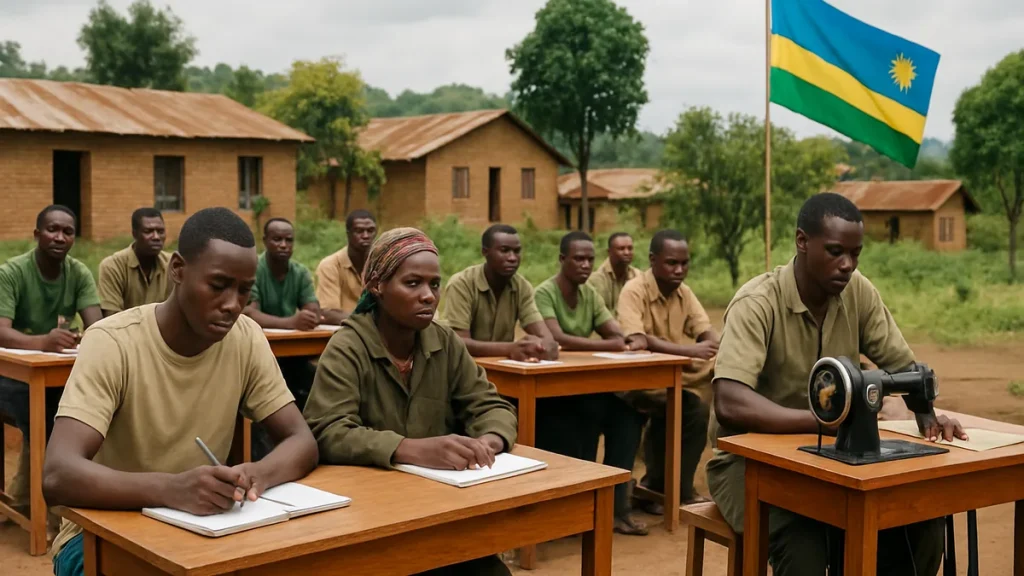
At Mutobo, education and practical assistance are adapted to the needs of adults who have spent years in the forest. Febronie Mukankiko, a teacher at the centre, noted that special training is required to effectively teach these students, many of whom have had limited formal education.
Graduation and certification are significant milestones for the returnees, bringing them joy and a sense of accomplishment. Musoni said the average stay at the centre is five months, after which returnees undergo a formal discharge process.
Support after discharge may include financial aid, vocational training, formal education, and help establishing income-generating activities. The commission also monitors former residents to evaluate their adjustment to civilian life.
For many, leaving Mutobo is only the beginning of a new phase involving finding employment, reconnecting with family, and adapting to society. Mpakaniye highlighted the disparity between the lives of senior commanders’ families, who often live in Rwanda or Europe, and those of ordinary fighters whose families remain in the forest.