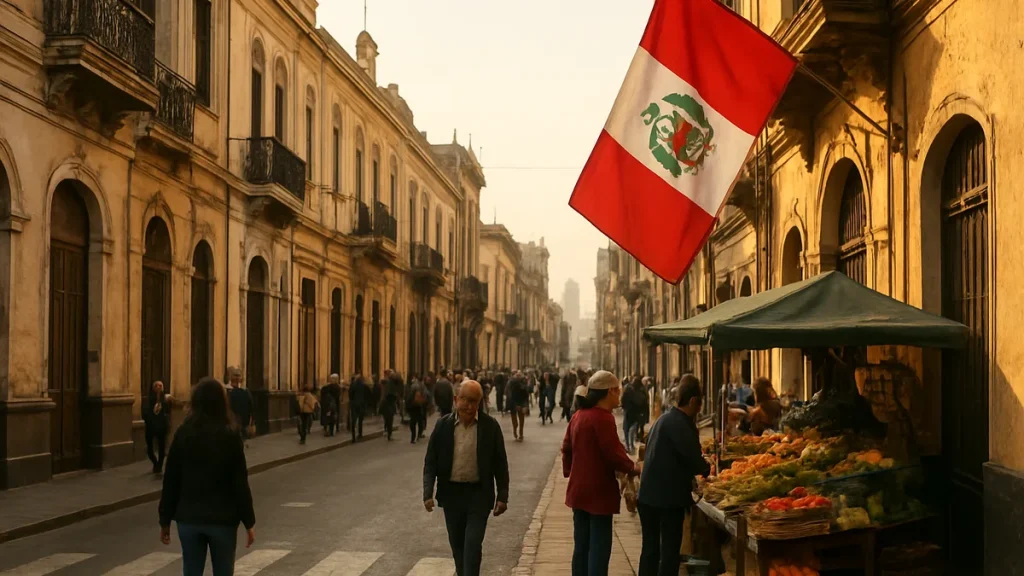

The richest 1 percent of Peruvians captured 42 percent of all new wealth generated between 2019 and 2025, according to an analysis by the nonprofit Oxfam. The report, published on Tuesday, highlights a growing gap between rich and poor in the South American country and raises questions about how the government is responding to deepening social divisions.
Oxfam said the share is higher than in the 2000 to 2019 period, when the top 1 percent took about 39 percent of new wealth. Over the more recent span, only 1.4 percent of new wealth went to the poorest half of the population, the group said in an email.
Oxfam says Peru’s wealth gap keeps widening
Alejandra Alayza, executive director of Oxfam in Peru, said economic inequality has stayed stubbornly high for decades. She warned that when people come to believe that the same groups always win and that nothing can change, inequality begins to look like a normal feature of life rather than an injustice.
“That is a dangerous kind of fatalism, and we must tear it down,” Alayza said. Experts cited in the report warn that this trend could weaken public faith in government and democratic institutions.
Peruvians doubt that power serves the public
Oxfam worked with the Institute for Peruvian Studies, a think tank based in Lima, on a survey published this month about how Peruvians view inequality. The groups found that 84 percent of Peruvians believe the country is governed by powerful interests that shape politics for their own benefit.
More than 75 percent said wealthy corporations and individuals avoid paying their fair share of taxes. The survey also suggested strong public backing for action. About 70 percent of respondents said they want the government to do more to reduce inequality, and a majority felt they had limited access to services such as healthcare, employment, education and justice.
“The undeniable scale of public support for action to reduce inequality leaves no room for complacency,” Alayza said. “Inequality is not a force of nature; it is made by political choices. And different choices can build a different Peru.”
Political turmoil and weakened democratic safeguards
The rise in inequality has coincided with a period of political turmoil, particularly around the presidency. A string of investigations, scandals and impeachment efforts has meant that Peru has been governed by nine presidents in the last 10 years.
The most recent, right-wing President Keiko Fujimori, took office in July after a narrow race marked by voting delays and bitter accusations among the leading candidates. Experts believe powerful interests have found room to operate amid the instability.
Will Freeman, a fellow at the Council on Foreign Relations, a US-based think tank, described the situation as a paradox. “How can you have such a rotation among elites but still have a relatively narrow political-criminal-business elite that holds a lot of power? I think both things are true in Peru,” he said.
Part of the upheaval stems from clashes between the presidency and Congress, which can impeach executive leaders on the basis of “moral incapacity”, a vague term. Analysts say the repeated leadership changes have weakened Peru’s democracy.
In December 2022, then-President Pedro Castillo announced he would dissolve Congress unlawfully, in response to repeated impeachment attempts against him. His removal and arrest sparked widespread protests. The government of his successor, Dina Boluarte, carried out a months-long crackdown on demonstrations, which rights groups say involved widespread abuses that have seen little accountability.
Since then, the government has also moved to weaken judicial oversight and hollow out anticorruption watchdogs. The Freedom House group, which measures political freedom worldwide, rated Peru “free” in 2022 but downgraded it to “partly free” the following year, citing deadly clashes between security forces and protesters. Its 2026 report kept Peru at “partly free”, pointing in part to the denial of full political rights to certain groups, including Indigenous peoples.
“High-profile corruption scandals have eroded public trust in government, and the weakening of judicial independence has impacted the country’s governing bodies,” the nonprofit said. Freeman added that the powerful groups operating in Peru are unstable and fluid, and that Peruvians are right to conclude that they wield outsized influence to defend commercial or political power rather than the general welfare.