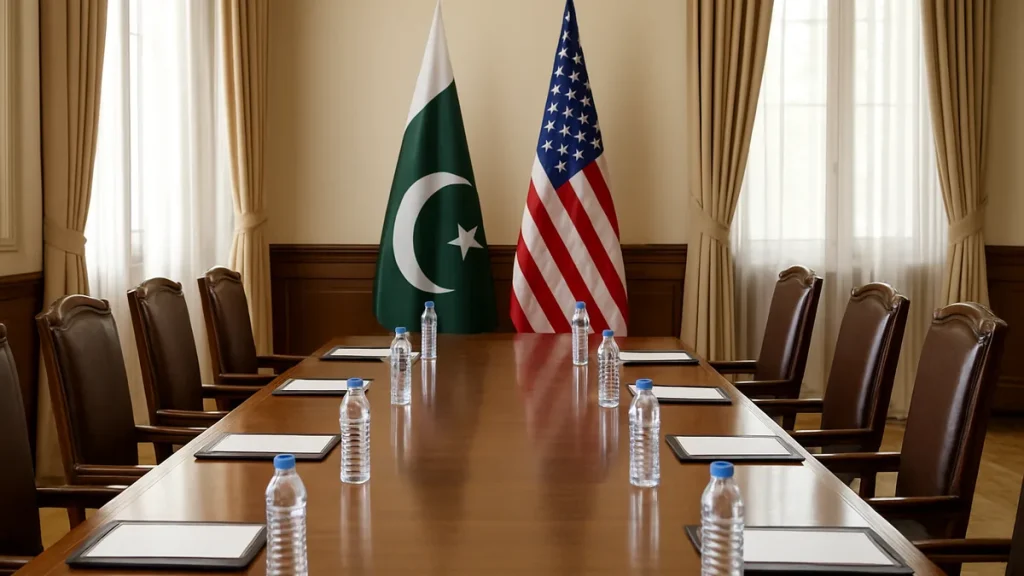

Federal Minister for Commerce Jam Kamal Khan met United States Chargé d’Affaires Natalie A. Baker in Islamabad on October 20, 2026, to discuss strengthening economic ties between the two countries. The talks focused on speeding up the ongoing trade agreement negotiations, widening market access and exploring new cooperation in agriculture, minerals, technology and investment.
Rana Ihsaan Afzal Khan, Coordinator to the Prime Minister on Commerce and Industries, Secretary Commerce Jawad Paul and senior officials of the Ministry of Commerce also attended the meeting. Welcoming the American delegation, the minister stressed the value Pakistan places on its long-standing economic partnership with the United States.
Progress on the reciprocal trade agreement talks
Jam Kamal Khan said both countries had considerable room to expand bilateral trade through better market access, greater private-sector involvement and investment in emerging sectors. He also pointed to Pakistan’s efforts to diversify its export markets and build international commercial partnerships, despite regional and global economic pressures.
Both sides reviewed the state of the Pakistan-U.S. bilateral reciprocal trade agreement negotiations and said they were committed to moving the discussions toward a mutually beneficial outcome. Secretary Commerce Jawad Paul told the meeting that substantial progress had been made on several important provisions of the proposed agreement. He said a few technical points still needed to be discussed with the USTR.
Agricultural exports, mangoes and dates
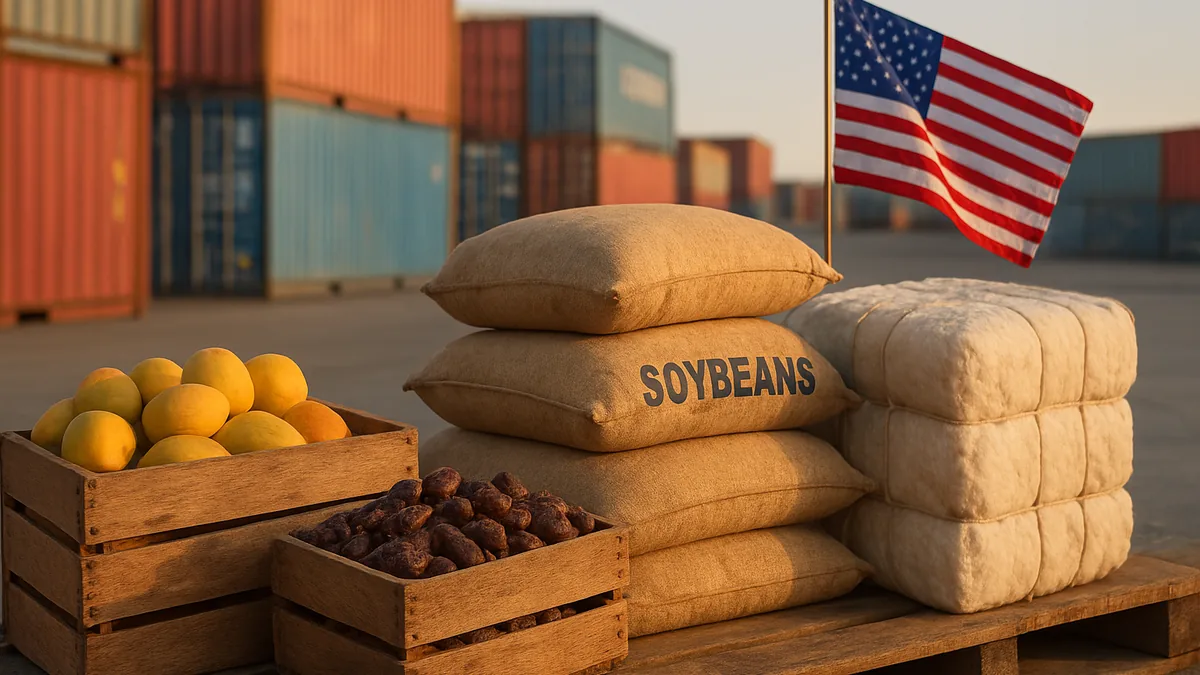
The meeting also considered market access for Pakistani farm products, particularly mangoes and dates. Jawad Paul called for quicker visits by relevant U.S. inspection teams to finalise mango export arrangements, and he asked for progress on the pending market access process for Pakistani dates. He said greater access to the American market would open valuable export opportunities, especially for growers and businesses in Balochistan.
The U.S. delegation welcomed the discussion and said it would follow up with the relevant American authorities. Both sides also explored ways to boost agricultural trade, including U.S. exports of cotton and soybeans to Pakistan. Jawad Paul stressed that competitive pricing and trade financing would be important in enabling greater imports from the United States, and discussions covered possible financing arrangements and closer coordination with trade institutions and industry associations.
Jam Kamal Khan highlighted Pakistan’s potential in agriculture, food processing, livestock and value-added production. He encouraged American companies to look at investment in modern farm machinery, food processing technology, cold-chain infrastructure and improved farming practices. He also invited American businesses and agricultural organisations to take part in FoodAg 2026, which is scheduled for Karachi from November 23 to 26. He said the exhibition would connect international buyers and investors with Pakistan’s growing agricultural and food-processing industries.
The Chargé d’Affaires welcomed Pakistan’s efforts to promote farm trade and said she was interested in encouraging closer engagement between American agricultural technology firms and Pakistani businesses.
Minerals, Balochistan and regional trade routes
Minerals and mining also featured in the talks. Both sides explored opportunities for investment, technical cooperation, skills development and responsible resource development. The U.S. delegation said it remained interested in strengthening cooperation in Pakistan’s mineral sector, including ways for American companies to contribute technical expertise, investment and commercial partnerships.
Jam Kamal Khan identified dates, olive oil and other farm products from Balochistan as promising areas for value addition and export growth. He said international cooperation could help improve processing facilities, product quality, packaging and access to global markets, while creating opportunities for small enterprises, farmers and women entrepreneurs. He also pointed to the industrial potential of Hub, Balochistan, citing its proximity to Karachi and opportunities in manufacturing, industrial infrastructure and special economic zones.
During a discussion of regional trade links, Jawad Paul said disruptions to traditional land trade routes, especially those connecting Pakistan with Afghanistan and Central Asian markets, had created challenges. He said uninterrupted regional connectivity, predictable trade arrangements and efficient logistics were essential for sustaining export growth and long-term commercial relationships. Jam Kamal Khan said Pakistan remained committed to strengthening its economic resilience and improving the business environment while taking broader regional developments into account.
Concluding the meeting, Jam Kamal Khan reaffirmed Pakistan’s commitment to a forward-looking economic partnership with the United States, based on mutual respect and sustainable commercial growth. Natalie A. Baker praised the discussions and said Washington wanted to expand economic engagement with Pakistan, particularly in trade, agriculture, technology and investment. Both sides agreed to keep working closely on the trade negotiations, address market access issues and look for new areas of mutually beneficial cooperation.