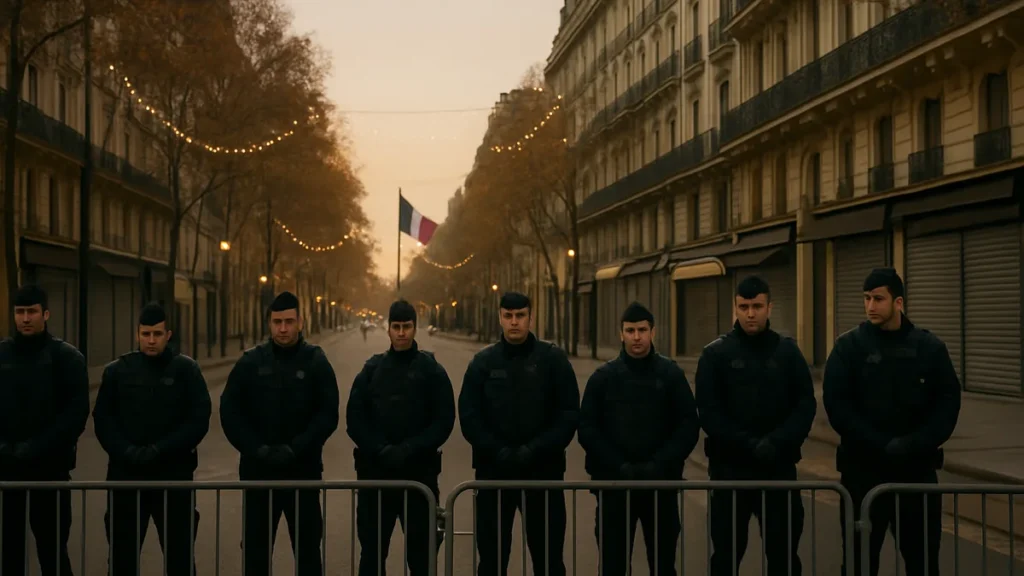
France has deployed 70,000 police officers to contain a widely expected wave of fresh unrest on Saturday, which falls on Halloween. The latest nationwide protests are fuelled by anger over the cost of living, public services and the government of President Emmanuel Macron. Interior Minister Laurent Nunez has promised that the riots and looting of two weeks ago will not be repeated.
That earlier unrest caught security forces off guard and left shops, public buildings and businesses damaged in cities across the country. Speaking at a news conference earlier this week, Nunez laid out the security arrangements for the day. He said it carried “a very high risk” of unrest and promised that officers would respond firmly to any trouble.
Paris march banned and new rules on face coverings
France’s top administrative court confirmed on Saturday that a march between the Paris squares of Republique and Bastille will not go ahead. The court rejected a challenge brought by unions. Demonstrations will instead be held on boulevards on the eastern edge of the capital, away from the busy shopping districts of central Paris.
Also read: France deploys huge security operation as protests loom in Paris · PSG-Lyon Ligue 1 match moved to Monday amid Paris protests
Authorities are also concerned that rioters might wear Halloween masks to hide their identities. Nunez pointed out that existing laws already allow police to ban face coverings when public order is under threat. The interior ministry said around 150 gatherings had been planned across France. The US Embassy urged travellers to avoid areas where demonstrations or large gatherings were taking place.
Budget strain and anger over schools fuel the protests
The protests gathered momentum in late September, when Macron’s minority government opened talks on its 2027 budget. Public debt is approaching 120 per cent of economic output, and borrowing costs are rising. That leaves the government under pressure to cut spending and gives it little room to manoeuvre.
Students have been among the most vocal critics, complaining about the dilapidated state of many schools, overcrowded classes and a university admissions system that many see as unfair. They have been joined by trade unions and a revived “Yellow Vest” movement demanding action on living costs. The unrest has spread beyond France, with youth-led demonstrations across Europe and more than 30 German cities scheduled to hold protests on Saturday.
The government’s pledges to reform education and ease fuel costs have not calmed the anger. Aaron Berthier de Grandry, a 15-year-old high school student from the Paris suburb of Nogent-sur-Marne, said he planned to join his third consecutive weekend of protests. “When I was little, I was told young people were the future,” he said. “Well, if we, as the future of France, lack resources, that means France will end up collapsing.”
The turmoil has also given a political boost to far-right leader Marine Le Pen, who leads opinion polls ahead of the presidential election in April. Potential centrist successors to Macron, by contrast, remain divided.
Retail losses and a contested law on rioters’ liability
The unrest adds to the pressure on an economy that, according to data released on Friday, shrank in the third quarter. The Chamber of Commerce estimates that losses to retailers exceed €1 billion ($1.1 billion). Other estimates put the total at twice that figure once uninsured damage and lost revenue are included.
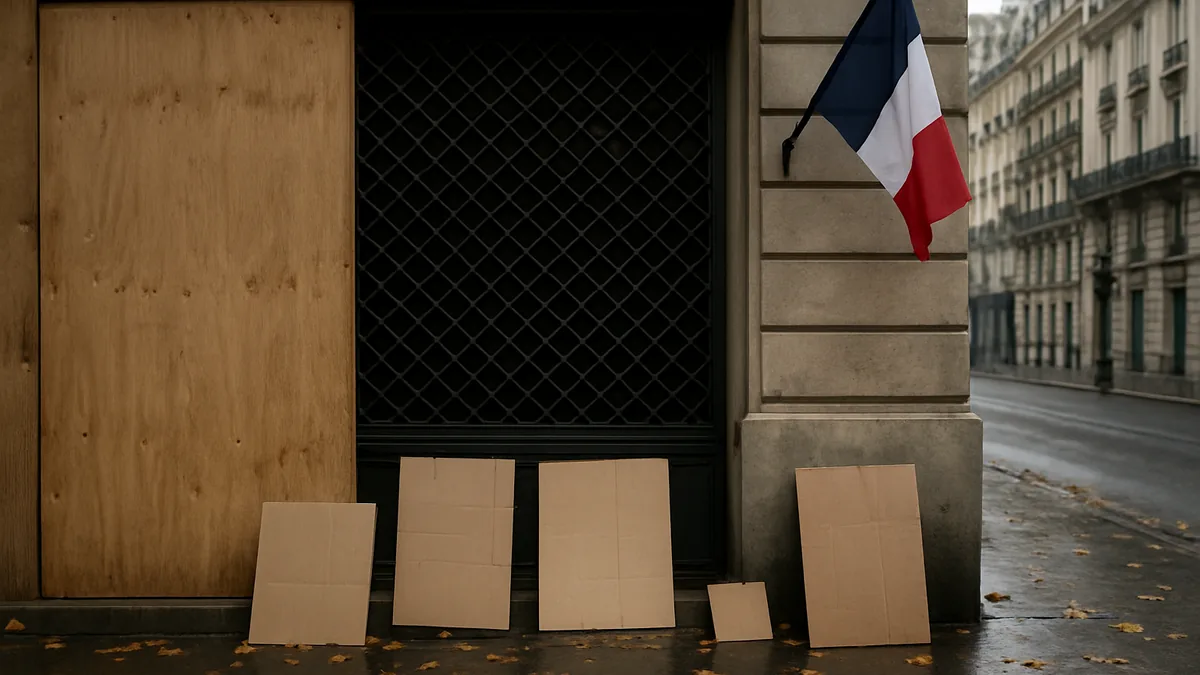
Shops targeted in earlier unrest included outlets of luxury brands such as Hermes, Louis Vuitton and Burberry. Along the main shopping boulevards of Paris, early Christmas lights now glow around boarded-up windows and security grilles.
The government is also moving ahead with a controversial law that would make rioters liable to pay up to €10,000 for damage caused either by themselves or by groups they are judged to belong to. Rights groups and some lawyers argue that the measure risks undermining the right to peaceful protest.