Federal Minister for Climate Change Musadik Malik has asked why thousands of people still die in natural disasters, even though scientific data, advanced technology and warning systems are available. He said the central difficulty is making sure alerts reach people facing danger and lead to prompt action.
Speaking at the closing session of an international conference on space technology for early warning, climate action and disaster risk assessment in Islamabad, Malik pointed to 4,600 deaths recorded in a single week of heatwave conditions in Karachi. He used the case to illustrate the distance between scientific knowledge and effective disaster response.
Gap between scientific knowledge and disaster response
Malik said authorities know where heatwaves are forming and that science provides accurate information. “Yet why are so many people still dying?” he asked, questioning why the ability to spot hazards had not led to better protection of lives.
He said developing countries often fail to treat each other’s problems as their own, which weakens joint responses to crises. Malik asked what the value of scientific progress was if governments and institutions could foresee disasters but could not shield vulnerable communities from them.
The minister said artificial intelligence had greatly widened the capacity to analyse complex information, completing tasks that once took supercomputers days or even weeks. He likened modern scientific precision to medical diagnosis, saying a doctor can detect a blockage of just 10 per cent in an artery, while science can reveal hazards in fine detail.
Warnings must reach specific communities in time
Malik stressed, however, that issuing an alert was not enough on its own. Authorities, he said, must ensure that warnings reach the particular individuals and communities at risk early enough for them to act. “A warning that has no connection to a particular person or area is, in fact, a warning for no one,” he said.
Referring to recent flood-related losses, he said advance warnings had existed but had failed to reach affected families. He described the continued loss of life despite scientific information and early alerts as a matter of serious concern.
Drawing another parallel with healthcare, Malik said disaster preparedness requires ongoing monitoring and follow-up. He compared this to doctors, who do not simply prescribe medicine but also track how patients respond to treatment and their daily habits.
Unsafe construction and poor urban planning blamed for deaths
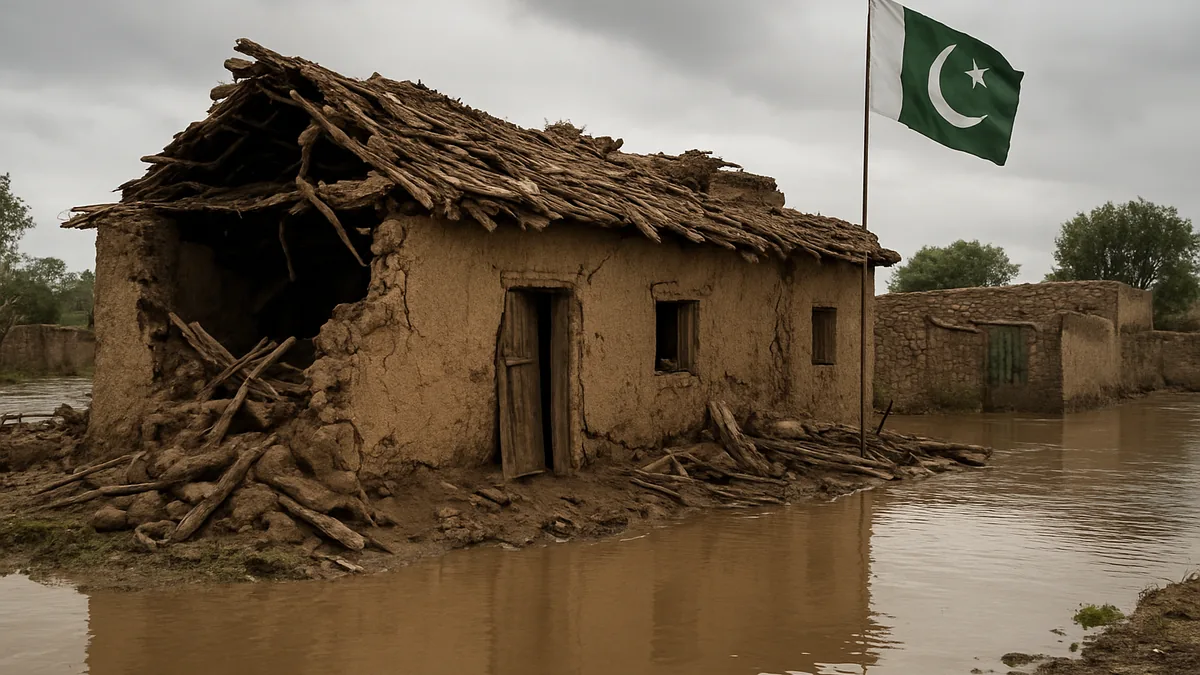
Malik also named unsafe construction and weak urban planning as major contributors to deaths during natural disasters. He said collapsing roofs and walls accounted for a large share of fatalities and argued that such incidents should not be written off as unavoidable accidents. “The collapse of roofs and walls is not merely an accident; it is the result of poor construction and improper zoning,” he said.
He identified several factors that worsen the impact of disasters:
- substandard buildings
- inadequate land-use planning
- poor management of rainwater flowing on roads
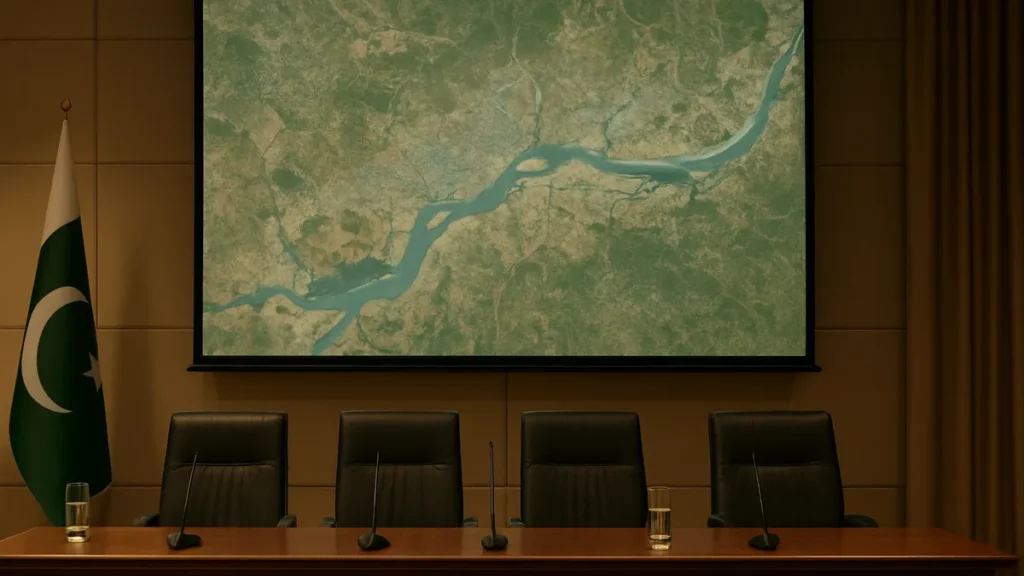
Malik said digital modelling now makes it possible to identify risks in advance that could not previously be detected with the same level of detail. Pointing to efforts in Europe to build a digital model of the entire planet, he asked why Pakistan could not create digital twins of flood-prone areas and river plains to improve disaster planning. “What technology do we need to digitally map flood-prone areas that we do not already have?” he asked.
Satellite data seen as key to accountability
The minister also emphasised the role of satellite data in identifying risks and strengthening accountability. He said such information could not be manipulated through bribery. “Satellite data cannot be bribed into changing. It identifies risks accurately,” he said, adding that evidence gathered from satellites provides facts rather than opinions.
Malik called for wider use of satellite-based information and digital mapping in disaster prevention. He said the task is no longer just gathering scientific data, but turning it into targeted warnings, better planning and practical measures that can save lives.