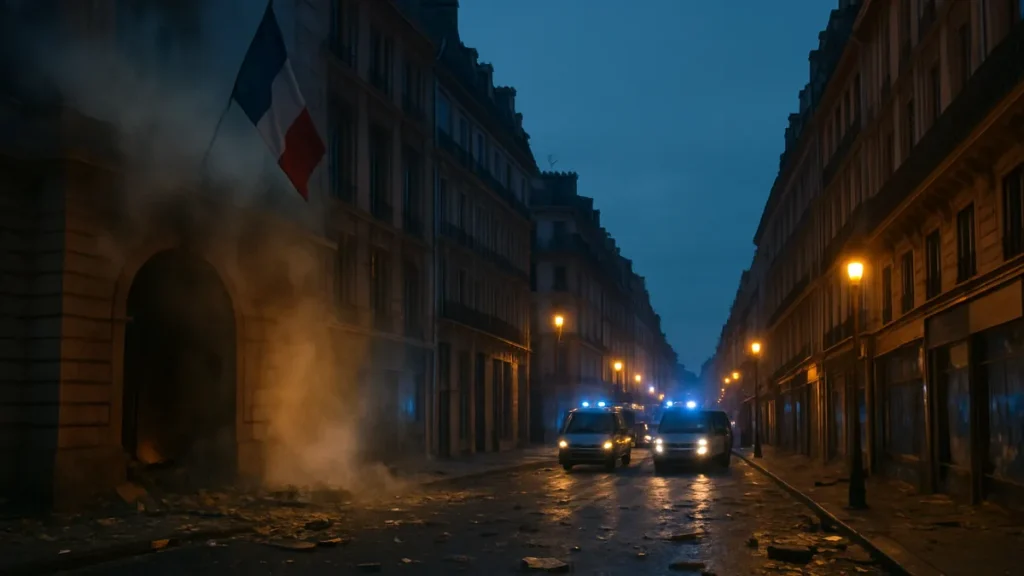
Trump’s claim that migrants and open-border policies lie behind France’s unrest has drawn sharp rebuttals in Paris, where officials and young protesters have rejected the idea. The violence, which included clashes, riots and looting, has become the subject of a fierce argument that is being heard on both sides of the political spectrum and across the Atlantic.
Speaking at the White House on Monday, US President Donald Trump said Europe would be “finished” unless it closed its borders and removed criminals, a reference to the people he said were protesting. He pointed to France and Italy, describing the turmoil and hatred there as stemming from “people coming into the countries that hate the country.”
Students reject Trump’s explanation for the riots
Young protesters in France were unimpressed by the US president’s intervention. Bilal Narjissi, a 17-year-old student at the Paul Eluard high school near Paris, which was one of the first schools to see protests, described Trump’s remarks as “stupid talk.”
Also read: Macron urges calm as France riots spread across cities
“They can think whatever they like. We’re focusing on the main subject, which is the students’ demands,” Narjissi said. He added that far-right politicians rely on fear in building their platforms and policies.
Emmanuel Dupuy, president of the Institute for European Perspective and Security Studies, a think tank focused on diplomacy and political analysis, said Trump’s argument was directed at American voters. “It’s an artificial argument used as a political tool in the context of midterm elections,” he said. He added that the US president was suggesting that events seen in France could happen in the United States if Democrats won power.
Scale of the violence and the police response
Trump’s comments followed demonstrations by high school students that were largely peaceful until they turned chaotic over the weekend. Rioters attacked city halls and looted stores, producing the worst disturbances France has experienced in a long time.
More than 2,000 people were taken into police custody, and the large majority of them were minors. Thousands of businesses were ransacked during the disorder.
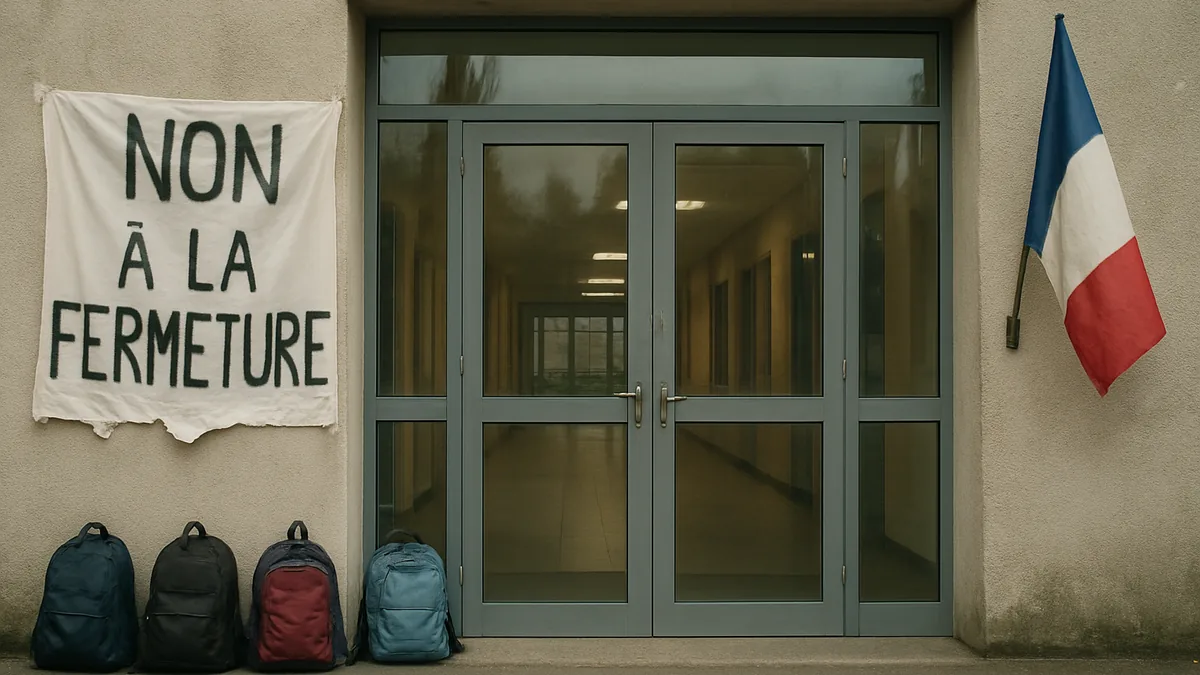
French authorities faced accusations that they had let the situation escalate. They responded by imposing partial and temporary curfews in certain cities, including areas of Paris. The protests initially centred on dilapidated buildings, overcrowded classrooms and teacher shortages, but they quickly widened into anger over the cost of living and wider social unease.
Italy, Albania and Spain have also seen demonstrations of a similar kind. French authorities have not linked crime with migration, and the state does not disclose the identities of people who are arrested and sent to trial. Constitutional laws aimed at equality make it illegal to collect data on ethnicity and race.
French and European politicians divided over blame
Marine Le Pen, the far-right leader and presidential hopeful, and centrist politicians including Macron and Prime Minister Sebastien Lecornu have all accused hard-left groups of fuelling the disorder.
The protests have also struck a chord elsewhere in Europe. Hungarian Prime Minister Peter Magyar said it was now “clear to everyone why Hungary takes the toughest possible stance on immigration,” posting a video on X that showed buildings burning in France.
Polish Prime Minister Donald Tusk, without directly naming France, made his own statement on X a day after the mass demonstrations and looting. “Poland will not repeat the mistakes of other European countries, nor will it pay for them,” he said, adding, “We will be uncompromising on security.”
Dupuy said it did not matter where those who joined the violence had come from. “These protesters were high school students; then professional black bloc and looters joined, too – whether they came from a third or fourth generation of former migrants is irrelevant,” he said. “Eventually, this is a problem of integration, not immigration.”
US midterms shape Trump’s message on immigration
The United States is in campaign mode ahead of key elections in early November that will determine which party controls Congress. With attention focused on the midterms, Republicans appear keen to use the unrest in Europe to build support for Trump’s Make America Great Again (MAGA) movement and its tough policies on immigration and border security.
US Vice President JD Vance wrote on X: “Western liberals imported the third world into France and other countries in the name of diversity and compassion.” He added, “They ignored fundamental questions of assimilation and compatibility.”
Some critics have argued that Trump is trying to draw attention away from the cost-of-living crisis in the US. Prices are rising there amid the Iran war he launched and the subsequent closure of the Strait of Hormuz, which has pushed energy prices to new highs.
Trump said that events in France should serve as a warning to American voters. Speaking at a rally in the US state of Kansas, he said: “If you want to see what is at stake in this election, just look at what’s happening in France.”