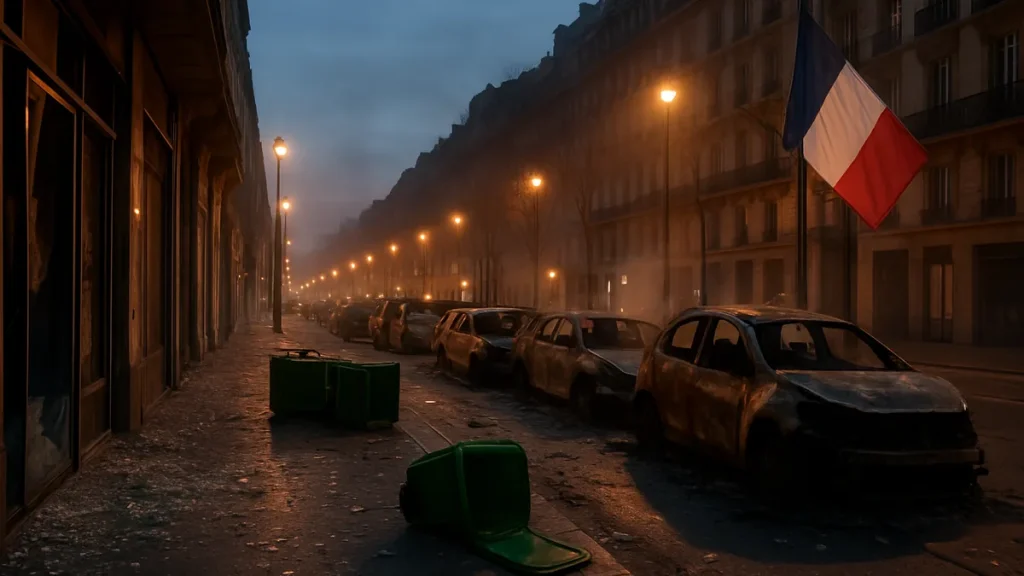

Mass protests across French cities over the weekend descended into riots in many places, and far-right politician Marine Le Pen has moved to capitalise on the turmoil ahead of the presidential election in April 2027.
On Sunday, Le Pen, leader of the National Rally (RN), criticised President Emmanuel Macron’s handling of the crisis in a video statement. She said the outgoing centre-right leader had lost his “credibility or authority”, and argued that ordinary people were squeezed between his austerity, which she described as “hammering” them, and “insurrectionary activists” on the left.
Le Pen blames the left and immigration for the unrest
Le Pen placed the blame for the looting and destruction that followed the demonstrations on the political left and on “decades of immigration” to France. She presented her party as the force able to restore order, but offered no firm evidence for her assertions that immigrants had led the rioting.
Le Pen is already well ahead in recent polls, and some observers say she is likely to become the next leader. In her video, she acknowledged that protesters had “legitimate social grievances”, but said Macron’s government was “exhausted, disoriented and seemingly incapable” of addressing them.
She also attacked the administration’s contested budget plans and promised to free the French from “Macronist toxic policies”. The article noted that she did not mention her own party’s proposal for strict spending cuts aimed at reducing rising public debt. Her remarks also fed online narratives claiming that immigrants, rather than French people, were driving the unrest.
Violence, arrests and damage across French cities
The Ministry of the Interior said about 550,000 people demonstrated on Saturday, while protest organisers put the figure at 800,000. Those taking part included students, trade unions and supporters of the “yellow vests” movement, which had protested against inflation in 2018, at the start of Macron’s presidency.
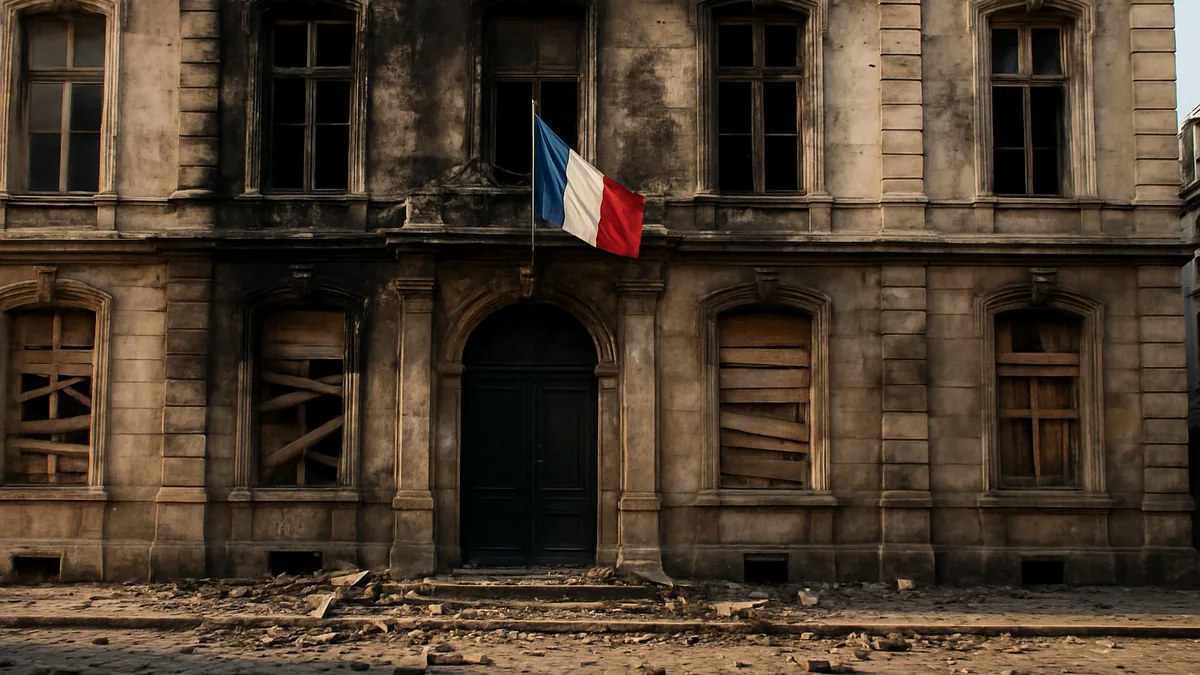
Most demonstrators marched peacefully, but masked groups attacked city halls in several cities on Saturday. The 19th-century City Hall in Limoges was badly damaged, a tourist office was set ablaze in Lyon, and hooded individuals attacked a police station in Marseille. The city has since banned protests.
Looters targeted hundreds of shops in several locations. In Paris, storefronts were smashed and broken glass covered the Place de la Republique, while the Marianne statue, a key symbol of France, was partially dismantled. Scenes of burned cars and defaced public buildings also emerged from across the country.
Paris police said one person died of a heart attack but did not give further details. Protesters and rights groups have accused police of using disproportionate force throughout the demonstrations. Officials said about 2,400 people had been arrested by Sunday, and several police officers were injured.
In a national address, Macron condemned the rioters and accused far-left groups of attacking police and public buildings. On Monday, Prime Minister Sebastien Lecornu said partial curfews would be imposed in some areas.
How school protests fed into a nationwide movement
The unrest began with school protests on September 21 in a poor borough of Paris. Pupils were objecting to dilapidated infrastructure, teacher shortages and tight class schedules. The demonstrations spread quickly across the country and coincided with a nationwide public sector strike against the government’s plans to cut public spending.
Far-left leader Jean-Luc Melenchon of the France Unbowed party, or LFI, has joined the protests. Analysts say he could face a backlash if anger over the destruction grows, which would give Le Pen a stronger platform.
Historical parallels with 1968 and the yellow vests
Peter McPhee, a professor emeritus at the University of Melbourne, described the protests as a “Christmas present” for Le Pen’s National Rally ahead of the presidential election. He called her move “profoundly worrying”, arguing that it was easy for her to link the attacks on buildings and shops to migrants, and that people are drawn to simplistic, often racist, answers to economic and social problems.
Analysts note that right-wing and centrist parties have historically gained after mass protests and disorder, as frightened voters turn to them to avoid anarchy. In May 1968, student-led protests erupted over poor schooling, rising inequality and stagnant wages, and were joined by striking workers and left-wing parties. Then-President Charles de Gaulle’s government initially struggled to contain the demonstrations, and he briefly left for a French base in West Germany.
The protests later lost momentum as public services shut down. De Gaulle dissolved parliament and called snap elections for June 1968, blaming the left for the violence. His conservative Union for the Defence of the Republic party won a landslide, while left-wing parties lost more than half their seats.
During the 2018 yellow vest demonstrations, working-class protesters opposed tax rises under Macron and found support within Le Pen’s party, although the left also tried to win them over. Many of those supporters later voted for her party in the 2022 legislative elections to punish the Macron government, a shift that still shapes a deeply divided parliament.