
Researchers from Northwestern Medicine, UT Southwestern Medical Center and UTHealth Houston tracked 13 astronauts during six-month stays aboard the International Space Station. Their findings suggest that crewed trips to Mars may be more feasible than previously believed.
The study, published in the journal Circulation, is described as the first to examine how the human heart reacts to Martian gravity after an extended period of weightlessness.
Why heart health matters for Mars missions
NASA has been concerned about whether astronauts’ hearts can adjust when moving from the microgravity of deep space to Mars, where gravity is roughly one-third of Earth’s. Returning crews have previously suffered orthostatic hypotension, a sudden fall in blood pressure on standing that brings dizziness, because spaceflight shrinks muscle and heart mass. In this study, most astronauts avoided those problems by following NASA’s Exercise Countermeasures program.
Also read: Fair river water sharing boosts economy in droughts, study finds
The crew exercised for up to two hours daily, including 30 to 45 minutes of endurance training and 60 to 75 minutes of resistance work. Dr. James Thomas, a cardiology professor at Northwestern University Feinberg School of Medicine and the study’s senior author, said the results give “strong reason to think astronauts can go to Mars and work well there.”
Heart scans and simulated Martian gravity tests
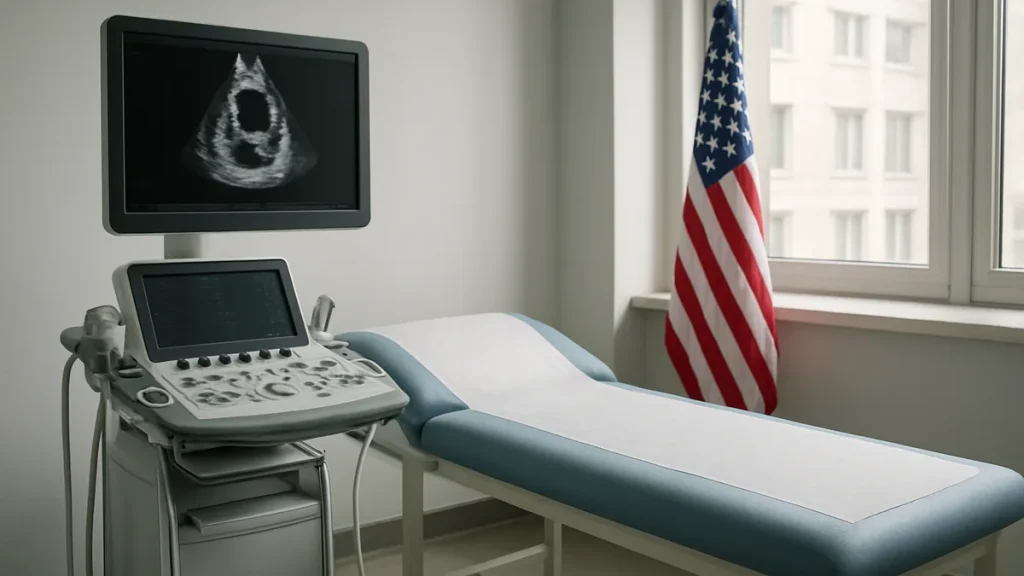
Dr. Thomas worked with Dr. Benjamin Levine and Dr. Michael Bungo to analyse ultrasound heart scans, known as echocardiograms, taken before, during and after each mission. The astronauts scanned one another every few weeks in orbit, while Dr. Thomas guided them live from Earth, sometimes as early as 3 a.m.
Early in the flights, the astronauts’ hearts pumped and filled with less blood than usual. Their heart function gradually returned to normal as the missions continued.
After landing, researchers mimicked arrival on Mars by tilting the astronauts 22 degrees upward while they lay down, a position that shifted blood toward the lower body. The tests showed no major heart problems, meaning the hearts handled the simulated Martian gravity about as well as they had handled standing upright on Earth before the mission.