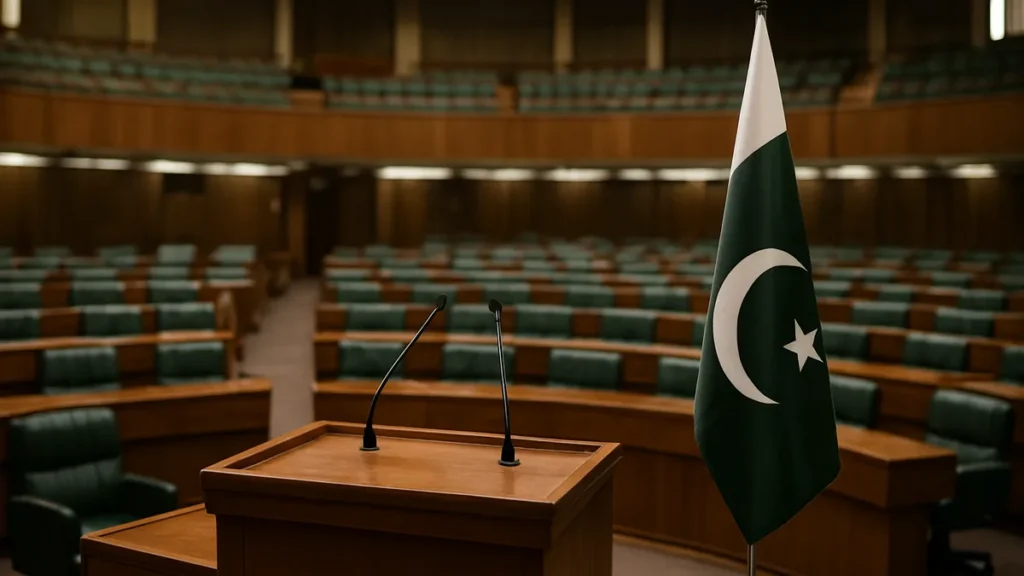
Pakistan People’s Party chairman Bilawal Bhutto Zardari on Thursday called on the Pakistan Tehreek-e-Insaf to end its boycott of parliamentary committees, arguing that the absence was weakening parliament and limiting its ability to voice public concerns. Addressing the National Assembly in Islamabad, he appealed to Leader of the Opposition Mahmood Khan Achakzai to use his authority to bring opposition lawmakers back into committee work.
Bilawal said the government and treasury benches had a duty to make parliament function properly, but the opposition shared that responsibility. “The responsibility of activating this House also rests with the opposition,” he said. He warned that anyone who wanted parliament to stay weak and ineffective would get their wish if elected representatives failed to carry out their roles.
PPP chairman urges opposition to join electoral reforms panel
Bilawal said the opposition’s decision to stay away from committees, including the finance committee, had weakened the legislature and left constituents without a voice in major policy discussions. He argued that opposition lawmakers should raise the concerns of voters and parties through parliamentary forums rather than remaining outside them.
Also read: PTI shifts decision-making power to parliamentary party
He directed his appeal at Achakzai, asking him to use the authority that PTI founder and former prime minister Imran Khan had exercised over opposition leaders in both the National Assembly and the Senate. The aim, Bilawal said, was to persuade lawmakers in both houses to return to committee work.
Bilawal specifically urged the opposition to nominate its members to the electoral reforms committee. He said taking part would give the opposition a chance to raise allegations of electoral manipulation and help improve the system before future polls. Parliament had already passed a resolution to form the committee, he noted, and the opposition should send its nominees’ names to the relevant office.
The PPP chairman said the panel could examine PTI’s complaints about alleged rigging and work on solutions before the next general elections, local government polls and by-elections. Electoral reform, he argued, required engagement from political parties rather than a walkout from parliamentary forums. He added that the drive to strengthen parliament would remain incomplete without the participation of key stakeholders.

Bilawal seeks briefing on regional tensions and economic risks
Bilawal also called for a comprehensive briefing to parliament on Pakistan’s changing geopolitical, economic and security situation. He warned that the country could face serious challenges in the days, weeks and months ahead, and asked the finance, foreign affairs, defence and interior ministers to brief the House on developments affecting Pakistan and the wider region.
Lawmakers, he said, needed to understand the potential risks facing the country, how regional developments could affect it, and what preparations the government was making to deal with emerging problems. He pointed to disruptions and difficulties along maritime routes, naming the Strait of Hormuz, the Red Sea and the Balkans. He asked for an assessment of how those disruptions could affect the global economy and Pakistan’s economy.
Bilawal further requested a parliamentary discussion on developments linked to the Iran conflict. He asked the government to explain how the situation could shape Pakistan’s economic outlook and regional security. He also said parliament should be told about the implications of Pakistan’s defence agreements, including their possible effects in the coming days.
The PPP chairman stressed that every member of parliament had a right to information about the challenges facing the country and the steps the government was taking in response. He said the briefing should address both immediate threats and the wider strategic environment, so that lawmakers could weigh the risks and contribute to national decision-making.
Call for parliamentary discussion on terrorism and security
Bilawal asked that parliament also be informed about the internal security situation, particularly the threat posed by terrorism. Lawmakers, he said, needed details of the measures the government was taking, the threats expected in the future, and the preparations under way to counter them.
He urged the government to set out what further steps were needed to meet security challenges. Parliament, he said, should have an opportunity to discuss how political parties and other stakeholders could contribute. He said the discussions should cover terrorism, defence agreements, economic concerns and other issues affecting the country, stressing that collective engagement was essential.
Bilawal maintained that the government could engage the opposition on these matters, but opposition lawmakers also had to use their parliamentary positions and take part in the process. He warned that efforts to set up an electoral reforms committee and to secure agreement among stakeholders on national issues would lose their effect if opposition representatives stayed away.
He called on the opposition to resume its place in parliamentary committees and to work with other parties to strengthen parliament’s role in resolving electoral disputes, security threats and economic challenges. His remarks combined a call for greater opposition participation in parliamentary business with a demand for fuller briefings on domestic security and a rapidly changing regional environment.