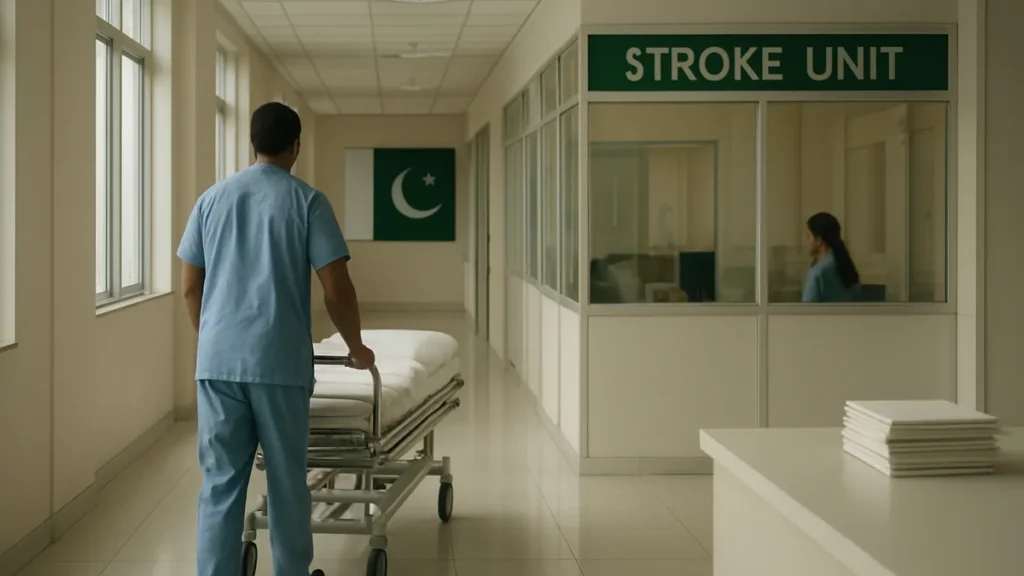
Punjab Chief Minister Maryam Nawaz Sharif has announced Rs5 billion for stroke treatment and ordered officials to make sure no patient is turned away for lack of money. She made the announcement on Thursday at an event marking the distribution of stroke cards. She stressed that fast intervention is needed to prevent permanent disability and save lives.
Addressing the gathering, she told her team to release the funds immediately and asked doctors to contact her directly if they faced further financial problems. “I don’t want anybody to suffer because you don’t have money,” she said. She also praised doctors Qasim Bashir and Asif Bashir, along with their teams, for treating patients and training nurses and other medical staff in specialised stroke care.
Time-critical treatment and the cost of clot-dissolving injections
The chief minister described stroke care as a time-sensitive emergency. In her account, patients must receive a clot-dissolving injection within four-and-a-half hours of symptoms starting, or they face a higher risk of lasting damage. She said a single tenecteplase (TNK) injection costs around Rs300,000, a sum many families cannot pay.
Maryam recounted meeting a 42-year-old driver who had suffered a stroke but received the injection in time and was now undergoing rehabilitation. Doctors told her that without the treatment he could have suffered irreversible damage or become bedridden. She said he began to feel symptoms while driving, and friends took him to hospital, where prompt care helped him keep the use of his limbs.
“Every minute matters,” she said, urging people to seek immediate medical help if they noticed any of the following:
- facial drooping
- weakness in an arm or leg
- restricted movement
- slurred speech
Stroke centres multiplying across Punjab’s districts
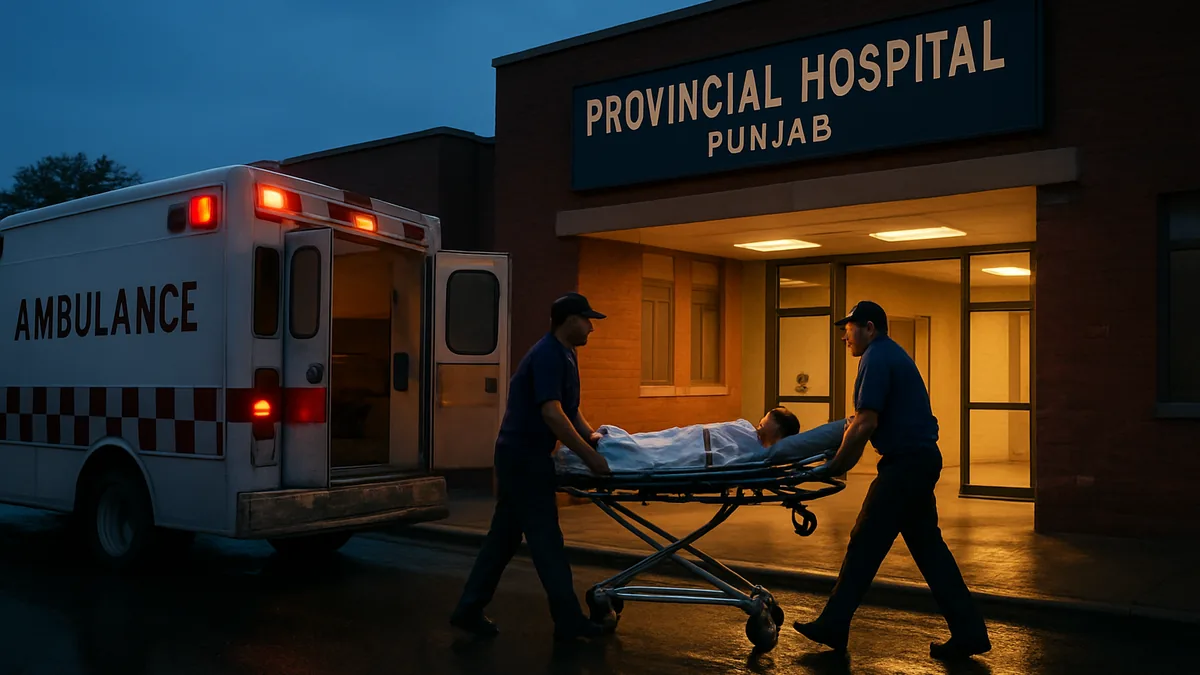
Maryam said the number of operational primary stroke centres in Punjab had risen from 16 to 40 across 23 districts within a few months. Another 15 centres are under development and are expected to be completed in the coming months. The goal is to spare patients in distant districts the trip to Lahore, where delays can worsen their condition. She gave the example of Rahim Yar Khan, where a stroke patient might not reach Lahore in time, especially without their own transport.
The provincial government is also expanding comprehensive stroke centres, which can carry out more advanced procedures to remove blood clots. She said three such centres were operational and four or five more were planned. She named the Punjab Institute of Neurosciences in Lahore and the Rawalpindi Institute of Cardiology as existing facilities. She also cited treatment at Sheikh Zayed Hospital in Rahim Yar Khan, saying patients in south Punjab can now access specialised care without travelling to Lahore. Planned sites include Holy Family Hospital in Rawalpindi and hospitals in Multan and Faisalabad.
Maryam called for more investment in specialist neurological nursing and in training doctors and physicians. She also urged the government to run sustained public awareness campaigns on stroke symptoms, risk factors and the need for rapid treatment. She listed high blood pressure, diabetes, irregular heartbeat and high cholesterol among the risk factors. People with possible symptoms should contact emergency services or go straight to the nearest stroke centre, she advised. She praised Rescue 1122, saying its head, Dr Rizwan, had told her the service carried about 85 stroke patients a day to the nearest centre.
Cancer, cardiac and children’s hospital plans in Punjab
Maryam outlined a wider push to bring specialised healthcare closer to patients and reduce the financial and logistical strain on families. A 1,000-bed public-sector cancer hospital is being developed in Lahore and will offer free treatment to patients who cannot afford care. She expected it to become operational within weeks. Cancer treatment centres equipped with modern machinery and funding are also being set up at divisional headquarters. She directed provincial health secretary Azmat Mahmood to speed up completion of the cancer facilities.
Catheterisation laboratories are being established in 20 districts to improve the diagnosis and treatment of heart disease, and several are already operational. Maryam cited the Nawaz Sharif Institute of Cardiology in Sargodha. She said the Jinnah Institute of Cardiology in Lahore is being developed to provide advanced cardiac care, including what she described as Pakistan’s first heart transplant programme. She urged health officials to establish at least one modern specialised paediatric centre in every divisional headquarters, so parents do not have to bring seriously ill children to Lahore. She also referred to a planned Nawaz Sharif Medical District along Lahore’s Ring Road, which would cover blood disorders, genetic diseases, orthopaedics and children’s illnesses.
Free services, complaint channels and patient dignity
Maryam said 100 million people had received treatment at government hospitals over the past year, and the provincial government had provided free medicines worth Rs100 billion. Government hospitals, she said, offer free consultations, diagnostic tests, medicines and surgeries regardless of a patient’s background. She acknowledged that improvements are still needed on waiting times, cleanliness and treating patients with dignity. Cameras have been installed in hospitals, and announcements are being made urging patients to report staff who demand money or commit other irregularities.
She highlighted a programme for children needing heart surgery, where around 15,000 children had previously been waiting. Through a public-private partnership, the government cleared that backlog, she said, and more children have since been treated. The programme has also treated children from Khyber Pakhtunkhwa, Azad Jammu and Kashmir, Gilgit-Baltistan, Sindh, Balochistan and Islamabad. The province has also funded kidney and liver transplants for patients who could not otherwise afford them. Field hospitals, mobile clinics, workplace healthcare facilities and mobile dental units have been added, and an air ambulance flew a woman with a spinal injury from Mianwali to Lahore.
Maryam urged doctors and hospital administrators to shorten queues, improve patient management and ensure timely diagnosis. She called on health officials to keep waiting lists as short as possible and to make sure money does not stop anyone from getting treatment. “The people will be satisfied, and God will also be satisfied,” she said.