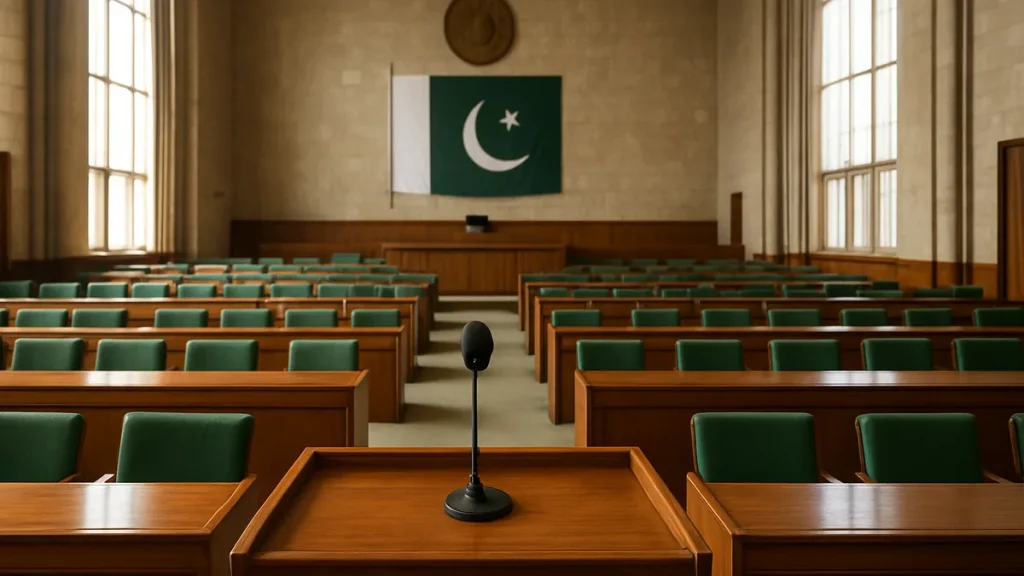
JUI-F chief Maulana Fazlur Rehman told the National Assembly on Wednesday that the federal government had gone back on an understanding meant to defuse the PTI’s long march on Islamabad. He said Prime Minister Shehbaz Sharif had asked him to persuade the party to call off its protest before the government changed course and imposed an emergency and governor’s rule in Khyber Pakhtunkhwa.
Fazl said PTI leaders had approached him during the march and asked him to help resolve the standoff. He then held talks with the prime minister and opposition leaders in an effort to prevent a confrontation. His account of those talks was given in parliament and is the government’s account only as he presented it.
Fazl’s account of the failed deal with PTI
Fazl said that after lengthy discussions, the prime minister asked PTI to end the march. The party, he said, was seeking access to its jailed founder Imran Khan and medical treatment for him. Fazl said he had tried to bring the two sides closer so that bloodshed could be avoided and the dispute settled through dialogue.
Also read: Govt holds off-the-record contacts with PTI, PM aide says · PTI leaders clash over Sohail Afridi, long march and talks
According to Fazl, he kept working on the matter after the prime minister’s request. Deputy Prime Minister and Foreign Minister Ishaq Dar later told him, however, that the cabinet did not agree to the proposed course. Fazl questioned why the government had sought his help if it planned to take extraordinary steps against the PTI-led provincial government.
His remarks echoed comments he had made earlier this month. At that time, he said PTI had agreed to call off the march if its demands were met, and that the prime minister had accepted the arrangement before the government moved to impose emergency rule and governor’s rule.
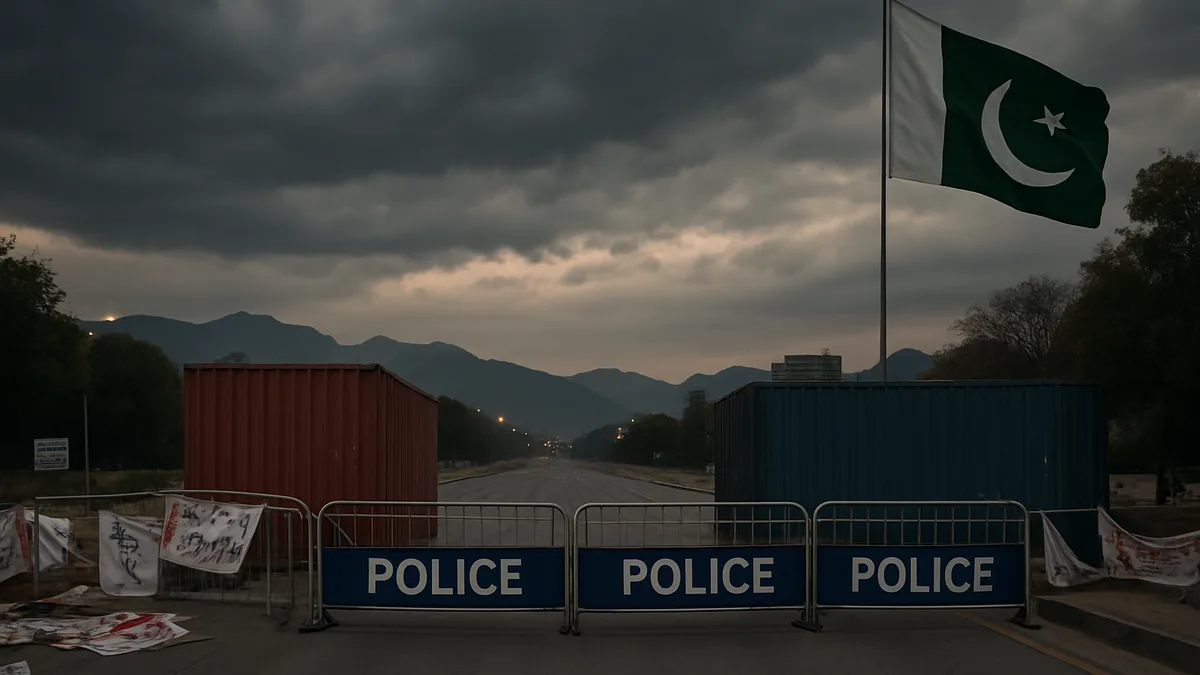
The government has said its decision was driven by security concerns. It also accused the provincial government of failing to cooperate in the fight against terrorism. The PTI’s long march began in Khyber Pakhtunkhwa on October 4, with the party demanding access to Imran Khan and renewed political negotiations. Talks between the government and the opposition did not produce an agreement, and the march deepened tensions between the federal government and the PTI-led province. The federal government then imposed emergency and governor’s rule on October 11, saying the worsening security situation required intervention.
Fazl criticises constitutional grounds for the emergency
Fazl said the government could not justify its actions simply by pointing to the emergency powers in the Constitution. In his view, those provisions had to be applied in line with democratic principles and the wider constitutional framework.
“The Constitution has provisions, but where an authoritarian mindset is involved, it misuses the Constitution,” he said. He argued that the government had used constitutional provisions to pursue a political goal.
He referred to Articles 232 and 234, which deal with the proclamation of an emergency and governor’s rule. These, he said, should be read together with Article 2A, which brings the Objectives Resolution into the Constitution. Fazl argued that the government had disregarded the importance of public representation and the people’s mandate while invoking emergency powers.
He said a change of government should come through the people’s vote, not through the use of state power. Even if parties had doubts about a provincial government’s performance, he maintained, removing it through extraordinary measures was no substitute for a democratic process. “Transfer of power should take place through force or through the public mandate — this should be clear,” he said, adding that the government had taken a non-democratic and non-political course.
Fazl also questioned the government’s claim that the intervention was needed because the Khyber Pakhtunkhwa government had failed to deal with terrorism.
Questions over the federal government’s security record
Fazl asked why the same constitutional measures had not been considered for Balochistan, where he said the security situation was also severe. He said officials and other prominent people there faced threats of abduction and referred to reports of officials being kidnapped. He added that members of his party were sometimes unable to travel freely within Balochistan to attend meetings.
He argued that if the failure to maintain law and order was the reason for emergency measures, the government should explain why the same standard was not applied across the board. “Is the federal government successful in maintaining law and order in the country?” he asked, calling on the Centre to account for its own record on militancy.
Fazl also criticised the counterterrorism policies followed since the era of former military ruler Pervez Musharraf. He questioned what successive operations had achieved. The worsening security situation, he said, called for a review of policy failures rather than the removal of an elected provincial administration.
During parliamentary debate on the emergency, government representatives cited rising militant violence. They accused the PTI-led provincial administration of not cooperating adequately with the Centre’s counterterrorism efforts. PTI has rejected the move and says it undermines the provincial public mandate.
Fazl points to JUI-F losses and calls for dialogue
Rejecting claims that his party was soft on terrorism, Fazl said JUI-F had suffered heavy losses in attacks and had spent decades opposing militancy. “My party is a party of martyrs,” he said, adding that his party had lost hundreds of workers and supporters to militant violence. He said those sacrifices should not be ignored because the party disagreed with the government’s political position or its handling of the crisis in Khyber Pakhtunkhwa.
Fazl said he had spent about 25 years confronting militancy and had seen religious scholars and party workers killed. He cited an attack in which, he said, 90 of his associates were killed at a single gathering, and said attacks on his party had continued. He accused the government of dividing political and religious groups rather than bringing them together to address the country’s problems.
He warned against using force to settle political disputes, saying confrontation would deepen divisions and could lead to more violence. He urged the government and opposition to sit down together and draft a new charter of democracy to guard against unconstitutional actions and political bloodshed. “I invite you to sit at one table and establish a new charter of democracy,” he said.
Fazl said the state should act as a unifying force rather than treat sections of the population as enemies, warning that coercive measures could provoke further resistance. He said his party was prepared to resist what it saw as government overreach, while urging authorities to avoid confrontation and return to negotiations. “The country belongs to all of us, not to any general,” he said, arguing that Pakistan’s political future should be decided through constitutional and democratic means.
Fazl also criticised the absence of Pakistan’s defence and foreign ministers from a meeting in Iran, questioning their responsibilities as senior officials. He said a defence agreement was being discussed in Iran while the two ministers were elsewhere, and asked whether the interior minister was also expected to carry out duties there. He concluded by calling for a broader political understanding to tackle governance and security challenges, saying the government and opposition needed to work together to prevent further instability.