
A Lahore court has cautioned lawyers and others involved in the fake-video case concerning Punjab Information Minister Azma Bukhari against disturbing courtroom proceedings. The court indicated that repeated disruptions could lead to restrictions on courtroom access and legal action under the Code of Criminal Procedure.
Judicial Magistrate Muhammad Naeem Wattoo issued this warning in a written order following a contentious hearing on Wednesday. During the session, Bukhari and Pakistan Tehreek-e-Insaf (PTI) social media activist Falak Javed exchanged heated exchanges related to the alleged circulation of a doctored and inappropriate video purportedly featuring the provincial minister.
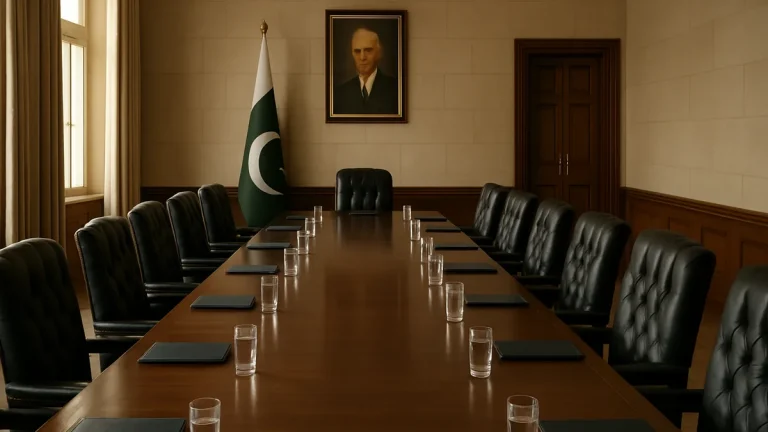
The court emphasized the importance of maintaining decorum and dignity in the courtroom, clarifying that open access to the hearings does not permit interference with judicial processes. It stressed that any recurrence of such conduct might result in actions under Section 352(1) of the Code, including limiting courtroom attendance.
The order also addressed concerns about inaccurate media coverage, including a false claim by a YouTuber that arrest warrants had been issued against Bukhari. The court directed media personnel to report the proceedings faithfully and without distortion.
On Wednesday, Bukhari appeared in court and provided her statement as the prosecution’s first witness. She had initially requested to testify via video link, citing security concerns and her ministerial duties, but the court rejected this request, requiring her physical presence. This decision was upheld by a Lahore sessions court in August, which ruled that in-person testimony was necessary to ensure the accused’s right to cross-examination.
During her statement, Bukhari clarified that she was the complainant, not the accused, and described the case as one involving the dignity and honor of a woman. She recounted discovering social media posts on the night of July 24-25, 2024, alleging a leaked video of her. She noted that Falak Javed’s X account had circulated the video widely.
Following this, Bukhari approached the Lahore High Court, where after several hours, a petition was taken up resulting in an order for action against those circulating the material. Subsequently, the National Cyber Crime Investigation Agency registered a case based on her complaint, naming suspects including Falak Javed and Muhammad Shafique. The case has now advanced to the evidence stage, with Bukhari’s statement recorded during Wednesday’s hearing.
Tensions escalated during the proceedings when Bukhari and Falak exchanged sharp remarks. Bukhari accused the accused of showing no remorse and objected to the tone used by Falak, prompting court intervention. She also raised concerns about the presence and behavior of individuals accompanying the accused, requesting restrictions on non-essential attendees and YouTubers at future hearings.
Bukhari explained that her initial request to testify via video link was partly to avoid direct confrontation with the accused and their supporters. After completing her examination-in-chief, she urged the court to proceed with her cross-examination immediately, citing her ministerial responsibilities and concern that the defense might use delays to prolong the trial.
The defense sought an adjournment, which the court granted as a final opportunity, scheduling cross-examination for September 12 at 10 a.m. The court directed the defense counsel to be fully prepared and warned that failure to proceed could lead to alternative measures, including recording Bukhari’s testimony via video link.
Additionally, the court noted the submission of a fresh charge sheet against co-accused Shahabuddin, who waived the statutory seven-day notice period. Charges were framed against him, and he pleaded not guilty, opting to face trial. Applications for exemption from personal appearance by co-accused Haider Ali and Tufail Ahmed were also approved for the hearing. Falak Javed was produced from custody, while other co-accused appeared on bail.
The fake-video case originated in July 2024 when manipulated material allegedly depicting Bukhari began circulating on social media. She has consistently maintained that the video is fabricated and that its dissemination amounts to an attack on her dignity.
Following Wednesday’s hearing, Bukhari reiterated that personal attacks and character assassination should not be dismissed as political rivalry. She warned that those employing fake news and falsehoods as political weapons would be held accountable in court.
In a related statement, Bukhari expressed readiness for cross-examination and said she had waited in court for the accused to be produced, but the defense again requested an adjournment. She urged the court to ensure the accused’s presence as per its orders to allow her statement to be recorded in their presence.
Bukhari emphasized her preparedness and denied any intention to avoid cross-examination, criticizing what she described as a propaganda effort by YouTubers. She stressed that attacking a woman’s dignity through fabricated videos cannot be justified as political disagreement and insisted that those spreading falsehoods would face legal consequences.
She further stated that the case should not be framed as a political dispute, highlighting that the alleged circulation of fabricated material targeting a woman’s reputation is a distinct issue. The matter of misleading reporting and courtroom disruptions was also raised during the hearing, with Bukhari asserting that those responsible for damaging a woman’s reputation through fake content would ultimately face the law.