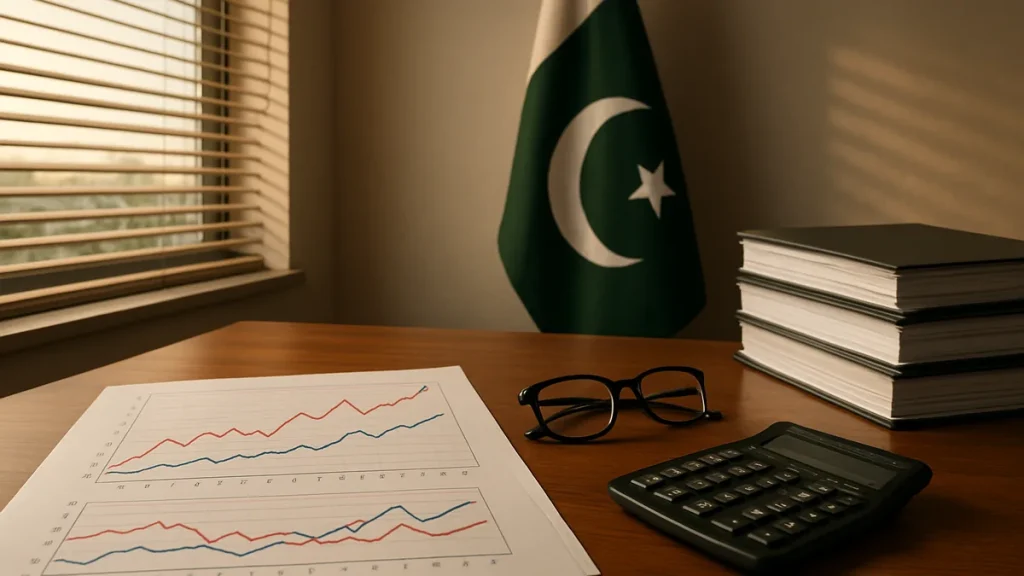
The World Bank said on Thursday that Pakistan’s per capita income could triple by 2050 if the country speeds up structural reforms aimed at drawing in private investment, strengthening institutions and raising productivity. The lender warned, however, that average per capita growth is still sluggish despite gains in macroeconomic stabilisation.
In its latest Pakistan Development Update, titled “Attaining Escape Velocity”, the bank said sustained annual growth of 6.2 to 6.9 per cent could allow Pakistan to reach Vietnam’s current income level by 2050. That outcome, it added, depends on upgrading policies and institutions to the standards of an average middle-income country. A separate assessment from the International Monetary Fund (IMF), released the same day, presented a bleaker picture for the wider region.
Growth and fiscal gains behind the upbeat outlook
According to the report, Pakistan’s real gross domestic product growth rose to 3.7 per cent in fiscal year 2026, up from 3.2 per cent in FY2025. Revenue growth and tighter spending produced a record primary fiscal surplus equal to 2.9 per cent of GDP, while strong remittances helped rebuild foreign exchange reserves.
Also read: Pakistan revises FY26 GDP growth to 3.65%, economy at $450.4bn
The bank said these improvements contributed to credit rating upgrades from S&P and Moody’s, and allowed Pakistan to return to international debt markets with a $3 billion Eurobond issuance. Even so, real per capita growth, which measures how quickly the income of the average Pakistani rises, is still around 1.6 per cent.
Bolormaa Amgaabazar, the World Bank’s country director for Pakistan, said: “Pakistan has made real progress in restoring stability, and markets have taken notice.” She added that the 1.6 per cent pace has stayed stuck at that level and that reforms to drive faster growth are now urgently needed.
Structural reforms the World Bank says are still needed
The report argues that reforms to encourage private investment are necessary if macroeconomic stability is to translate into higher living standards. This is especially pressing because fiscal resources and foreign exchange remain limited. It called for a better business environment, a fairer tax system, easier access to finance and a smaller role for the state in the economy.
Some reforms are already under way, according to the bank:
- Timely power tariff adjustments that helped cut energy subsidies from 1.1 per cent of GDP in FY2025 to 0.8 per cent in FY2026
- Continued trade liberalisation under the National Tariff Policy
- The recent privatisation of Pakistan International Airlines
Sebastian Essl, the report’s lead author, said sustained growth led by the private sector would require a coordinated plan and firm implementation of reforms. The World Bank said such reforms could help Pakistan reach, by 2050, the per capita income levels of countries currently classified at the upper-middle-income threshold.
IMF forecasts regional output contraction linked to Iran war
The IMF forecast that economic output across the Middle East, North Africa and Pakistan would shrink by 1.3 per cent in 2026. It cited the effects of the US-Israeli-led war against Iran on energy production, shipping, tourism, trade and investor confidence.
The fund said the regional economy is expected to rebound with 6.6 per cent growth in 2027. Output in the affected economies would generally remain below the levels projected before the war. The impact has been uneven, with oil-exporting economies under greater strain from disruptions to energy production and shipping, while oil importers have proved more resilient.
The IMF’s baseline assumes the conflict eases in early 2027 and trade gradually normalises during that year, but it stressed that the outlook carries exceptionally high uncertainty. “Further disruption to energy production and trade routes” could push energy prices higher, the fund said, and tighter external financial conditions could also weigh on the outlook. It also flagged investors reassessing AI-driven productivity gains, rising interest rates, inflation concerns and fiscal pressures as risks that could tighten financial conditions further.
Oil-importing economies have been supported by domestic demand, remittances, tourism, favourable financial conditions and policies that shield consumers from higher commodity prices. Growth in the Caucasus and Central Asia is expected to moderate to a more sustainable pace, with output projected to expand by 5.2 per cent in 2026 and 5 per cent in 2027. The IMF urged policymakers to keep prices stable, preserve fiscal sustainability, safeguard central bank independence and pursue structural reforms that raise productivity and create jobs.