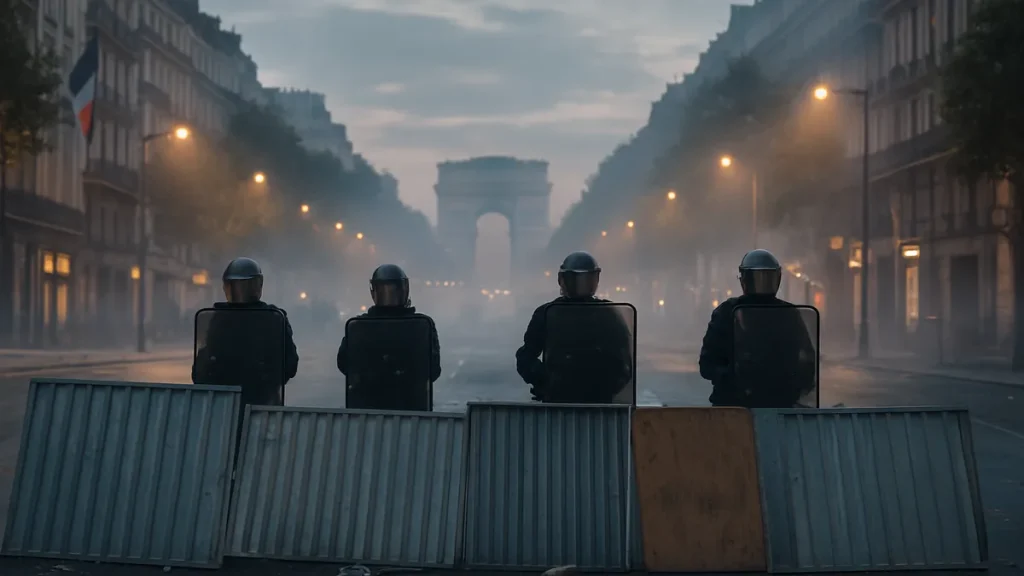
Nearly 1,000 people were arrested as hundreds of thousands of people joined another day of protests across France on Saturday, officials said. The demonstrations were largely peaceful for much of the day, but some clashes broke out late in the evening.
In several cities, including Paris, police used tear gas and water cannon to disperse crowds. In Marseille, barricades were set alight, and in Bordeaux, people tore boards from a shop. Officials have so far avoided a repeat of the rioting and looting seen the previous weekend, which led to some of the worst scenes of disorder in France’s modern history.
Crowd estimates and heavy security across the country
The interior ministry said an estimated 410,000 people took part in Saturday’s protests. The unions put the figure at about 800,000, a significant gap between the two counts.
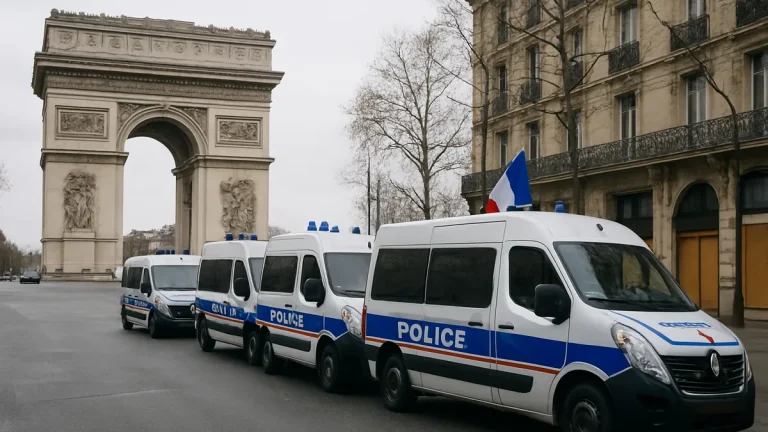
Some 70,000 police officers were deployed, and authorities imposed restrictions in several cities. The aim was to stop the protests, which are over the cost of living and poor conditions in schools, from descending into the kind of chaos that overwhelmed officers the previous week. During that disorder, hundreds of businesses were looted and buildings were set on fire.
President Emmanuel Macron had earlier this week decreed that only demonstrations organised by recognised trade unions would be permitted. Hundreds of people have also been jailed for vandalism, arson and looting after fast-track court hearings in recent days.
Clashes and arrests in Paris, Marseille, Bordeaux and Lyon
In Paris, clashes erupted at the end of a peaceful march that ran from the Porte d’Italie towards Porte de Vincennes. The police operation included an elite unit that usually deals with organised crime and counter-terrorism. Some protesters built makeshift barricades and threw objects at officers, while police charged groups of masked youths who were smashing the windows of a car dealership.
Interior Minister Laurent Nuñez said that “several thousand radical activists gathered at the rear of the march, including around 500 individuals identified as rioters.” He later said that nearly 1,000 people had been arrested and that the figure would rise.
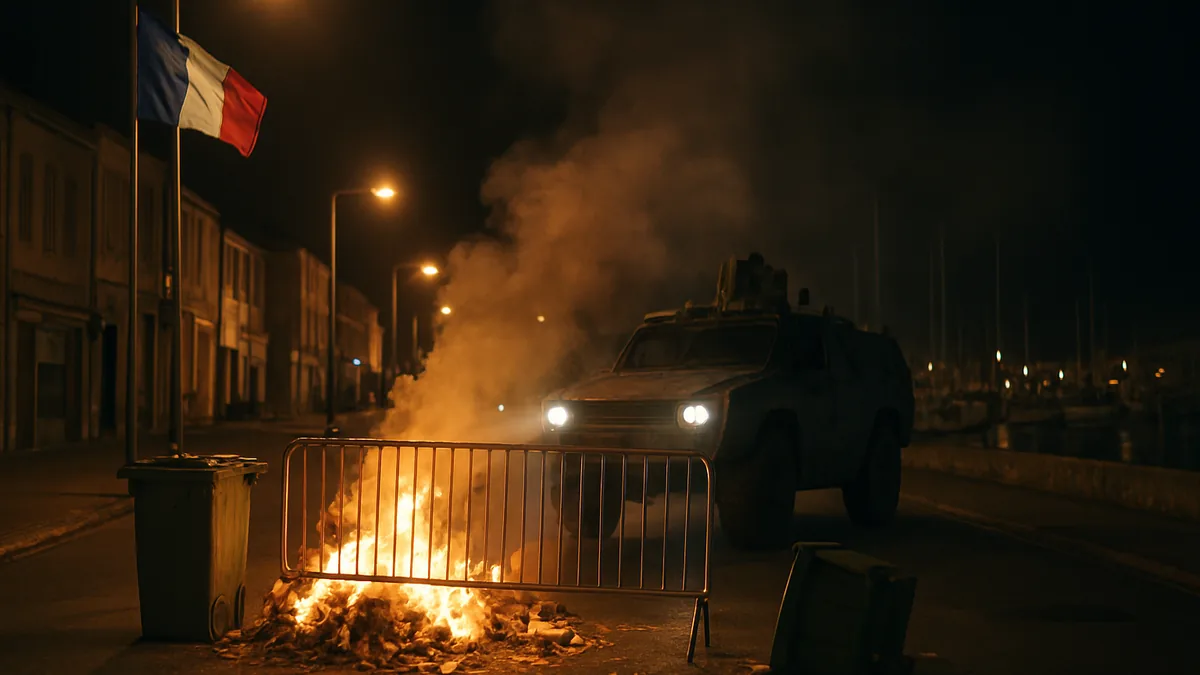
In Marseille, rubbish bins were set ablaze and metal sheets used to block streets. A law enforcement vehicle was seen driving through a burning barricade in the port city, France’s second-largest. In Bordeaux, protesters dressed in dark clothing and face coverings were seen taking boards from a building to build a barricade.
In Lyon, police used tear gas to break up a crowd that had reportedly gathered in an area the local prefecture had declared off-limits. One protester, speaking in France’s third-largest city, described the scene: “There were around 150 of us, mostly secondary school and university students. Then the tear gas came almost immediately. You could barely see anything in the street.”
Nuñez also said two people had been seriously injured, one in the south-western city of Toulouse and another in Clermont-Ferrand, in central France.
Protesters voice anger at Macron and the government
Many demonstrators said they were frustrated with the government. A peaceful protester in Paris, who gave her name as Zelie, said people had taken to the streets because they were “really frustrated” and had been “suffering a lot” since Macron came to office. The 26-year-old said: “They keep us quiet. They take our money, they tax us a lot and we can’t say anything.”
Two masked teenage protesters, who did not want to give their names, said their generation was in despair and felt abandoned by the government. One of them said looting was “really not good” but argued that it was “because of poverty and the violence of the police.” He said the protests would end “when we have a response to our demands. We really want a change in France.”
Elsewhere in France, around 13,000 people joined a rally in the north-central city of Orléans against the hard-right National Rally party. The event proceeded peacefully.
Protests spread to Europe and the toll of last weekend
Protests driven by similar concerns also took place in other European cities on Saturday. In Albania’s capital, Tirana, riot police fired tear gas to disperse thousands of anti-government demonstrators, and clashes were also reported in Brussels, the Belgian capital.
In Milan, northern Italy, a major security operation involving hundreds of soldiers alongside police prevented protesters from gathering in the city. Many had feared a repeat of the violence seen the previous week, when some protesters started fires, smashed windows and looted shops.
About 550,000 people took part in last weekend’s demonstrations against rising fuel prices and the cost of living, which followed weeks of student protests. The unrest that followed resulted in more than 2,500 arrests. Marches that began peacefully became marred by violence, looting and destruction, and more than 2,000 shops and other businesses across France were said to have been directly affected.
France’s Chambers of Commerce and Industry (CCI) estimated the damage “at hundreds of millions euros.” According to the AFP news agency, one demonstrator lost a hand to a police crowd-control grenade, and about 1,000 police officers were injured. French authorities later said they had been forced to impose overnight curfews in Paris and other cities.
The protests come ahead of France’s presidential elections, which are due in six months, and leading contenders have blamed Macron and his ministers for the unrest.