In Detroit, Michigan, the first question at the US Senate debate between Democrat Abdul El-Sayed and his Republican rival Mike Rogers concerned the economy, the issue voters appear to care about most. El-Sayed did not answer with interest rates, taxes or trade. He turned directly to the US-Israel war on Iran.
Rogers, who is backed by President Donald Trump, was the focus of El-Sayed’s attack. The progressive Democrat said on Wednesday that rising petrol and food prices were tied to the conflict. He called for a War Powers Resolution and accused Rogers of standing too closely with Trump on a war he described as senseless from the start.
Democrats press the economic cost of the war
El-Sayed was referring to legislative efforts aimed at limiting Trump’s power to keep the eight-month conflict going. Across Michigan, Democrats are stressing their opposition to the war as they try to win over voters hurt by higher fuel and grocery bills.
Jonathan Guyer, programme director at the Institute for Global Affairs (IGA), said the war had become a matter of household budgets. “The war in Iran is a kitchen table issue,” he said. He added that voters rarely rank foreign policy as their top concern, but that it is now so closely linked to the economy that, in his view, foreign policy effectively is the economy.
An IGA survey released last month found that 60 percent of potential voters disapprove of Trump’s handling of the war. The group also reported that 81 percent of respondents agreed the conflict had raised the cost of living, a finding that presents a clear problem for Republicans.

Fuel prices climb after shipping disruptions
Shortly after Israel and the United States began attacking Iran on February 28, Tehran started disrupting energy shipments through the Strait of Hormuz. Oil and gas prices rose sharply as a result.
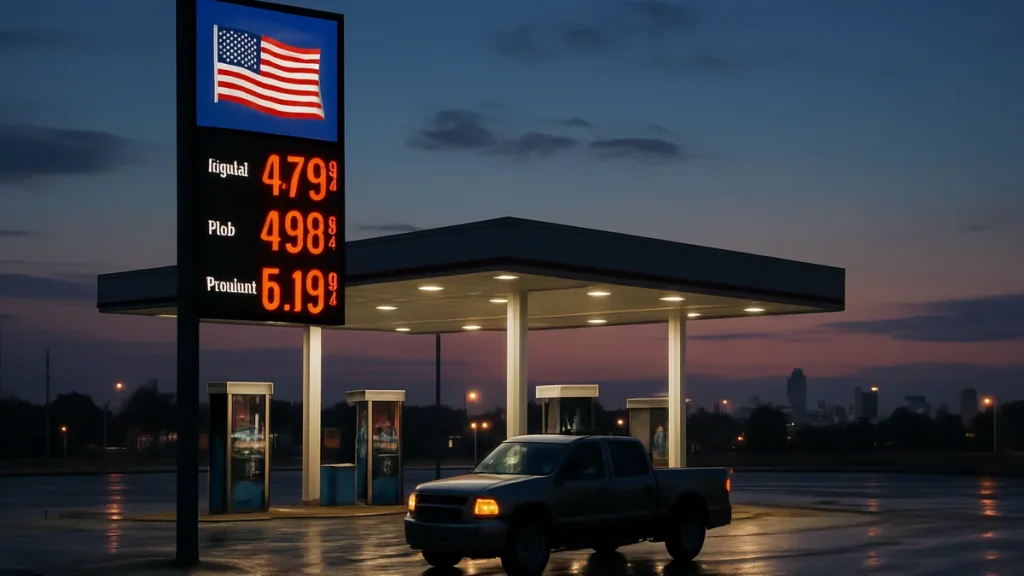
Diesel, which powers heavy machinery and the trucks that carry consumer goods across the country, has reached record highs over recent weeks. Petrol has also become less affordable, and ordinary Americans feel the increase almost every day at the pump.
According to the American Automobile Association (AAA), the average price of a gallon (3.8 litres) of petrol has risen from less than $3 before the war to more than $4.27 as of Thursday. Higher energy and transport costs have spread through the wider economy, feeding inflation at a time when affordability has become a central issue in US electoral politics.
Trump and his allies have argued that the war was necessary to stop Iran from acquiring a nuclear weapon. Before the war, however, Trump had repeatedly said that Iran’s nuclear programme had been “obliterated” by US strikes on the country’s uranium enrichment facilities in June 2025. US intelligence officials have also told Congress they have no evidence that Iran is building a nuclear bomb.
Republicans divided over the war and Trump’s handling
Rogers defended the war during Wednesday’s debate. He warned that allowing Iran to obtain a nuclear weapon would mean losing control of the wider region, and he linked that outcome to high petrol prices. At the same time, he has called for the conflict to end. In a recent campaign advertisement filmed in a grocery store, he said, “The war with Iran needs to end, and end quickly.”
Other Republicans in competitive House and Senate races have taken similar positions. In Ohio, Senator Jon Husted has called for a “quick” end to the war. In Iowa, Congresswoman Ashley Hinson, who is running for the Senate, said she had told Trump the conflict should come to an “immediate and successful end”. In Maine, Senator Susan Collins has pointed to her votes in favour of several War Powers Resolutions.
Trump, the leader of the Republican Party, has suggested he may resume all-out fighting with Iran after the midterm vote next month. He has also described the war as a historic success. “I think it’s one of the greatest things we’ve done. We’ve stopped Iran from having a nuclear weapon,” he told reporters on Wednesday.
Even so, most Republicans still back the war. A Pew Research Center poll released earlier this month found that 63 percent of Republican respondents approve of Trump’s handling of the conflict. The IGA survey, conducted in August, put that figure at 74 percent. Only 34 percent of Republican respondents said they “strongly approve”, down from 40 percent in April.
Guyer said the weaker enthusiasm among Republican voters could hurt the party in the coming elections. “It means that Republicans aren’t necessarily walking away from the president, but their support for him has a lot less conviction,” he said in an interview. He added that this could matter if those voters stay home on election day or are less willing to help in campaigns.
With the vote less than two weeks away, Democrats clearly see the war as a vulnerability for Republicans. They are repeatedly raising the conflict to challenge Trump-backed candidates across the country.
At a Senate debate watch party in Detroit on Wednesday, attended by dozens of El-Sayed’s supporters, Democratic Senator Chris Murphy was asked about the war. Murphy, who recently returned from a visit to the Middle East, answered mainly in economic terms. He said diesel in Detroit was already above $6 a gallon and would rise further if fighting resumed, and he accused Rogers of backing a course that would be a severe blow to the US economy.
Murphy framed the choice for Michigan voters in stark terms. “If you want this war to continue for another year, if you want gas prices to climb to $8 a gallon, vote for Mike Rogers. If you want the war to end, if you want prices to come down, then vote for Abdul El-Sayed.”