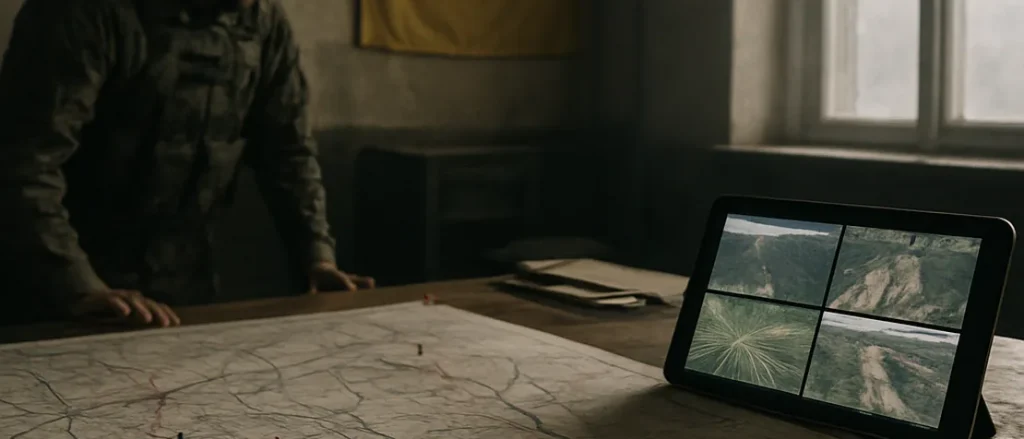

Ukraine has stabilised the front line and “broken Russia’s ability to advance” by killing large numbers of Russian soldiers, Ukraine’s former commander-in-chief has claimed in an exclusive interview. Gen Oleksandr Syrskyi made the remarks in his first interview since he was dramatically removed from his post during the summer.
Syrskyi said Moscow’s overall losses in the war were six times higher than Ukraine’s. “If you count only dead, then it’s up to 11 times,” he added. Neither Russia nor Ukraine officially publishes the numbers of their dead, and Ukraine’s military has said it inflicted record losses on Russian soldiers in September, a claim that cannot be verified.
Syrskyi defends his record on the front line
Syrskyi addressed his sacking and rejected critics who described him as too “old school” to command Ukraine’s new, technologically advanced forces. He pushed back against soldiers who previously served under him and who told the broadcaster they had been ordered to hold their positions even when they were almost surrounded by Russian troops, which led to heavy losses.
UK intelligence chiefs estimate that Russia has lost around half a million men killed in Ukraine since it launched its full-scale invasion in 2022. The US-based Center for Strategic and International Studies believes Ukraine has lost up to 150,000 troops killed by June 2026.
Syrskyi argued that this gap in death tolls, along with technological advances and a strategy of attacking weak points in Russia’s lines while containing its advances elsewhere, explains the current stalemate at the front. He said Russia had managed to seize 61 square kilometres in the first six months of 2026. “It’s an indication that the front line has been stabilised,” he said.
The Institute for the Study of War has also backed this trend. One of its recent reports says that in September 2026, Moscow lost more territory than it gained.
Dismissal and the clash with defence minister Fedorov
Syrskyi had been appointed commander-in-chief in 2024. He had earlier won praise for defending Kyiv at the start of the full-scale invasion in 2022, and for leading a successful counteroffensive east of Kharkiv in the autumn of that year.
President Volodymyr Zelensky dismissed him this summer amid a major dispute with then-defence minister Mykhailo Fedorov. Fedorov had said that, rather than adapting to the changing nature of the war, the army under Syrskyi had blocked his initiatives. Zelensky first fired Fedorov as tensions between the two men became public, but mass street protests then forced the president to also remove Syrskyi. He was replaced by Maj Gen Mykhailo Drapatyi, 43.
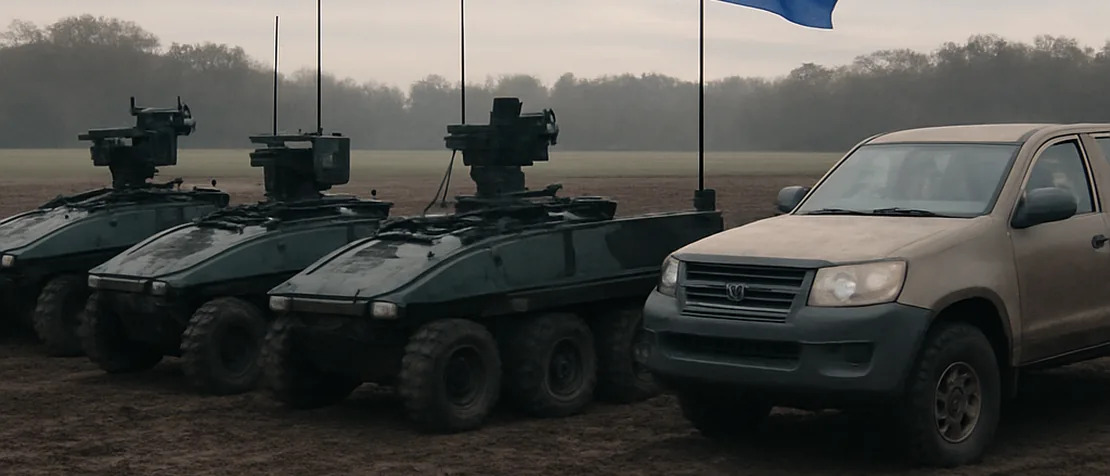
Syrskyi told the broadcaster he had “disagreements” with Fedorov, whom he said “didn’t take into consideration the interests of the army” when buying weapons and supplies. He said Fedorov had created an “imbalance” by prioritising drones while overlooking key front-line equipment such as unmanned ground vehicles, pick-up trucks and motorbikes. Even with drones, Syrskyi said, the army received only half of what it needed.
Fedorov was a popular young minister known for his digital and technological initiatives, and many contrasted him with Syrskyi, whom critics felt was not suited to leading the new technological arms race with Russia. Syrskyi rejected that criticism, saying drone use reached an unprecedented level during his time, including deep strikes more than 2,000km (1,200 miles) behind enemy lines. He said Ukraine was the first country to create the Unmanned Systems Forces as a separate branch of its armed forces, under his command, and that drones now account for 80% of Russia’s losses.
Kursk operation and warnings on future warfare
Syrskyi acknowledged that Ukrainian troops made chaotic withdrawals from the eastern cities of Avdiivka and Vuhledar, and from around Pokrovsk, under his leadership. Soldiers who spoke to the broadcaster said they had been ordered to remain in place at any cost, and that by the time they were told to pull back, it was often too late. Syrskyi did not deny that such situations occurred, but said Ukraine was fighting a far more powerful army.
He said that in 2025 Moscow had an 18-to-one advantage in jets and bombs, and that Russia had two-and-a-half times more artillery pieces and shells than Ukraine. He also argued that Russia could mobilise four million militarily trained men, which he said allowed Russian forces to create chances to push through.
Syrskyi also defended the Kursk incursion, one of his best-known operations, which began in August 2024. The operation ended in a dramatic retreat the following spring, which some soldiers described as “catastrophic”. Syrskyi insisted it was “a necessity”, saying Russian forces had been pushing along all main directions with up to six times more troops than Ukraine had. He argued that the incursion disrupted Russia’s offensive, forced Moscow to redirect troops and gave Ukraine’s stretched brigades in the east and south a chance to recover.
He also warned European allies who doubt that Russia may have territorial ambitions beyond Ukraine. He urged them to begin preparing for war now and to “drop all illusions that [it] will not come”. Syrskyi further predicted that the conflict would become more technological, with more robots, automated systems and artificial intelligence. “Even ordinary weapons now get an AI-based control system to enhance their capabilities,” he said. He added that Russia and Ukraine were racing to develop “active systems of defence” to protect armoured vehicles, but insisted that “the human role will remain definitive [on the battlefield] because [people] will need to control those systems”.