
Noel Tata, chairman of Tata Trusts, the principal shareholder of the Tata group, has opposed the reappointment of N Chandrasekaran as chairman of Tata Sons and a proposed public listing of the group’s holding company. The disagreement has become a public dispute over power, governance and control at one of India’s oldest and most influential business empires.
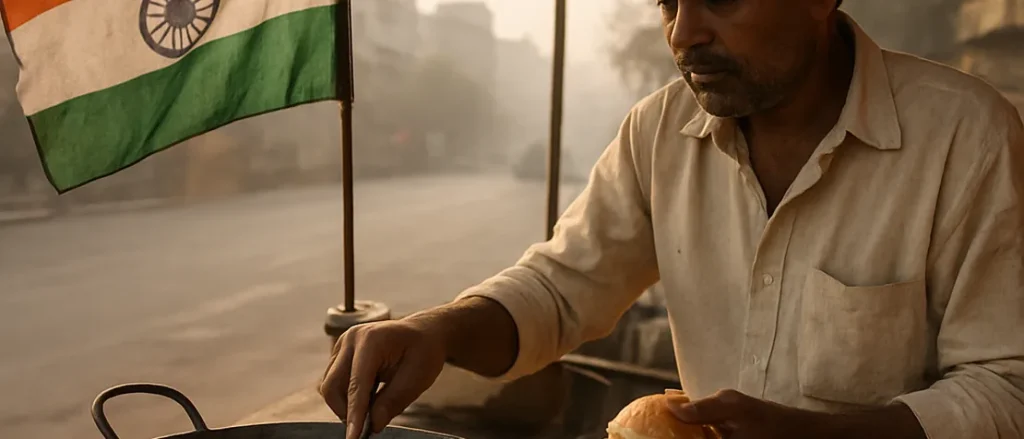
The row is visible well beyond the boardroom. Mansi Kadam, who prepares vada pav for customers in Mumbai, said she knows little about the developments but would not switch from Tata salt. Her loyalty, observers say, reflects how deeply the brand is trusted, and the question now is whether that trust can stay separate from a fight over the group’s leadership.
Boardroom split over listing and chairman
At the centre of the dispute are two issues: the proposed public listing of Tata Sons and the reappointment of Chandrasekaran. Most of the Tata Sons board, including SP Group, its biggest minority shareholder, backed both decisions.
Noel Tata has opposed both resolutions. He argues that a public listing would dilute the group’s philanthropic ethos, and he believes both decisions could be overturned at the annual general meeting.
Shriram Subramanian, head of the independent corporate governance firm InGovern Research, said: “When we say this is a governance crisis, it’s a misalignment of interests between the board [of Tata Sons] and the shareholders [Tata Trusts].” He said he did not expect the brand’s image to be hit immediately, but he raised concerns about the leadership’s ability to handle the challenges.
The tussle has also moved into public view through legal notices and conflicting statements. Venu Srinivasan, vice-chairman of Tata Trusts and a nominee director on the Tata Sons board, has sought a probe into alleged governance lapses at some trusts. The trusts deny that any lapses occurred.
Strain on a brand built over decades
Tensions have been building since the death of former chairman Ratan Tata in 2024. Noel Tata is Ratan Tata’s half-brother, and Ratan Tata had designated him as successor. Experts say Ratan Tata’s death left a leadership gap in the group’s public image, because his philanthropy and leadership had become closely tied to the brand.
The group has topped India’s most valuable brand list, compiled by valuation consultancy Brand Finance, since 2018, according to its website. The group describes Tata Sons as the “fastener keeping the many disparate elements of the whole together”. Tata Trusts, which represents seven philanthropic trusts holding the majority stake, is widely seen as the group’s moral compass.
Harish Bijoor, a business and brand strategy consultant, said the group once had a unified reputation. “Once upon a time, there was a unified audience which said the Tatas are good people with good governance. Today, the opinion is divided,” he said. He added that most consumers appear unfazed, while business partners, investors and employees have split, with few agreeing on which side is right.
The group did not respond to detailed questions sent by email.
Past controversies and the 2016 Mistry removal
The Tata group has faced controversy before. Its biggest came in 2016, when the Tata Sons board abruptly removed Cyrus Mistry as chairman and brought back Ratan Tata as interim head. A long legal battle followed, which ended in 2021 with a Supreme Court ruling in the Tatas’ favour.
Other episodes include protests over industrial projects, scrutiny of its telecom business during a spectrum allocation controversy, a high-profile dispute with Japan’s Docomo, and recent questions over Air India’s performance. Some acquisitions drew criticism, including Tata Steel’s troubled Corus deal, while Tetley and Jaguar Land Rover were successful.
Morgen Witzel, a fellow at the Exeter Centre of Leadership, said in an email interview that the group’s community work has built its reputation. He pointed to healthcare and education for people in hundreds of villages around Jamshedpur, support for employees who want to start their own businesses, and backing for thousands of female entrepreneurs linked to Tata Motors in Pune.
Proposals to avoid a listing and open questions
Noel Tata has put forward two proposals to avoid a listing. The first is for the Tata Sons board to buy back part of SP Group’s minority stake, which he describes as a “fair and equitable solution” to the group’s demand to monetise its holding. The second is to restructure Tata Sons by merging two businesses with itself, which would change how India’s central bank classifies the company and could help the group avoid a listing.
It is unclear whether he can pull this off, because unlike Ratan Tata he has not yet consolidated power. Subramanian said Ratan Tata’s larger-than-life image was partly behind the current conflict, since people were deferential to him and his successor became known only after his death, through his will. He said a transition overseen by Ratan Tata himself would have been smoother.
Bijoor has called on the group to publish a “white paper” on how the conflict ends. “They stood for transparency, and they must never shed that,” he said.
How the group handles these tensions may offer a glimpse of its future. The outcome will be watched closely across corporate India, where Tata’s governance and business practices have long been regarded as a benchmark.