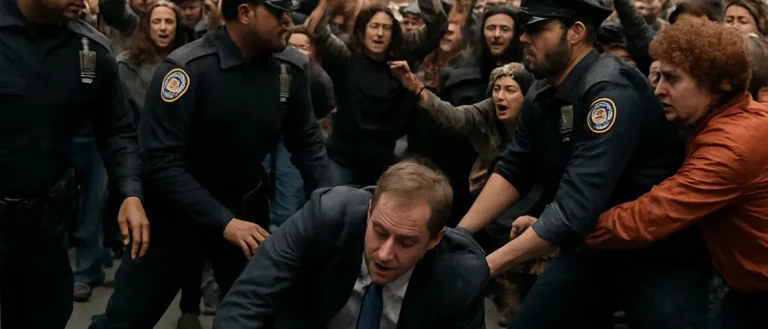


Pakistan’s federal government has reportedly resolved to bring in an emergency in Khyber Pakhtunkhwa, according to well-informed sources who spoke on Saturday. The move comes as the Pakistan Tehreek-e-Insaf (PTI) advances its long march toward Islamabad.
The decision emerged from a meeting at Aiwan-e-Sadr between Prime Minister Shehbaz Sharif and President Asif Ali Zardari. The prime minister was accompanied by Deputy Prime Minister and Foreign Minister Ishaq Dar, Adviser to the Prime Minister on Political Affairs Rana Sanaullah, Interior Minister Mohsin Naqvi, Law Minister Azam Nazeer Tarar and others. Senators Sherry Rehman, Saleem Mandviwalla, Syed Naveed Qamar and Dr Asim Hussain of the PPP were also present.
Cabinet to take up KP emergency proposal on Sunday
A statement issued by the President House said the participants had agreed to call separate sessions of the National Assembly and the Senate on October 13. Insiders added that the federal cabinet had been asked to convene at 9:30am on Sunday to approve an emergency in Khyber Pakhtunkhwa.
Separately, the prime minister telephoned Jamiat Ulema-e-Islam (JUI-F) chief Maulana Fazlur Rehman to congratulate him on performing Umrah. He then invited the JUI-F leader to a meeting at the Prime Minister’s House, and the invitation was accepted.
Fazlur Rehman presses for talks instead of emergency
During that meeting, Fazlur Rehman again urged the premier to open talks with the PTI in order to end the country’s political crisis. Sources said he argued that negotiations were a better route than governor’s rule or an emergency in the province, and he repeated his backing for substantive dialogue between the government and the party.
Sharif, for his part, briefed the JUI-F chief on the government’s attempts to engage the opposition and said every possible effort was being made to settle the matter through mutual understanding. Fazlur Rehman asked the prime minister to consult his party’s core committee and requested more time to consult the opposition and PTI on the impasse. He later contacted opposition leaders and PTI leadership in Islamabad.
Governor and interior minister signal little room for talks
Speaking on a television programme called Naya Pakistan, Khyber Pakhtunkhwa Governor Faisal Karim Kundi said no official decision had yet been taken on an emergency or governor’s rule in the province. He said the federal cabinet would determine on Sunday whether to impose either measure or both. Kundi also criticised Chief Minister Sohail Afridi, saying he should step down if he could not protect the province’s people.
The governor ruled out any further talks with the PTI, saying several of its members had been arrested or were surrendering. He alleged the party did not want dialogue, questioned whether it qualified as a political party, and accused it of pursuing talks only through confrontation and unrest.
In an informal exchange with reporters, Interior Minister Mohsin Naqvi said there appeared to be little room left to avoid an emergency. He suggested journalists question the relevant parties about the efforts he had made to resolve the matter, adding that those parties would be able to describe how far he had gone. According to his remarks, no further options remained.
Section 144 imposed across Rawalpindi district for a month
An official notification said Section 144 had been imposed across Rawalpindi district for one month, running from October 10 to November 8. The order, which authorities said was enforced because of security concerns, bans the following:
- Public gatherings, rallies, processions, sit-ins and protests
- Any gathering of five or more people
- Carrying weapons, sticks and petrol bombs
- Double riding on motorcycles and the use of loudspeakers
The notification warned that legal action would be taken against anyone found violating the restrictions.
The move comes against a backdrop of friction between the PTI-led provincial government and the federal government, particularly over counter-terrorism policy. Officials have repeatedly urged the PTI and the provincial administration to abandon what they call “extremist” politics and support the Centre’s anti-terrorism approach, but have not received a clear, positive response.
The PTI launched its protest march towards the federal capital on October 4, seeking the release of its jailed founding chairman, Imran Khan, and the restoration of constitutional supremacy, as the party describes it. Khan has been in jail since August 2023 and faces multiple cases, ranging from corruption to terrorism, since he was removed from power through a no-trust motion in April 2022.