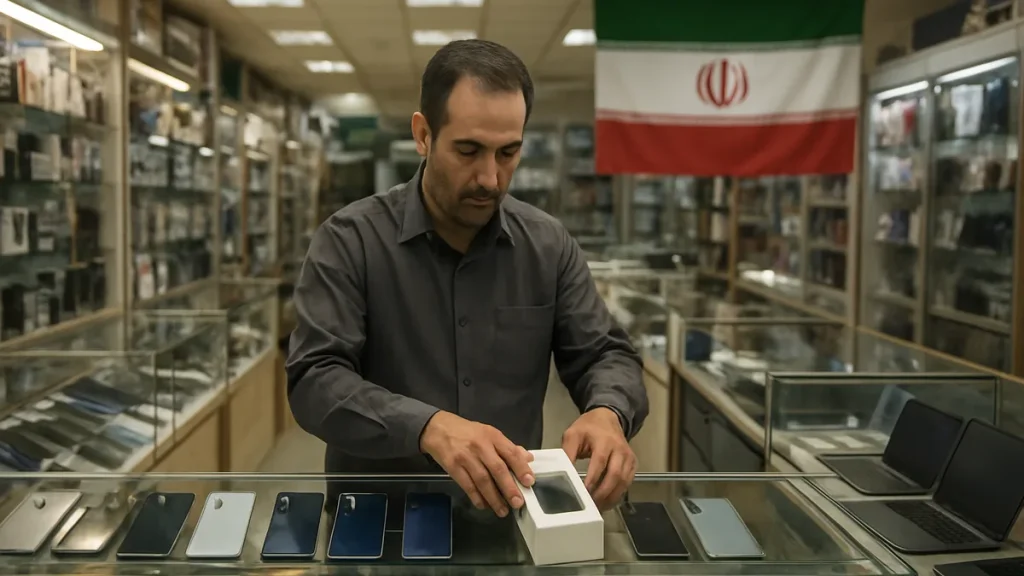
New electronics are still appearing in shops in Tehran, but buyers are paying far more for them. Days after Apple released its latest iPhone 18 lineup in the United States on September 18, the new models were on sale in the downtown area of the Iranian capital, according to a report based on interviews with traders and buyers.
Apple has no physical presence in Iran because of years of international sanctions. The country is also under an ongoing US naval blockade of its southern ports, which had handled the bulk of its imports. A phone and accessories trader at Charsou Mall, a major electronics hub in Tehran, said the goods still find their way in. “These things can’t stop a mobile phone seller,” he said, asking not to be named for security reasons.
Smuggling and detours keep devices flowing into Iran
The trader said bringing phones into the country has become far more complicated, slower and more expensive. He blamed both external pressures and domestic conditions set by the Iranian government.
Also read: Netanyahu vows Iran regime change: Can Israel topple Tehran?
Many internationally made electronics had previously arrived through Dubai in the United Arab Emirates. However, the nearly eight-month war with the United States and Israel has disrupted trade through the Strait of Hormuz. Iran has also repeatedly attacked the UAE during the conflict, and the UAE announced on August 19 that it would halt trade, commercial exchanges and financial transactions with Iran.
Some traders then turned to passengers flying in from Oman to carry in phones and other goods. That route narrowed after the United States imposed sanctions on all Iranian airlines, and anyone providing services to them, in September. Few flights now land in the country. “Most of the phones are now smuggled into the country. Many go to Sulaimaniyah and then come in by land,” the trader said, referring to the city in the Kurdish region of northern Iraq that borders western Iran.
The same pattern applies to other products, including laptops, graphics and processing units, PlayStation consoles and even Starlink terminals.

Government fees and restrictions push up phone costs
Prices for computers and consoles are high but, according to the report, phones have been hit hardest. This week in Tehran, a 15-inch MacBook Air with the M4 chip sold for the rial equivalent of more than $1,450, about 6 percent above the average retailer price in the UAE. A one-terabyte PlayStation 5 Slim disc-edition console cost about $730, which the report said was 11 percent more than some retailers in the US charge.
Imported phones only keep mobile service running for 30 days unless a registration fee is paid to the Iranian government. That fee was introduced nearly 10 years ago, and the government said it was aimed at fighting smuggling and corruption. The amount depends on the phone’s value. Import duties reach up to 6 percent for phones worth below 600 euros, up to 15 percent for phones priced between 600 and 900 euros, and up to 30 percent for phones above 900 euros.
Additional levies and “warranties” sold by domestic companies can push the extra cost of some phones above half of the total price paid.
Registration does not guarantee full access, however. The government imposes severe internet filtering and shutdowns, global payment methods are unavailable to Iranians, and international firms refuse many services to Iranian nationals because of US sanctions.
The government can also stop registering phones whenever it decides this is necessary. Between 2023 and 2024, authorities refused to register newer iPhone models under any circumstances. They said the devices were made by an American company and were draining scarce foreign currency reserves needed for imports. Similarly priced high-end models from other brands were not targeted in the same way.
Rial slide leaves ordinary buyers struggling
According to the state-linked Tasnim news site, about $1.6bn worth of mobile phones were imported commercially in the previous Iranian year, which ended in March 2026. Up to 20 percent of those phones were priced above $600. Phones worth $470m were brought in by air passengers, most of them higher-specification models. There are no clear figures for smuggled phones.
In mid-August, customs chief Foroud Asgari told state media that roughly one million phones had been imported during the first five months of the current Iranian year. In the same period a year earlier, the figure was 3.16 million. He said the import value of phones had fallen by about 70 percent.
Rising government charges and local restrictions are making new phones harder to afford. The monthly minimum wage and basic government subsidies for an average married worker amount to the equivalent of only $83 in Iran.
The rial has kept sliding. It traded at about 2.64 million to the US dollar in Tehran on Monday, a slight improvement on an all-time low reached earlier in the month. Prices have risen across the board, especially for food and other essentials. The report linked this to domestic mismanagement, war damage, sanctions and the blockade, which it said are squeezing the economy and making most of the country’s 90 million people poorer.
Afsaneh, a 27-year-old teacher from Tehran, has been considering replacing her iPhone 13 with last year’s iPhone 17, but she hesitates when she sees the prices. “The only way to get it is to sell my current phone, use my small savings and also borrow from my parents,” she said.
She said many of her peers and acquaintances are keeping old devices running by repairing them or replacing parts where possible, because they cannot afford to upgrade. “A lot of people are one failure of a major electronic device away from getting into serious debt,” she said.