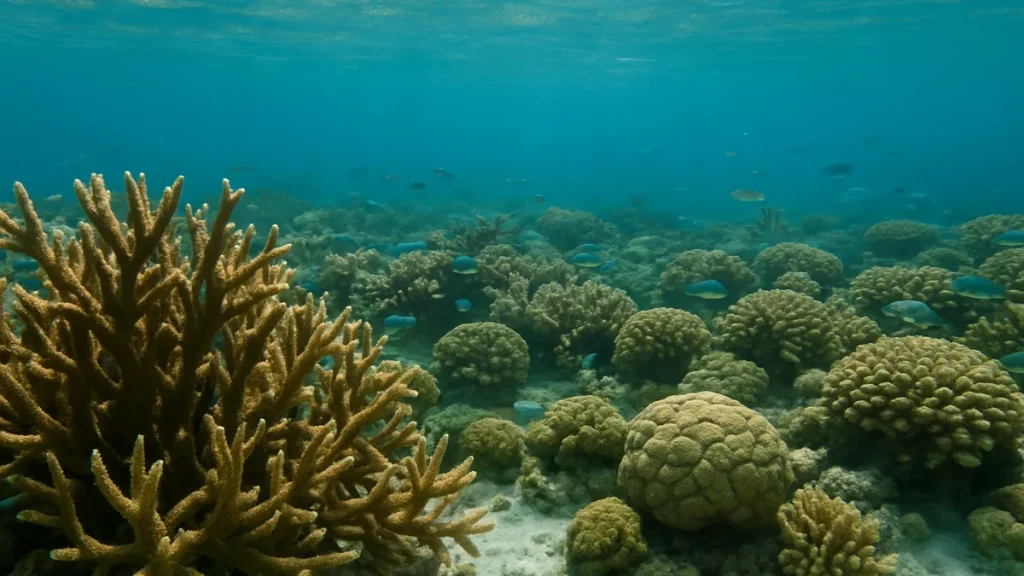
Almost all of the world’s shallow-water coral reefs could collapse within the next half-century, the International Union for Conservation of Nature (IUCN) has warned. In a global assessment released on Thursday, the organisation placed 96 percent of the planet’s coral reef systems in its most severe threat category and said total extinction could occur by 2075.
Mishal Gudka, scientific lead of the IUCN Red List of Coral Reef Ecosystems assessment, described the outlook in stark terms. “The future threat of climate change is looming and severe, and that poses a very high risk to the survival of these ecosystems,” Gudka said.
Rising ocean temperatures put reefs under growing strain
Corals are highly sensitive to heat, and human-driven climate change makes them especially vulnerable. Warming oceans are increasing how often and how intensely damaging bleaching events occur.
When a reef collapses, hard corals disappear and are replaced by algae, rubble and sponges. The reef can no longer support the varied wildlife it once held, from tiny invertebrates to fish such as grouper.
Gudka also pointed to a “super” El Nino, a natural warming phenomenon that emerged this year, as another risk to corals. The remarks were made at a news conference at COP17, the UN biodiversity summit held in Yerevan, Armenia.
Reefs that support food, tourism and coastal protection
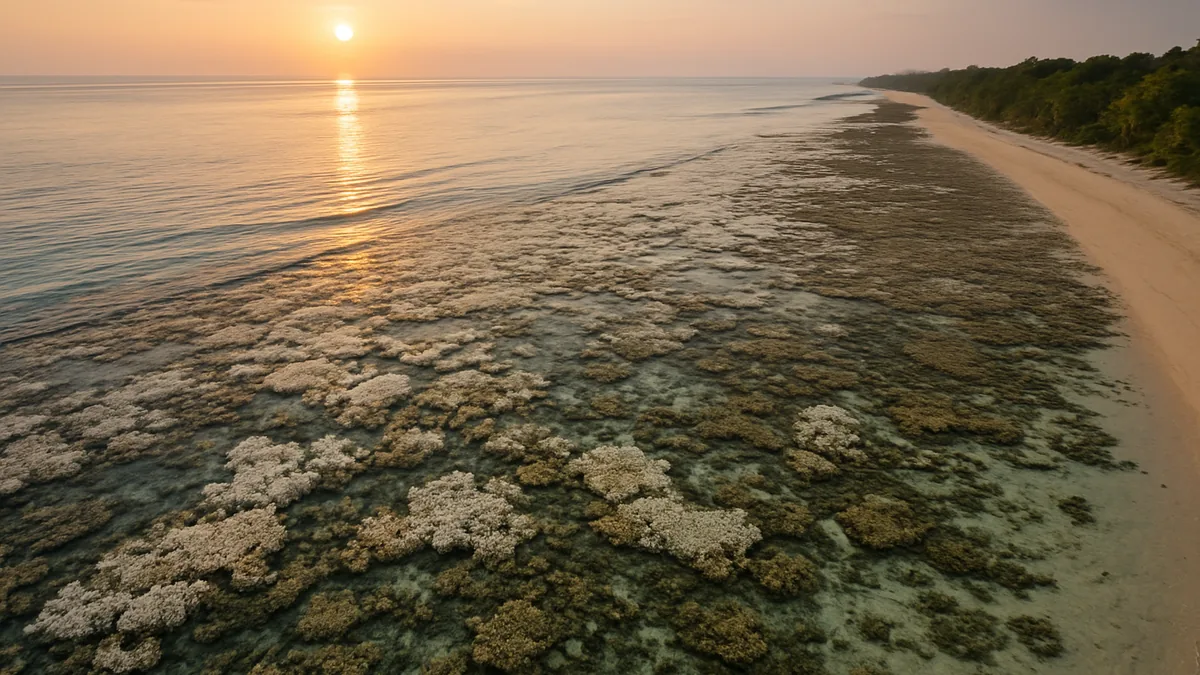
Coral reefs are critical sources of seafood and tourism income, and they often act as buffers against coastal erosion and storms. Sometimes called “rainforests of the sea”, they hold some of the world’s richest biodiversity and support about a quarter of marine species, along with coastal communities and businesses.
According to the assessment, most of the world’s best-known reef systems are critically endangered. Australia’s Great Barrier Reef, the Coral Triangle spanning the Western Pacific and Southeast Asia, the Mesoamerican Barrier Reef System and the Red Sea reefs all fall into that group.
For the report, the IUCN used a “middle-of-the-road” scenario from the UN’s panel of climate experts. That scenario projects global temperatures rising 2.7C above pre-industrial levels by 2100. The analysis examined 127 tropical and subtropical coral systems covering 188,362 square kilometres.
Scientists say many reefs can still recover
The IUCN pointed to another of its studies, published a week earlier in the journal Nature, which found nearly 44 percent of reef-building coral species face a raised extinction risk due to climate change. A year earlier, a survey found harmful bleaching had reached 84 percent of the ocean’s reefs, the most intense such event in recorded history.
Despite the grim findings, the IUCN said coral reefs in most parts of the world “are not yet lost”. Gudka said corals have shown a remarkable ability to recover from devastating bleaching. Resilient pockets of reef could survive into the future, so every possible effort should be made to help them.