Some Republicans running in the November US midterm elections are quietly distancing themselves from President Donald Trump over the Epstein files and the war with Iran, according to Rina Shah, a geopolitical adviser and strategist who is a former senior GOP congressional aide. Shah said the shift is already affecting the campaign trail, with candidates in competitive races avoiding the subject of Trump’s policies.
Trump has long presented himself as a political outsider who would expose the abuse of power by elites and move the government’s focus from distant conflicts to problems at home. Slogans such as “drain the swamp” and “America first” helped energise a large base of Make America Great Again (MAGA) supporters. Halfway through his final term, however, critics point to a number of reversals: he has courted the ultra-wealthy, slowed investigations into convicted sex trafficker Jeffrey Epstein, and launched an ongoing war with Iran.
Trump’s Epstein files pledge and the backlash
During his 2024 presidential campaign, Trump said he would declassify files that the Federal Bureau of Investigation (FBI) kept about Epstein and his global network of contacts. Members of his incoming cabinet were enthusiastic about the idea. Kash Patel, who now heads the FBI, said it was time to “put on your big boy pants and let us know who the pedophiles are.”
Also read: Three key issues shaping the 2026 US midterm elections
A few months after taking office, Trump began to drag his feet, which triggered a backlash from influential figures in the MAGA movement. He then began describing the whole issue as a “hoax” and said Republicans were being tricked by Democrats into demanding an investigation into Epstein’s network.
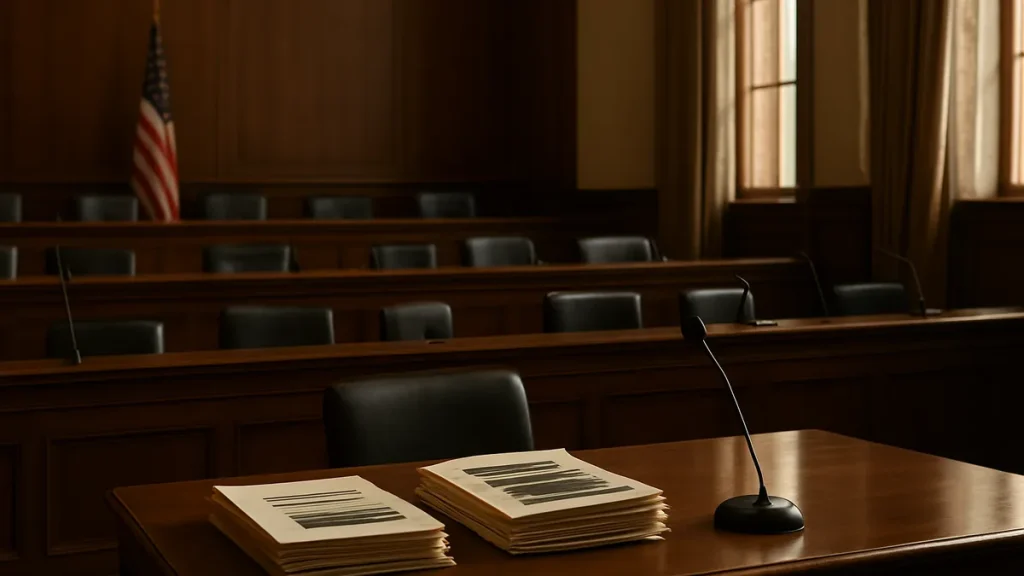
Congress eventually forced the release of the files, with help from a handful of Republicans who broke ranks with Trump. The administration has since published batches of the files, but they are heavily redacted, and it has continued to withhold some material. According to the source, the Republican lawmakers who voted to require the releases have paid a price for defying the president, and three of them lost their offices.
Republicans who crossed Trump and what it cost them
The article lists several Republicans who came into conflict with Trump, and the consequences they faced:
- Marjorie Taylor Greene, a US representative from Georgia, left her seat in January 2026 after publicly clashing with Trump over Epstein.
- Nancy Mace, a Republican from South Carolina, lost her bid to become the party’s candidate in her home state after Trump refused to endorse her.
- Lauren Boebert, from Colorado, barely won the primary in her own contest after angering Trump by backing calls for transparency from Thomas Massie.
- Massie, a Republican from Kentucky, also drew Trump’s anger, which the article says likely cost him his primary.
- Senator Bill Cassidy, who voted for an anti-war bill, faced a Trump-backed rival in a Louisiana primary and ended up losing.
Taken together, these cases suggest that the cost of opposing Trump within the party has been high. The article presents them as evidence that Trump uses primaries to punish lawmakers who break with him on either the Epstein files or the Iran war.
The Iran war and a split within MAGA
Trump had long promised to reduce foreign military involvement, setting himself apart from the interventionist approach of recent Republican presidents. Now he and his party face hard questions about the US-Israel war on Iran. Tucker Carlson, a political commentator with influence in the MAGA movement, has called the war a mistake, saying, “This is Israel’s war. This is not the United States’ war.”
Among disillusioned MAGA supporters, a view has taken hold that Trump is using the war to divert attention from the Epstein issue. Massie, a former congressman, summed up that sentiment by saying, “Bombing a country on the other side of the globe won’t make the Epstein files go away.”
Trump has tried to play down the war’s impact. However, the article says voters, including Republicans, believe he broke his own promise, and his overall approval rating has fallen to record lows. Shah argued that the promise now looks different to many of his supporters. “Seven months into an open-ended campaign with shifting goals,” she said, “that promise looks different to a lot of his voters.”
Congress votes and the promise to purge the deep state
Public sentiment has not translated into many votes against the president in Congress. Democrats have repeatedly tried to limit the war by passing resolutions noting that Trump did not secure the approval of Congress. In September, only seven Republican House members joined Democrats to pass an anti-war bill, and in the Senate, similar efforts have drawn only a handful of Republican backers.
Trump called the Republicans who supported the anti-war bills “unpatriotic” and said, “They should be ashamed of themselves.”
One of Trump’s most appealing promises was to purge a “deep state” establishment that he says runs the country without accountability to the public on social, fiscal and foreign policy. In some respects, the article says, he has kept that promise. The Department of Government Efficiency (DOGE) forced tens of thousands of federal workers out of their jobs and helped dismantle institutions such as the US Agency for International Development (USAID). The military also dropped its focus on racial, gender and economic diversity, and a campaign was waged against institutions ranging from universities to the Smithsonian Institution.
Shah, however, said lobbying groups, including some that support foreign governments, have been given a free hand, while ethics rules and watchdogs tasked with tackling political corruption have been weakened. The article also notes that at his inauguration, Trump surrounded himself with some of the wealthiest people in the world, several of whom have since taken on roles in his administration.