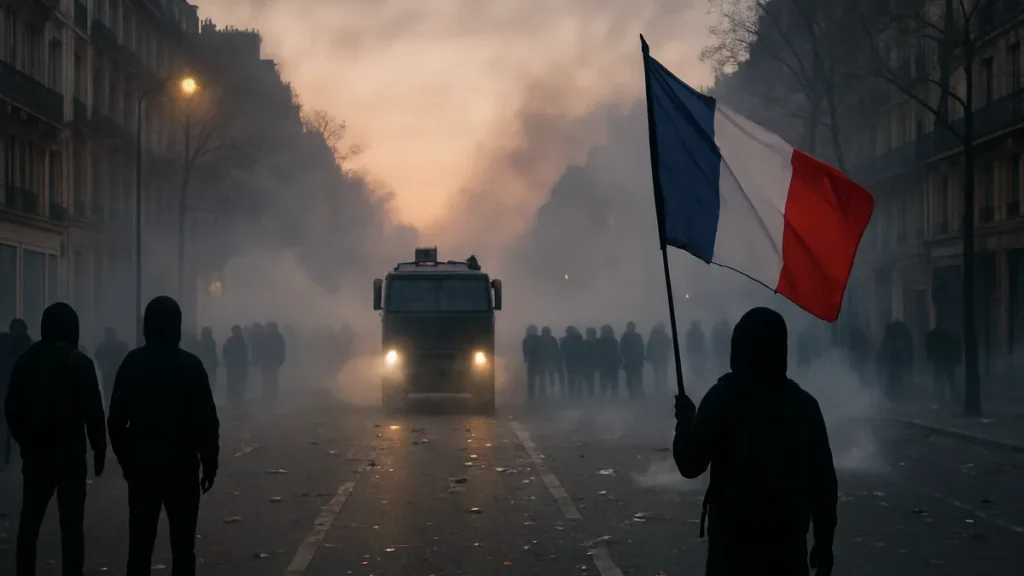

Protesters clashed with police in Paris and other French cities on Saturday during nationwide rallies over high prices, as the country moves toward a presidential election. In Marseille, France’s second-largest city, demonstrators broke into the town hall before police forced them out.
The unrest is adding pressure on President Emmanuel Macron’s government, which has already faced weeks of student demonstrations that at times turned violent.
Paris clashes, water cannon and attacks on broadcaster offices
In Paris, police fired a water cannon and teargas after hundreds of protesters, most wearing face masks and some setting off fireworks, confronted them at several locations, reporters on the scene saw. Thousands more joined a march through the capital that cut main roads and led authorities to close many metro stations in the centre.
Windows were broken at the offices of the broadcasters CNews and Europe 1 in western Paris after protesters threw projectiles. Authorities had banned protests around government buildings, the Champs-Élysées and train stations, and police detained around 60 people in the capital on Saturday morning.
Public criticism has focused on the police’s response, which some view as disproportionate.
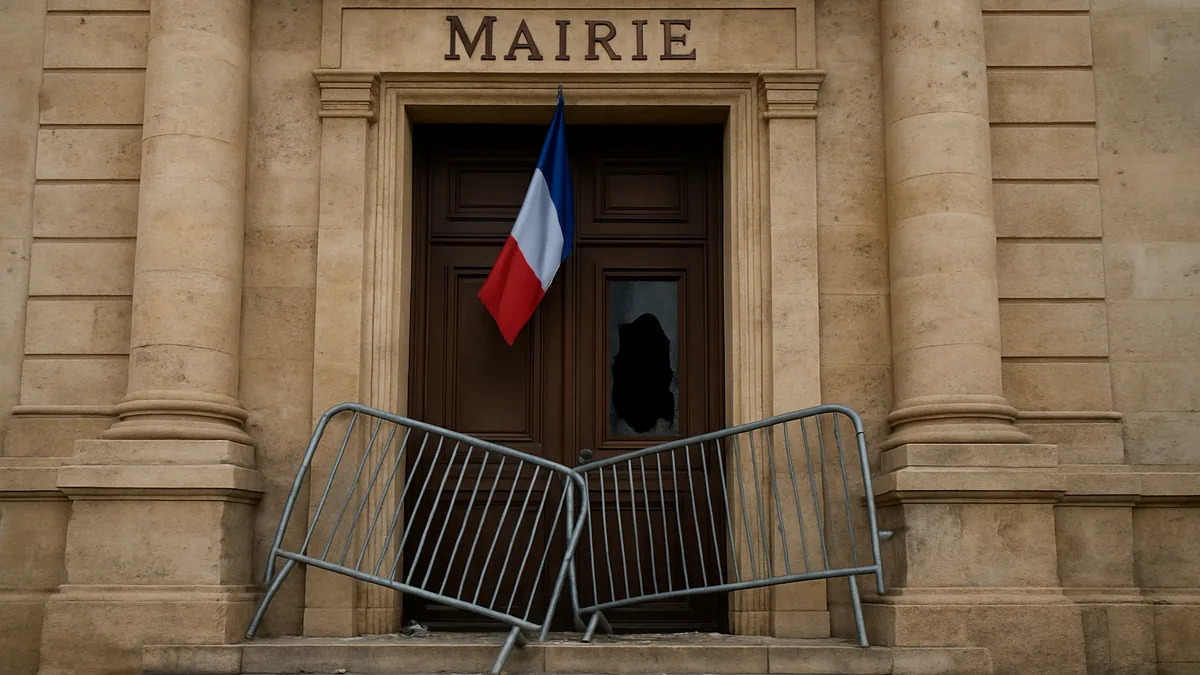
Marseille town hall breached as nationwide turnout grows
In Marseille, masked protesters rammed the door of the mayor’s offices with security barriers. One demonstrator shouted, “We’re taking the Bastille,” a reference to the 1789 storming of a fortress during the French Revolution.
Several protesters got inside, and one sprayed an anarchist “A” symbol on an interior wall before police moved in to disperse them. A news agency photographer also saw protesters attack a police building in the city.
A source at the interior ministry said more than 32,000 people had taken part in some 140 actions outside Paris shortly after midday. Police, the source added, detained more than 160 people across the country. Organisers’ website had listed more than 600 planned demonstrations across France ahead of the protests.
- More than 32,000 protesters took part in about 140 actions outside Paris by midday.
- Police detained more than 160 people nationwide.
- Around 60 people were detained in Paris on Saturday morning.
- More than 600 demonstrations were planned across France.
Cost of living fuels anger behind the “yellow and youth” protests
The Yellow Vest movement, which eight years ago staged street protests against Macron’s government over planned fuel tax hikes, called for the “yellow and youth” demonstrations. It urged teachers, students, workers, pensioners and farmers to take part on the first day of the half-term holidays.
In the central town of Guéret, Franck, a civil servant in his forties, said he had nothing left at the end of the month. “Prices are going up but wages aren’t,” he said, adding, “We can’t take it anymore, we’re suffocating.” Around 300 people joined that protest, a quarter of them high school students.
Christophe, a 47-year-old carpenter and former Yellow Vest protester, said he was indignant at what he viewed as police brutality against teenagers in recent weeks. “We’ve reached the point where the repression is targeting our own children,” he told reporters.
In the western city of Rennes, around 20 people built a barricade from trash bins and large pallets outside a shopping mall. A masked student, Aude, said protesters were demanding better resources for education and an end to police brutality.
The protests come as a survey of 2,000 people, published earlier this month, found around 45 percent of French people worried about the cost of living and inflation. Purchasing power has dwindled since 2024, and fuel prices have soared since the start of the US-Iran war earlier this year.
The eurozone’s second-largest economy is also struggling to rein in public debt, which is projected to exceed 120 percent of GDP next year, double the EU limit of 60 percent. Economists say significant debt reduction will require major reforms, such as sharply curtailing France’s generous pension system.
Macron urges calm as far-left and far-right seize unrest
On Friday evening, Macron called for “calm and respect”, adding that the right to protest went hand in hand with “respect for people and property”.
France’s far-left and far-right parties have both seized on the unrest. Jean-Luc Mélenchon, leader of the far-left France Unbowed party, backed the student protests and marched in one demonstration on Tuesday. Marine Le Pen, who leads opinion polls for the presidential race, has positioned her National Rally party on the side of the police.