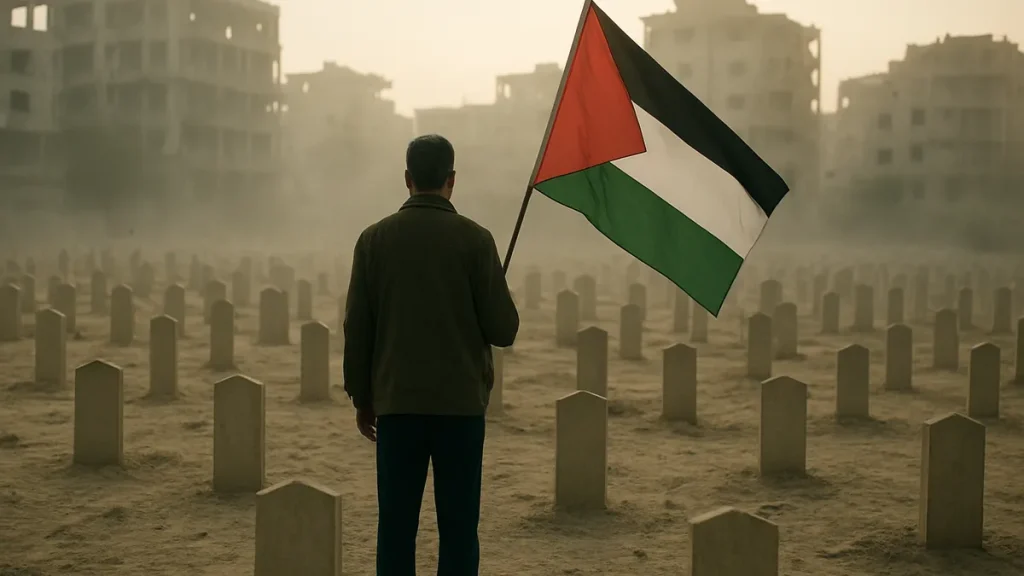

Every morning, Mahmoud Khalla, 40, walks to a cemetery close to where he lives in Gaza City. He visits the graves of relatives he lost during Israel’s war on Gaza, and he has kept up this routine in the months since he buried them.
The graves hold people he loved most. His wife, his three children, his parents, his two brothers and their families, his sister and her children, and other relatives were all gathered at the family home in Jabalia, northern Gaza, on December 21, 2023. Mahmoud is now the only member of his family still alive.
Israeli strike destroys Jabalia family home
An Israeli strike hit the five-storey family house and destroyed it, killing all 39 people inside. Mahmoud had left shortly before the attack to look for food, because supplies were already scarce under the ongoing Israeli siege.
Israeli tanks had surrounded the area, making it dangerous to move around. Mahmoud said he had told his family he would go and see what was available. “As soon as I had been out for about 15 minutes, I heard a huge explosion,” he told .
When he returned, he found that the targeted house was his. He said he was in complete shock, but he gathered himself and, with a few neighbours still in the area, tried to rescue anyone trapped under the rubble.
Israeli air attacks, quadcopters and surveillance aircraft kept striking the area, which made it impossible for him and his neighbours to search for survivors. Ambulances and civil defence teams also could not reach the site that night. “A surveillance aircraft dropped a bomb on us, so we immediately ran away,” he said. “We came back the next morning.”
The next morning he went back and called out for his relatives. Nobody answered, and that was when he understood that he had lost almost everyone he loved. “There were five floors of rubble. It was impossible for us to pull anyone out,” he said.
Months alone and homeless in Gaza
The strike on his family home was not the only loss. Mahmoud said the house of his uncles, opposite his own, had been hit nine days earlier, killing 18 people. The rest of that branch of the family had moved south.
With almost all of his relatives dead or displaced and his home gone, Mahmoud had nowhere to go. He spent the following months moving from street to street, looking for a place to sleep. Finding shelter among displaced families was hard, because he was not related to any of them.
“I was sleeping in the streets, or in cars or vehicles whenever I found one that was open,” he said. “I was totally lonely and homeless.” Without any shelter, he was exposed to attacks, and finding food became as pressing as finding a safe place to sleep.
“You don’t know whether a bullet will hit you, whether a rocket will come, whether you will find food or where you will sleep,” he said.
Recovering family remains by hand in Gaza
A ceasefire was announced for Gaza in October 2025, and families began searching for missing loved ones. Nearly a year later, an estimated 8,000 people are still missing, with their bodies believed to be under the rubble of their homes or in other places.
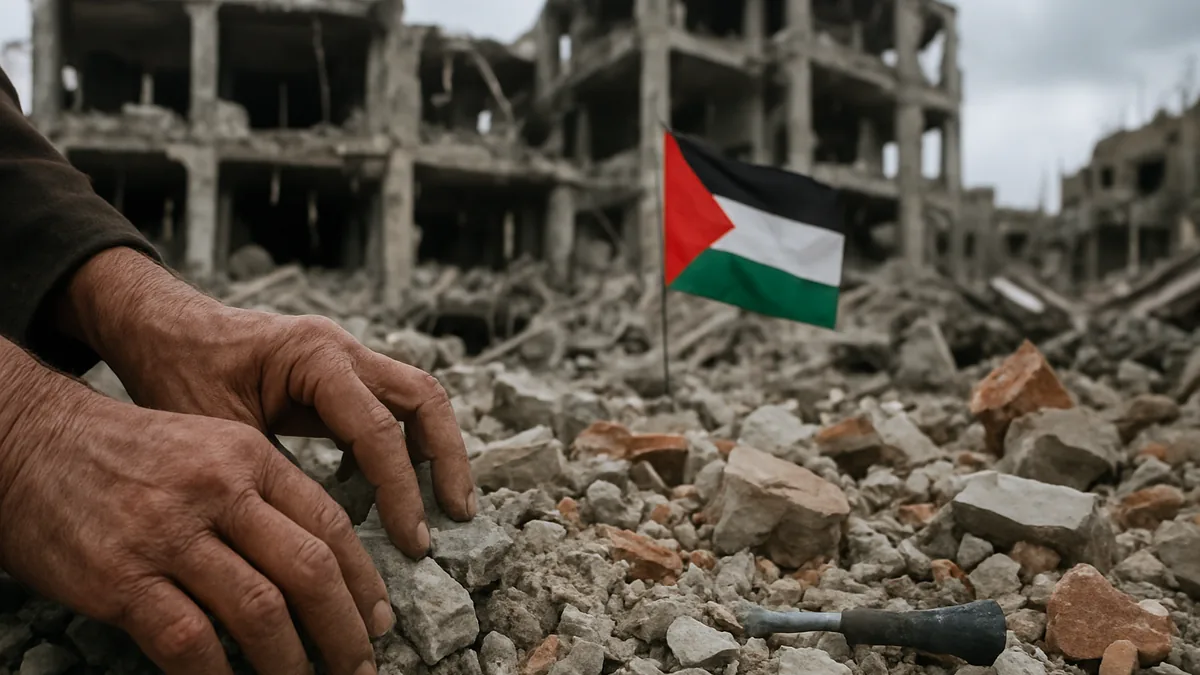
Months after the ceasefire began and bombing decreased, Mahmoud started recovering the remains of his family himself. They had been buried among the wreckage of their home for 29 months. “The feeling that my family was still under the rubble, without being buried, was very difficult,” he said. “It never left me.”
He first asked the civil defence, the Red Cross and other authorities for help. He said they had little equipment and faced a huge number of other families asking for assistance, so they could do little for him.
Eventually, friends and neighbours who volunteered joined him, and they began the painful work of digging out the remains by hand. Mahmoud said the process began around May this year and took three months.
“Sometimes, we managed to recover one person in a day. Sometimes, it took two days,” he said. The first to be found were two relatives who had been staying with the family. The last were his sister and her children, who had been buried together.
He buried his relatives at a cemetery near Jabalia an-Nazla, in northern Gaza. “I felt a great sense of relief when I finally buried them,” he said. “It took me three months to recover all of their remains, working day by day.”