Iran is reportedly close to finalizing an agreement with Oman regarding new shipping lanes through the Strait of Hormuz. However, Tehran emphasized that the strategic waterway will remain closed until the United States fulfills a series of demands, including compensation for damages, lifting sanctions, and ceasing military threats.
A US official confirmed that Iran and Oman are nearing a deal that could enable the restoration of safe passage through the strait, a vital corridor for global oil and gas shipments. Iran had blocked this route in retaliation to US and Israeli strikes on its territory that began in late February.
Iranian Foreign Minister Abbas Araghchi stated that talks with Oman are in their final phase. He reiterated that the strait would only reopen once Washington complies with Iran’s conditions. The agreement with Oman is expected to establish the new shipping lanes to be used after these demands are met.
Meanwhile, US President Donald Trump described the American approach toward Iran as “low-keying it” and engaging in “semi-negotiations.” Despite the absence of direct talks between the two countries, messages continue to be exchanged through intermediaries. Araghchi noted that Tehran will not initiate direct negotiations as long as Washington violates an interim agreement signed in June.
Among Iran’s conditions for reopening the strait is compensation for damages caused by US attacks. Mohammad Baqer Zolqadr, secretary of Iran’s top national security body, outlined additional demands: an end to US threats against Iran and its allies in Lebanon, Palestine, Yemen, and Iraq; lifting the naval blockade in the Gulf; removal of sanctions; and the release of frozen Iranian assets.
The US and Israel launched airstrikes on Iran over five months ago, aiming to prevent Tehran from developing nuclear weapons and to diminish its regional influence. Although a ceasefire was agreed upon in June, the US reinstated a blockade on Iranian shipping in July, which Iran claims violated the truce and contributed to its breakdown.
The US official indicated that lifting the blockade would coincide with the announcement of a deal restoring unimpeded commercial shipping. However, this would depend on Iran fulfilling its commitments. The proposed arrangement reportedly grants Tehran control over vessel traffic entering the Gulf via the strait, a condition that has raised concerns among shippers about its practicality.
In a related development, the United Arab Emirates reported that Iran attacked a ship linked to its state oil company. Iran has not commented on the incident, though its Revolutionary Guard Corps has previously targeted vessels attempting to transit the strait without Iranian authorization.
Alongside Iranian actions in the Strait of Hormuz, its Yemen-based allies, the Houthi rebels, have intensified attacks on shipping at another critical oil route between the Red Sea and the Gulf of Aden. The Houthis declared a naval blockade against Saudi Arabia last month, citing a Saudi siege on Yemen, which Riyadh denies.
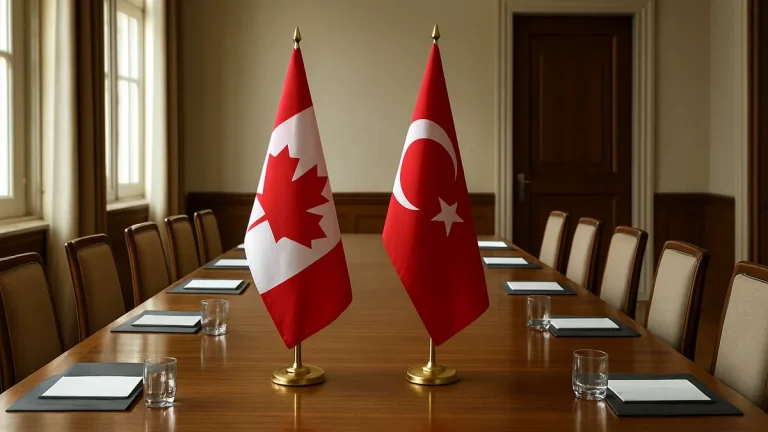
The Yemeni rebels claimed responsibility for an attack on Saudi Aramco’s Jazan refinery on Sunday, shortly after Saudi Arabia signed a defense pact with Turkey and Pakistan aimed at countering regional instability linked to the US-Israeli conflict with Iran. Saudi authorities reported a fire at the refinery that was quickly extinguished without injuries, but did not specify the cause.
Turkish Foreign Minister Hakan Fidan clarified that the new alliance is not targeted at Iran or any other nation, but is intended as a general security commitment. Meanwhile, fighting in Yemen has escalated, with the Yemeni military reporting seven deaths, including civilians and soldiers, in a recent Houthi attack on the Red Sea port city of Mocha. The military also intercepted and destroyed 11 drones used in the assault.