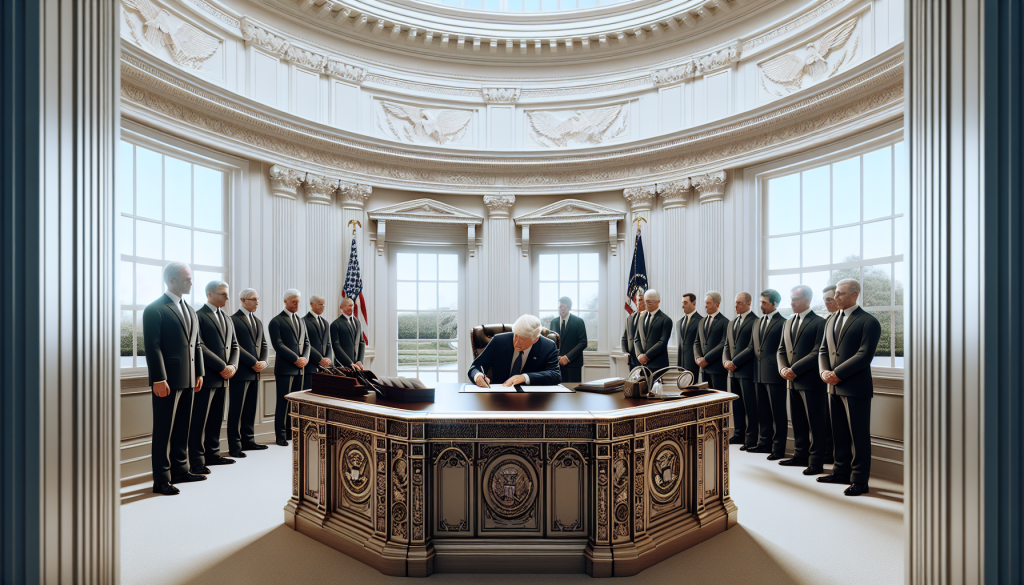
In a significant development, President Donald Trump has formally signed a new counterterrorism strategy designed to bolster the United States’ ability to prevent and respond to terrorist threats. This strategy outlines updated priorities and approaches to address the changing landscape of global terrorism, emphasizing intelligence sharing, interagency cooperation, and enhanced border security measures. The move reflects ongoing efforts by the administration to adapt to emerging challenges posed by both domestic and international terrorist groups.
Notably, the strategy focuses on disrupting terrorist networks before they can execute attacks, integrating advanced technology and data analytics to improve threat detection. It also highlights the importance of partnerships with foreign allies to combat terrorism on a global scale, recognizing that effective counterterrorism requires coordinated international action. The policy update comes amid heightened concerns about radicalization and the spread of extremist ideologies through digital platforms.
Meanwhile, experts suggest that this new framework could have a lasting impact on US national security policies by prioritizing proactive measures and resilience. The strategy’s implementation will likely influence resource allocation within federal agencies tasked with counterterrorism efforts, potentially reshaping operational tactics. As the threat environment continues to evolve, this initiative represents a critical step in reinforcing the nation’s defenses against terrorism in the years ahead.