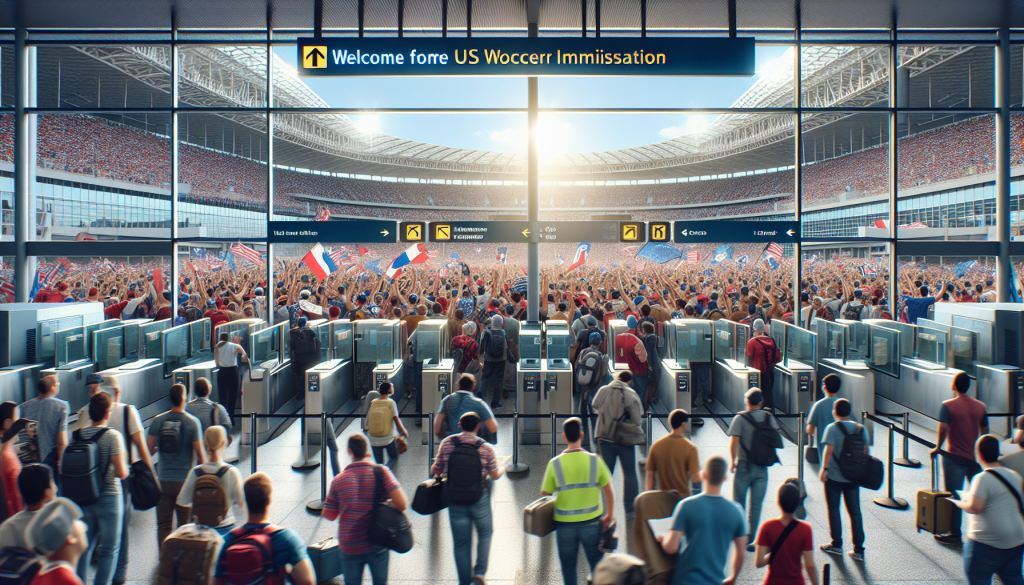
The stringent immigration policies implemented by US President Donald Trump have raised concerns among international sports fans, particularly those planning to attend the upcoming World Cup. These regulations have tightened border controls and visa approvals, potentially barring some supporters from entering the United States. The World Cup, a global event attracting millions of visitors, relies heavily on the free movement of fans across borders to maintain its vibrant atmosphere and economic benefits.
In a significant development, the new immigration stance could affect the diversity and size of the World Cup audience, as fans from various countries may face difficulties obtaining entry permits. This situation highlights the broader implications of national immigration policies on international sporting events, where fan participation is crucial for success. Meanwhile, organizers and authorities are under pressure to find solutions that balance security concerns with the need to facilitate global attendance.
Notably, the restrictions underscore the challenges of hosting major international events in countries with strict border controls. The potential exclusion of some fans not only diminishes the cultural exchange and excitement surrounding the World Cup but also impacts local economies that benefit from tourism. As the tournament approaches, the intersection of sports and immigration policy remains a critical issue for stakeholders worldwide.