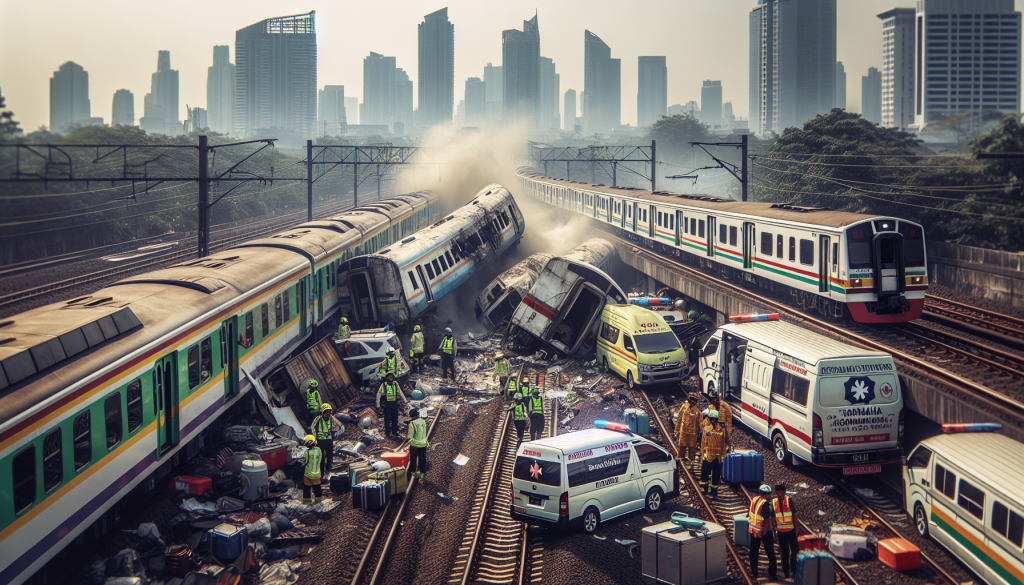
In a tragic incident on Monday, a commuter train collided with a long-distance train on the outskirts of Jakarta, resulting in at least four fatalities and injuring dozens of passengers. The crash occurred during peak travel hours, exacerbating the impact on commuters and raising urgent concerns about railway safety protocols in Indonesia’s densely populated capital region. Emergency services responded promptly to the scene, providing medical aid and transporting the injured to nearby hospitals.
Indonesia’s rail network has experienced rapid expansion in recent years to accommodate growing urban populations, but this growth has been accompanied by safety challenges. Collisions like this underscore the critical need for improved signaling systems, better maintenance, and stricter operational oversight to prevent future accidents. The government has faced increasing pressure to enhance infrastructure and enforce safety regulations to protect millions of daily rail passengers.
Meanwhile, the incident has sparked a national conversation about public transportation safety and the importance of investing in modern technology to reduce human error. Families of victims and survivors are calling for accountability and swift action to prevent similar tragedies. This collision serves as a stark reminder of the risks inherent in Indonesia’s transportation system and the urgent reforms required to safeguard its citizens.