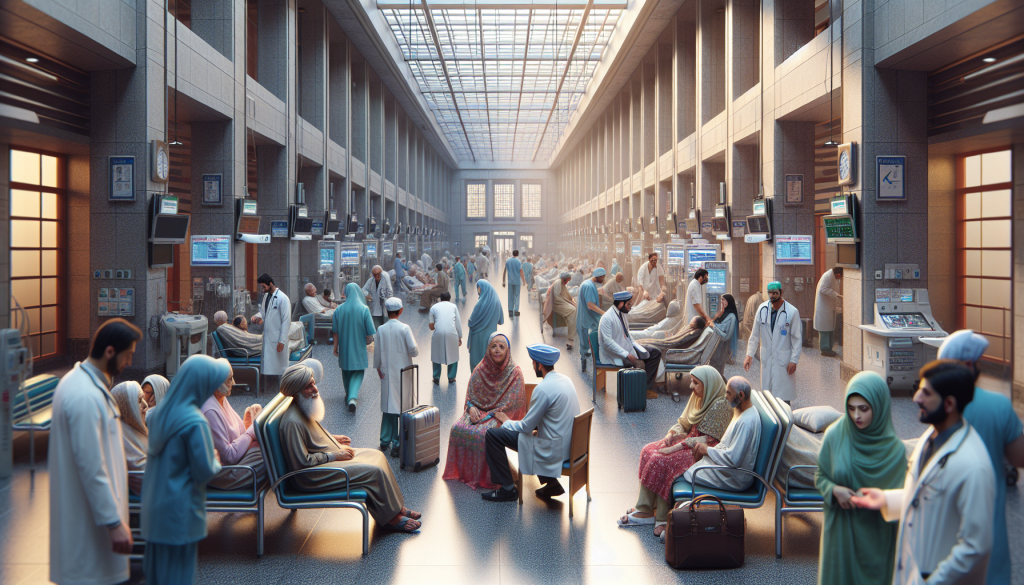
Cancer patients throughout Sindh, including the bustling metropolis of Karachi, are grappling with severe hardships as no public sector hospital in the province currently offers comprehensive cancer treatment encompassing all necessary services under a single roof. This glaring deficiency forces patients to navigate a complex and often exhausting healthcare maze, visiting multiple institutions to receive surgery, chemotherapy, and radiotherapy separately. Moreover, many terminally ill patients are deprived of proper palliative care, leaving them to endure unnecessary pain and suffering during their final days.
Health professionals and oncologists highlight that the fragmented nature of cancer care in Sindh results in frequent referrals between hospitals, which not only delays critical treatment but also significantly increases the financial and emotional strain on patients and their families. This disjointed system becomes an additional hurdle for those already battling the physical and psychological toll of cancer.
It is worth noting that Pakistan faces a heavy cancer burden, with over 180,000 new cases diagnosed annually. Sindh, due to its large population and relatively advanced diagnostic facilities, accounts for a substantial share of these cases. Despite Karachi being the largest city in Pakistan and a major healthcare hub, no single government hospital in the province provides an integrated cancer care model that includes surgery, chemotherapy, radiotherapy, and palliative care services. This gap in healthcare infrastructure leaves patients to start treatment at one facility only to be referred elsewhere for other aspects of their therapy, often resulting in fragmented and incomplete care.
A poignant example illustrating this ordeal involves a 55-year-old man from Hyderabad who was diagnosed with stomach cancer. After his diagnosis, he was referred to the Sindh Institute of Urology and Transplantation (SIUT) in Karachi. His journey took him between SIUT’s Reagent Plaza facility and its main hospital near Civil Hospital Karachi, where he was then advised to seek treatment at the Jinnah Postgraduate Medical Centre (JPMC). However, the challenges did not end there. At JPMC’s cancer ward, doctors examined him but subsequently referred him to the Karachi Institute of Radiotherapy and Nuclear Medicine (Kiran), a specialized cancer center operated by the Pakistan Atomic Energy Commission.
Upon reaching Kiran hospital, the patient was sent back to JPMC after it was determined that his cancer had metastasized to other organs, reaching stage four, where curative treatment was no longer feasible. The oncologists at JPMC then recommended palliative care, but since no public hospital in Sindh offers dedicated palliative care services, the patient’s family was advised to approach the Aga Khan University Hospital for symptom relief. After days of navigating between hospitals, the patient returned to Hyderabad, spending his remaining days at home, enduring great pain without adequate medical support. This tragic case underscores the critical gaps in Sindh’s public health system regarding cancer care.
Another pressing issue is the scarcity of strong pain relief medications in public hospitals. Morphine, both oral and injectable forms, which is internationally recognized as the gold standard for managing severe cancer pain, is rarely available. Similarly, fentanyl patches, another effective option for chronic cancer pain, are difficult to procure due to stringent regulatory controls and limited supply. This shortage leaves many patients suffering from uncontrolled pain, exacerbating their distress during already challenging times.
Officials within the Sindh health department acknowledge that cancer treatment services are dispersed across various institutions in Karachi. For instance, JPMC offers surgical interventions for cancer and facilitates chemotherapy through financial aid programs such as Pakistan Bait ul Maal for patients unable to afford costly medicines. The hospital also houses one of the country’s significant radiotherapy units. Nevertheless, it lacks a structured palliative care program, which is vital for patients with advanced or terminal cancer.
Despite the escalating cancer burden, Sindh has yet to establish a fully integrated public cancer hospital that provides diagnosis, surgery, chemotherapy, radiotherapy, and palliative care under one roof. This is particularly striking given the provincial government’s investment of hundreds of millions of rupees in specialized procedures like bone marrow transplants at institutions such as Dow University of Health Sciences and the National Institute of Blood Diseases in Karachi. These investments, while important, do not address the fundamental need for a centralized, comprehensive cancer treatment facility accessible to all patients.
Repeated efforts to obtain comments from Sindh Health Minister Dr. Azra Pechuho were unsuccessful. However, she has previously asserted that Sindh boasts some of the best healthcare facilities in the country and that the province’s health sector achievements often go unrecognized. Meanwhile, patients and their families continue to bear the brunt of this fragmented system. Many are compelled to sell property, incur debt, or rely on charitable organizations to finance their treatment journeys, which can be long and costly.
In a related development, health experts emphasize that without establishing integrated cancer treatment centers and expanding palliative care services in public hospitals, thousands of patients in Sindh will continue to face immense difficulties. These challenges are not limited to obtaining timely and effective treatment but extend to managing the debilitating pain and symptoms associated with advanced stages of cancer. The urgent need for systemic reforms in cancer care delivery in Sindh remains a critical public health priority.