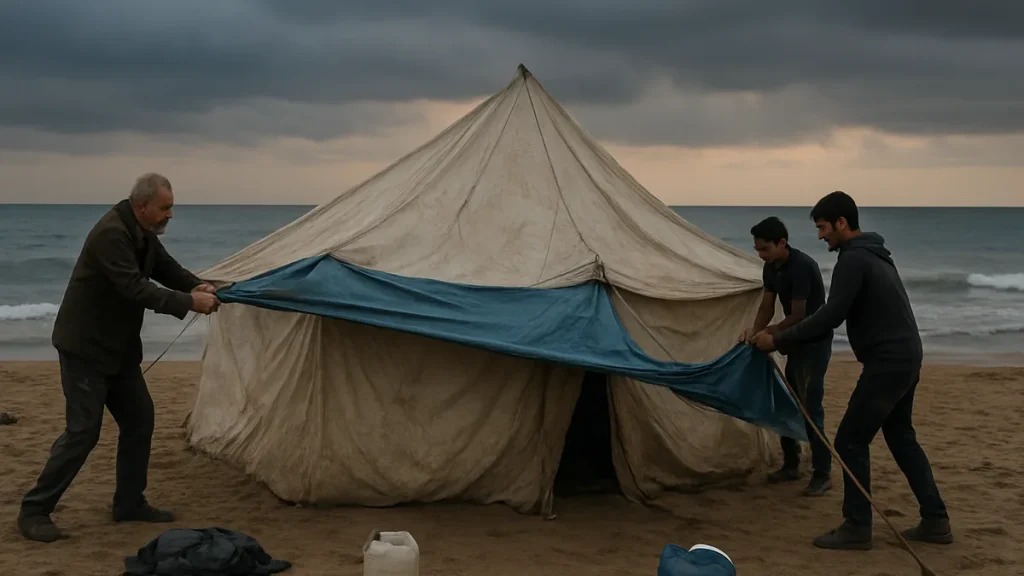
Families sheltering in tents across Gaza are preparing for a fourth winter with little protection from rain, wind and flooding. On a beach camp in western Gaza City, Mohammed al-Jamal, 60, and his sons were pulling at a tarpaulin on their worn-out tent, trying to anchor it to the ground before a storm arrived from the sea.
Many displaced Palestinians still live in tents and makeshift structures that offer limited defence against the coming cold. Temperatures can fall to 7C (below 45F), but coastal winds and rain make conditions feel much colder, according to the accounts gathered for this report.
Torn tents leave families exposed to each storm
Al-Jamal said his family cannot afford a replacement tarpaulin, which costs between 120 and 150 shekels ($37-$47) in local markets. Instead, he said, they can only patch the damaged shelter and hope it survives the next storm.
“We are trying to prepare as much as we can to protect ourselves from the water and the wind,” he said. “We follow the weather reports, and whenever there is a warning of a storm, we start preparing. But once the storm comes, everything gets torn apart, and we have to start all over again. It is continuous suffering throughout the winter.”
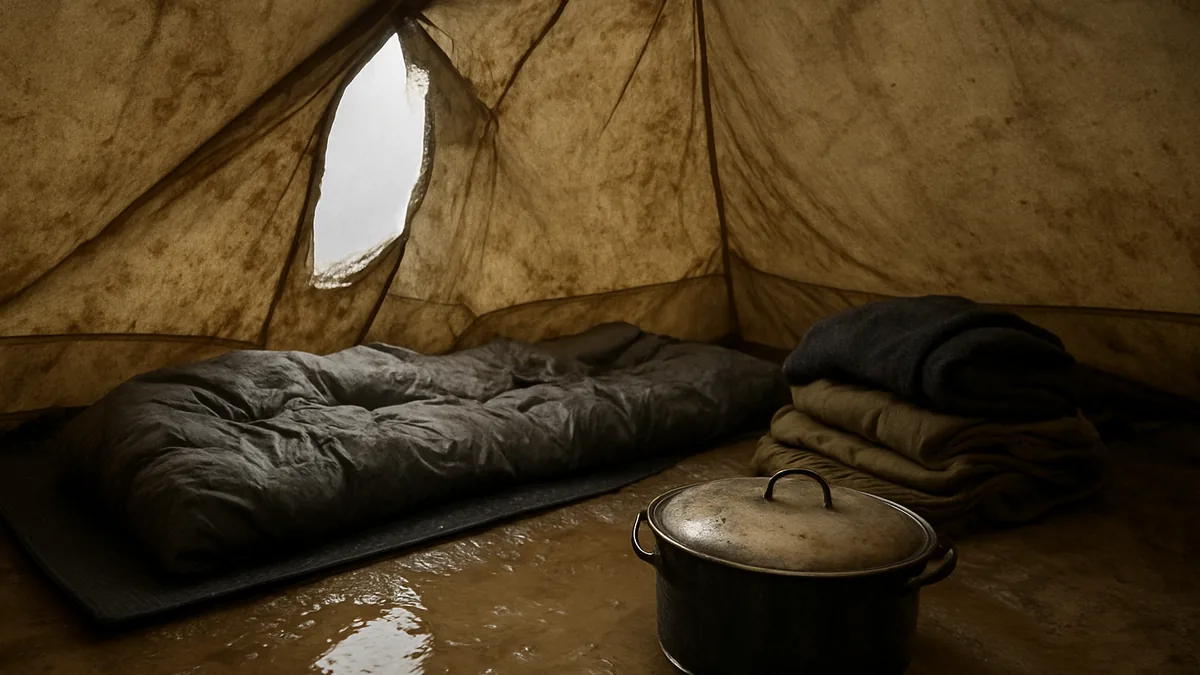
Al-Jamal, who is originally from the Shujayea neighbourhood of Gaza City, has been displaced several times since the war began in October 2023. About 30 members of his extended family live in the same harsh conditions. When it rains, water seeps into the tent, flooding the living space and threatening what few belongings they have. When temperatures drop, the family wears extra layers of clothing to cope.
Al-Jamal said he had repeatedly heard promises that shelter materials and caravans would be allowed into Gaza. None had reached his family, and he said he had not seen any enter. He called the announcements “false promises and lies” that had left displaced families waiting for help that never arrived.
Shelter shortages and stalled supplies across Gaza
The war has killed more than 74,500 Palestinians and destroyed or damaged more than 80 percent of buildings, according to the figures cited in the report. With homes and infrastructure gone, about 1.5 million of Gaza’s 2.3 million people are living in tents or makeshift shelters. Many have been forced to move from city to city whenever Israeli assaults reach their homes or camps.
The Office for the Coordination of Humanitarian Affairs (OCHA) said at least 294,250 families in Gaza need winter shelter assistance. With current supplies, however, only 52,000 families, roughly 18 percent of those in need, have access to partial humanitarian aid.
A Shelter Cluster survey found that more than 65 percent of displaced households were living in tents or makeshift shelters, and more than half of those shelters were in poor or very poor condition. The Norwegian Refugee Council (NRC) said on October 5 that at least 500 truckloads of shelter materials were waiting to enter Gaza or to be procured. At the current pace, the NRC said, those supplies could take more than seven months to arrive. The materials include tents, tarpaulins, ropes and other repair items.
The siege has also disrupted the flow of supplies into the enclave. For families already living in torn tents, the shortage leaves few options beyond repeatedly repairing the same shelters.
Damaged drainage raises the risk of flooding in camps
Damaged roads, drainage and sewage systems also make it more likely that rainwater will mix with wastewater and flood the camps. Husni Muhanna, spokesperson for Gaza Municipality, said more than 85 percent of the city’s infrastructure had been damaged. He added that its rainwater drainage system was operating at about 20 percent of its previous capacity.
Muhanna said rubble, damaged drainage networks and shortages of heavy machinery, fuel and maintenance materials were hampering winter preparations. The municipality has begun emergency cleaning and maintenance work, but he said its efforts remain constrained by a lack of resources.
Displaced mothers describe repeated losses and mounting strain
Khitam Salman, 39, who is originally from Beit Lahiya in northern Gaza, has been displaced several times over the past two years. Living near the beach, she is trying to prepare for winter with tents that have already been repeatedly damaged. “Every time there is a storm, we put up the tarpaulins and tie them down, only to have to do it all over again,” she said.
Salman said one of the family’s tents had collapsed four times while they were sleeping inside. The fabric tore, letting in sand and leaving them little protection from rain and wind. She said the family needs tarpaulins for two tents and for the room where they store their belongings, but cannot pay for them. Her husband works in the health sector, she said, but he is paid only once every three months, and the money does not cover the family’s needs.
“I’m worried about this winter … that the whole nightmare will repeat itself all over again,” she said.
Yosra Mesleh, 45, was displaced from her home in the Nassr neighbourhood of Gaza City after it was destroyed. She is preparing for her second winter in a tent. When water enters, she said, it soaks the bedding and belongings, and the family often has nowhere dry to sit, cook or eat. In summer, she said, the heat and humidity inside the tent were unbearable, and water shortages made their situation worse.
Her husband has been out of work since the start of the war, and her son is struggling to cover his own expenses. Mesleh said she remembers life before the war, when they had an apartment and her husband ran a tea and coffee shop. They have since lost both their home and their only source of income. Without cooking gas, she said, she worries about how the family will prepare meals when rain keeps them indoors.
“We need tents and tarpaulins. We need cooking utensils and a proper place to prepare food. We also need a regular supply of gas,” she said. “We are not asking for towers or anything extravagant. We are asking for tarpaulins and tents, for a dignified life.”