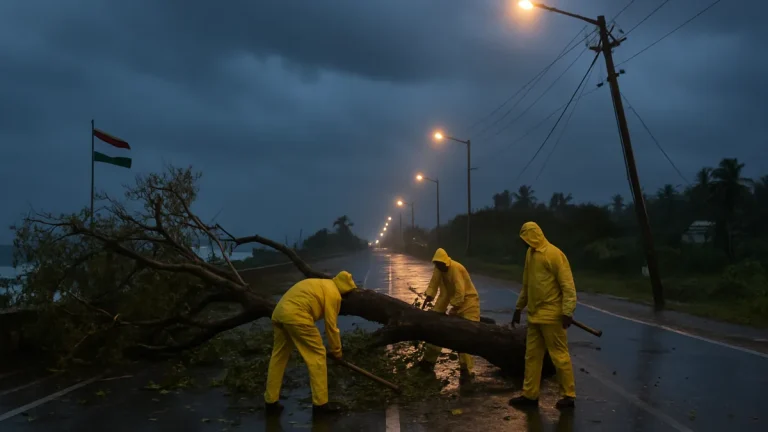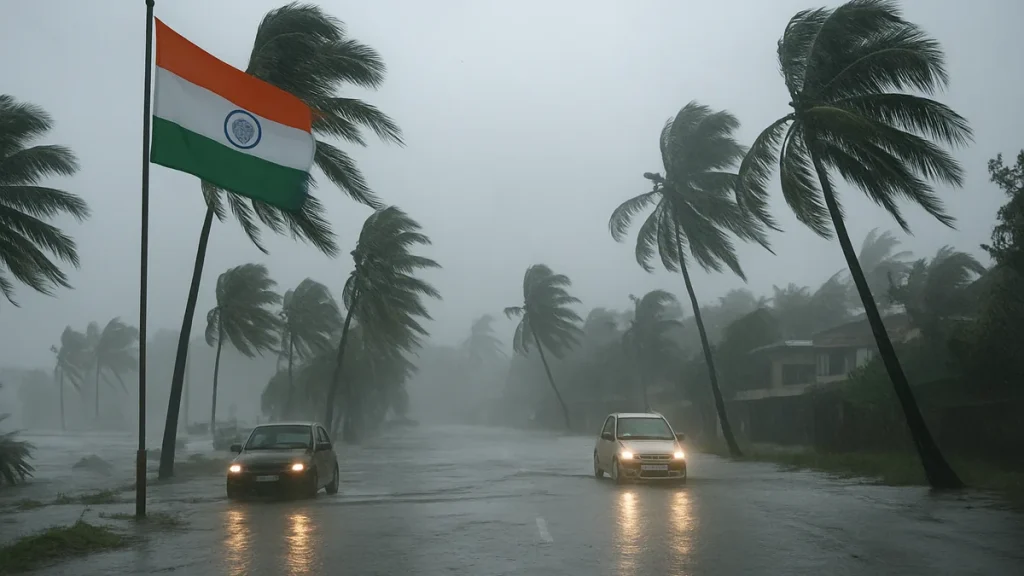
Cyclone Arnab has struck India’s east coast, causing widespread damage along with heavy rainfall and wind speeds of up to 135kph (84mph). The storm crossed into Andhra Pradesh early on Wednesday morning, bringing down trees across highways and disrupting power supplies.
Authorities say more than 12 million people live along the cyclone’s expected path. No casualties have been reported so far.
Evacuations and travel disruption in Andhra Pradesh and Odisha
At least 180,000 people were moved out of Andhra Pradesh and Odisha a day before landfall. Flights and train services were cancelled, and some schools were forced to shut.
Also read: India Evacuates Tens of Thousands as Cyclone Arnab Nears
A resident of Kakinada district, which sits in the storm’s path, described fear over where floodwater would reach next. India’s Meteorological Department has forecast a storm surge of up to 1.5 metres above tide level, warning that low-lying areas in Andhra Pradesh could be submerged.
Storm weakens after reaching land
Arnab made landfall as a “very severe cyclonic storm”, the third-highest category on its scale. It was downgraded to a “severe” storm after moving further inland.
Nepal restricts trekking and Sri Lanka closes schools
In neighbouring Nepal, authorities warned tourists on Tuesday to avoid high-altitude areas, citing fears that the storm could bring torrential rain, snowstorms and avalanches from Thursday to Saturday. Authorities suspended the issuing of trekking permits for three days. The restriction matters because this is peak hiking season, with about 750 hikers receiving permits each day.
Nepal is still recovering from a glacial mountain collapse in August that killed more than 1,400 people and left at least 5,000 missing. Sri Lanka has also closed schools, after its Department of Meteorology warned that the storm could trigger flash floods and landslides.