
Palestinians in the occupied West Bank are fencing their homes, keeping watch at night and setting up informal guard groups as settler attacks increase. Residents and figures cited by the Palestinian Liberation Organization’s Colonization and Wall Resistance Commission describe a sharp rise in incidents since the war in Gaza began in October 2023.
The attacks range from assaults on people to vandalism of orchards and farmland. Villagers say existing protection is inadequate, leaving them to defend their families and property largely on their own.
Settler attacks intensify around al-Mughayyir
Abdul Rahman Jabr, 32, says his life changed more than a year ago when his home in al-Mughayyir, a village east of Ramallah, was targeted by Israeli settlers. The house, which he built in early 2023 before his marriage, sits on the edge of the village in an area with a long history of settler violence. He now lives there with his wife and their two-year-old daughter.
He said his vehicle was set on fire by settlers in April 2024 and that the windows of his home were smashed with stones. He could not say how many times the property had been targeted. In the past week alone, he said, settlers reached his property seven times, forcing him to stay home from work to protect his family.
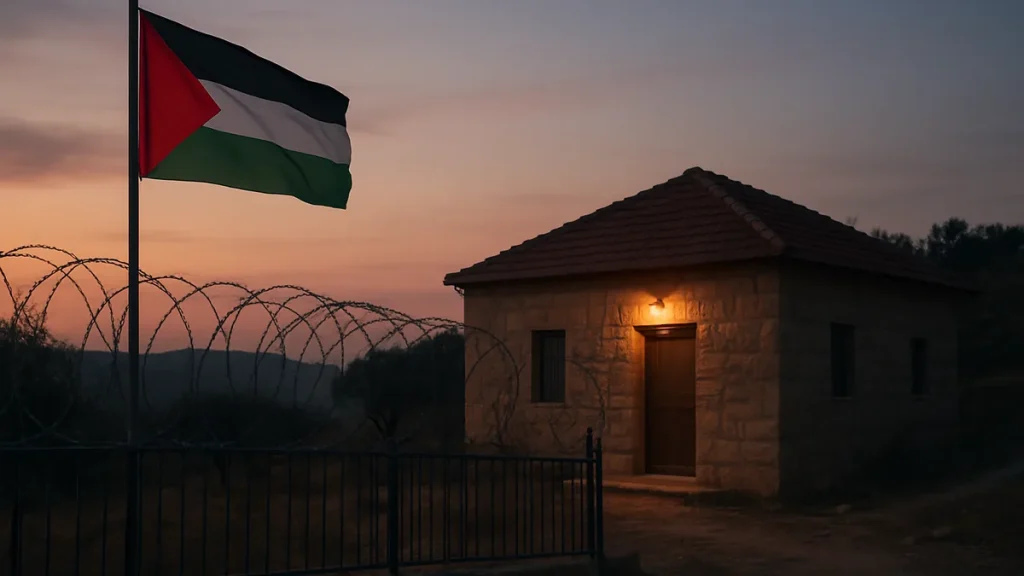
After the attacks, he surrounded the house with barbed wire and an iron fence. “This isn’t a sufficient measure, but it’s the only thing I can do on my own,” he said. He added that neighbouring households had also installed fences, and that the barriers had at least helped keep livestock out of their yards.
Abdul Rahman described repeated appeals for help that had gone unanswered. “We’ve made countless appeals, but no one listens, so we had to take this step,” he said.
Unofficial guard groups in Sinjil face arrests and raids
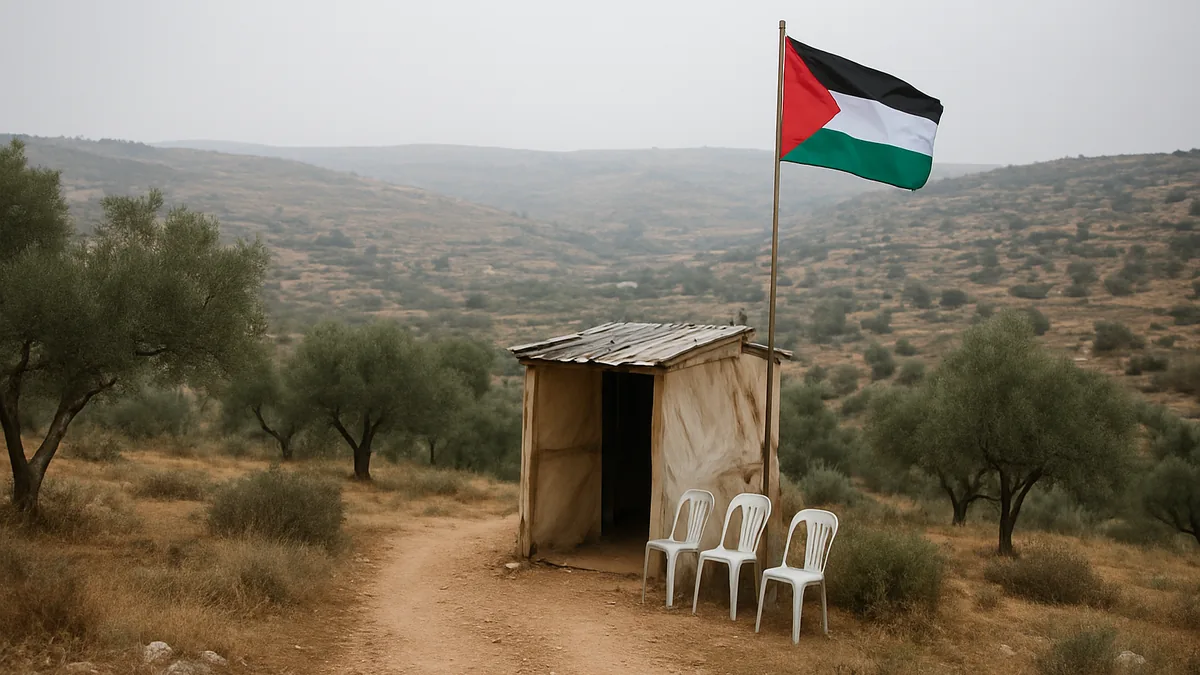
Palestinians are also beginning to organise collectively. In Sinjil, north of Ramallah, a group of young men has repelled several settler attacks in recent months. Basel Awad, a pseudonym used for security reasons, said the village’s guard committee, of which he is a member, is unofficial and exists to protect residents’ homes.
According to Awad, between 20 and 30 unarmed people gather each night at key locations that settlers have used as staging posts for raids into Sinjil. The guards have paid a high price, he indicated. The Israeli army has arrested six members of the guard, and at least 10 have been injured in what appears to be an effort by Israel to dismantle the neighbourhood watch.
Awad described an incident in the Jabal al-Batin area, which he said is frequently targeted. “We had set up a tent in the Jabal al-Batin area, which is frequently targeted by attacks. Soldiers arrived last winter and fired tear gas canisters inside. We all suffered from suffocation, and then they demolished the tent and confiscated it,” he said.
Landowners in Beitillu refuse to abandon their land
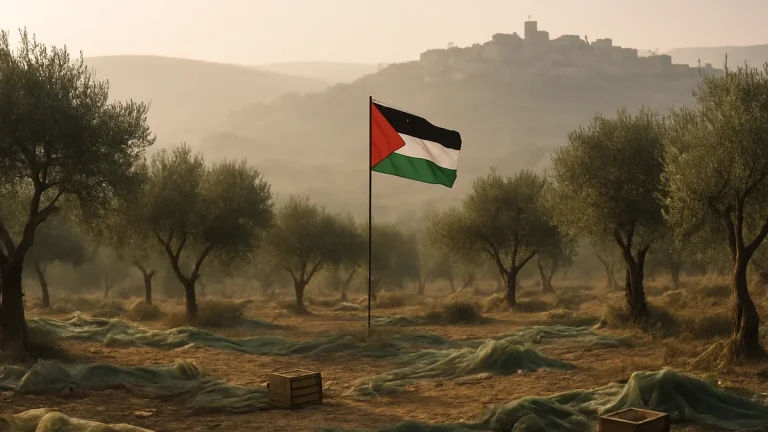
Despite the risks, some Palestinians say they will not leave land they fear could be taken. Nasr Radwan, 53, is one of the landowners in Beitillu, west of Ramallah, where settlers frequently raid. He said the land owned by him, his brothers and their relatives covers 1,500 dunums and contains more than 100 springs.
Radwan said he has been beaten by settlers on several occasions, but he and his brothers insist on being on the land every day. In June, settlers set up an outpost near the property, which he said is being used as a base to attack his crops and assault his family. The most recent attack, he said, took place the previous Saturday, when settlers smashed the windows of their vehicles and beat his brother while the family was harvesting olives.
For the past three years, he said, settlers have tried to seize the land by blocking an access road, so relatives now travel 5km (3 miles) on foot to reach it. “We know that being on our land means facing constant attacks. It could even cost us our lives. But we also know that if we abandon it, it will be lost forever,” he said.
Accountability gaps and warnings from rights groups
Palestinian residents, according to the accounts in this report, have little real protection or legal recourse when attacked, and settler raids are sanctioned by Israeli authorities. Villages are left exposed to repeated assaults, with no penalties for settlers who destroy property, assault residents or, in some cases, kill.
Human Rights Watch reported in August that Israeli authorities have failed to prosecute settlers for violence against Palestinians. The Israeli rights group Yesh Din reported by the end of 2025 that only 3 percent of the hundreds of cases it has documented since 2005 had resulted in convictions.
Omar Rahhal, director of the Ramallah-based SHAMS Center for Human Rights, said Palestinians’ self-protection measures do not absolve Israel, as the occupying power, of its legal responsibility under the Fourth Geneva Convention to protect civilians. He described such measures as a stopgap for a population facing a profound power imbalance, pointing to the presence of Israeli soldiers during settler attacks on families and land.
“Impunity, the arming of settlers, the allocation of funds to settlements and policies adopted by ministers in the Israeli government are factors that contribute to the continuation of attacks and the resulting increase in the number of victims,” Rahhal said.