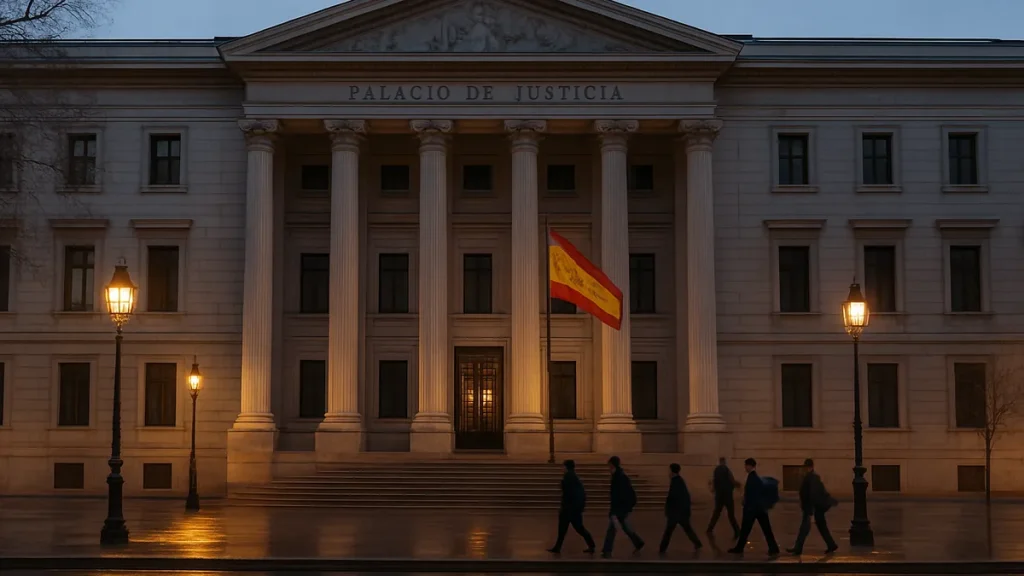

Spain’s Supreme Court has ruled that Carles Puigdemont, the former president of Catalonia, can come back to the country without the threat of arrest. The decision comes nearly a decade after he went into self-imposed exile following a failed bid for independence. The court on Monday upheld a move to lift an arrest warrant against him, which was tied to the referendum his regional government held in 2017 against the wishes of Madrid.
The same ruling also rejected an appeal from the far-right Vox party, which had opposed lifting national arrest warrants for Puigdemont and two of his former ministers, Lluís Puig and Toni Comín. The outcome ends a long legal dispute between the Spanish judiciary and the former Catalan leader, though it remains unclear when he might return.
Referendum fallout and Puigdemont’s flight to Belgium
Madrid imposed direct rule on the region shortly after the vote, which was banned and met with a heavy police crackdown. Puigdemont then fled to Belgium, where he has lived ever since. The separatist majority in the regional parliament had declared independence after the referendum, and Madrid responded by dissolving parliament, removing the leaders and calling a snap election.
The referendum set off what was described as the biggest political crisis in Spain since democracy was restored after the death of Francisco Franco. Today, however, Catalan independence has become a relatively minor issue in national politics, with housing and immigration now dominating the agenda.

Amnesty dispute and the Supreme Court’s reversal
In 2024, Spain’s socialist government passed a controversial amnesty covering dozens of Catalan politicians and activists involved in the secession drive. The Supreme Court, however, argued that Puigdemont and several of his colleagues should be excluded. Its reasoning centred on charges against them of alleged financial crimes linked to organising the referendum.
The Constitutional Court overruled that interpretation earlier this month. That decision paved the way for Monday’s ruling, which lifted the warrants and allowed Puigdemont and his former ministers to return to Spain.
Puigdemont’s campaign from abroad and JxCat’s struggles
Puigdemont was elected to the European Parliament in 2019 and later to the Catalan parliament in 2024, leading the centre-right Together for Catalonia (JxCat) party. While abroad, he campaigned in the south of France, where supporters crossed the border to attend his rallies. He also made at least one brief return to Spain, addressing a crowd in Barcelona before slipping back over the border to France, an appearance that prompted a police manhunt.
Puigdemont said his role had been to stir public opinion and internationalise the conflict. In a video posted as the ruling was announced, he said: “My role was to stir public opinion, internationalise the conflict and work from the heart of Europe to explain the reality of Spain.” Comín, his former regional health minister, plans to travel to Madrid this week for administrative procedures linked to his status as an MEP.
JxCat has been losing ground in Catalonia, where the far-right, pro-independence Catalan Alliance has taken many of its voters. JxCat’s parliamentary support had been key to Prime Minister Pedro Sánchez forming a left-wing government after the 2023 election. Spain’s general election is due next month, and it could see the far right enter government for the first time.