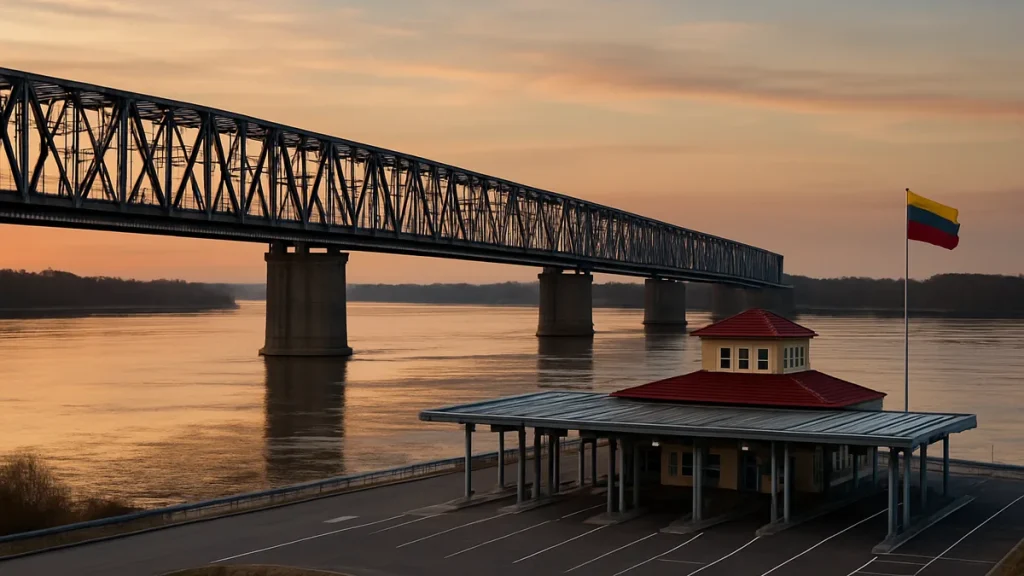

China and North Korea have opened the New Yalu River Bridge, a 3km (1.9-mile) crossing that links China’s Dandong with North Korea’s Sinuiju. Officials on both sides described the new border link in strong terms, and the bridge officially opened on Thursday.
Analysts are far more cautious. Experts say obstacles ranging from international sanctions to a North Korean leadership that puts security first could limit any gains in trade.
Leaders hail the crossing as a sign of closer ties
Chinese Premier Li Qiang said the bridge would “vigorously promote” trade and “strengthen emotional bonds”. North Korean Premier Pak Thae-song said it would “accelerate the advance for the prosperity of the two countries” and “add fresh vigour” to economic cooperation.
The bridge is a tangible sign of both governments’ efforts to revive a relationship that has cooled since its Cold War-era peak. Phillip Park, a professor at the University of North Korean Studies in Seoul, said the project reflects “China’s renewed effort to strengthen its relationship with North Korea at a time of changing regional alignments”.
Park added that it remains unclear whether the project will lead to deeper economic integration, greater North Korean dependence or a real shift in Pyongyang’s strategic direction.
Sanctions and security priorities limit the bridge’s promise
Park said the crossing could help trade and logistics, but it does not lift international sanctions. Jae-woo Joo, a professor of Chinese foreign policy at Kyung Hee University in Seoul, argued that the bridge could “tremendously” boost trade, including the transfer of components banned under sanctions tied to Pyongyang’s nuclear and missile programmes.
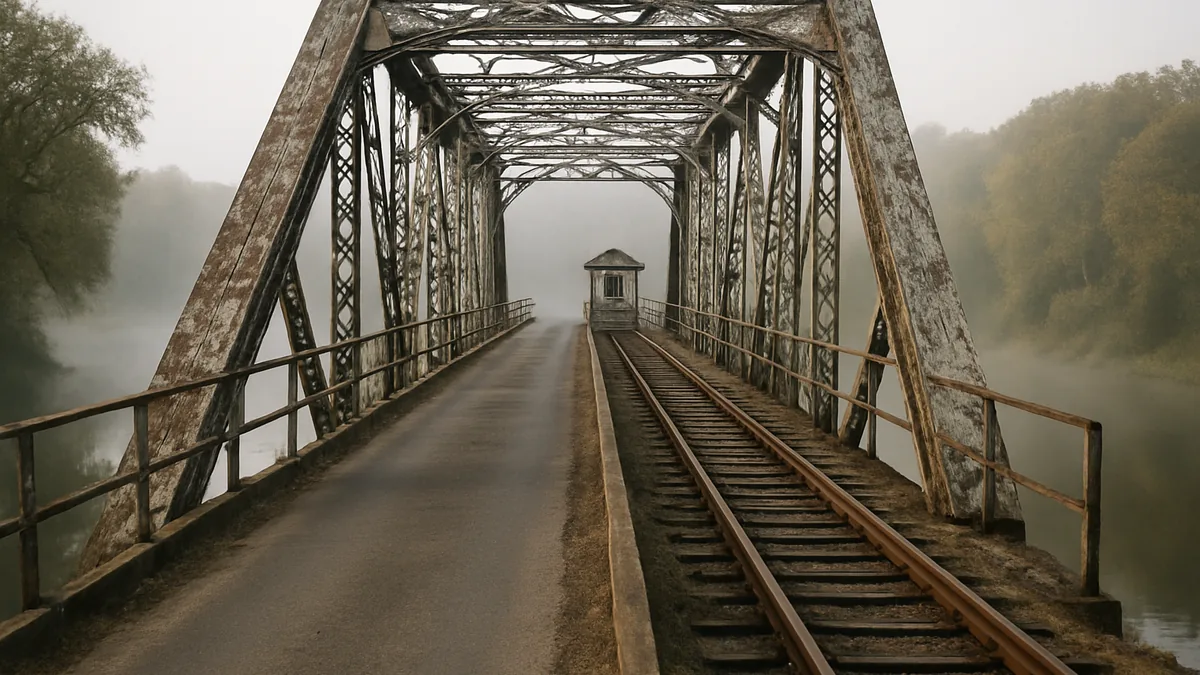
Until now, road and rail freight between Dandong and Sinuiju, the main route for China-North Korea trade, had moved exclusively over the older Sino-Korean Friendship Bridge. That structure was opened in 1943 and has a single-lane road and a rail track. It can carry vehicles weighing no more than 20 tonnes.
Christopher Green, a senior consultant for the Korean Peninsula at the International Crisis Group, said the bridge’s importance should not be overstated, because China-North Korea trade is “fundamentally driven by politics”. He said a lack of transit routes was “not the main obstacle”, and that the key issue was “the politics of national security, not economics”.
Trade is growing but remains small and below its peak
Figures from China’s General Administration of Customs show that two-way trade between North Korea and China rose 25 percent in 2025, reaching $2.74bn. Trade has continued to climb in 2026, jumping nearly 20 percent to $1.5bn in the first half of the year. If the pace holds, it would reach its highest levels since the COVID-19 pandemic.
China accounts for as much as 95 percent of official trade with North Korea, which is among the world’s most diplomatically and economically isolated states. Even so, the total remains small in global terms. China’s overall trade reached $6.36 trillion in 2025, and North Korea’s share was a little more than 0.04 percent.
Official trade between the two neighbours is also well below its 2010s peak. It hovered around $5-6bn for much of that decade and peaked at $6.45bn in 2013. Economists have offered several explanations for the slowdown, including tighter sanctions and China’s waning reliance on imports as it pushes for greater economic self-reliance.
A long delay and differing views on what comes next
The project took a long time to finish. Construction began in 2011 and was completed on the Chinese side in 2014. North Korean authorities only finished roads and customs facilities on their side of the river this year, after repeated pauses linked to tensions with Beijing.
Marco Mari, a PhD researcher at Bocconi University in Italy who studies China-North Korea economic ties, said “the 12-year delay certainly suggests that economic cooperation is more conditional than the language of friendship might imply”. He also said Russian support gives Pyongyang alternatives that reduce Beijing’s leverage.
Analysts have partly linked Beijing’s deeper engagement with Pyongyang to North Korea’s growing ties with Moscow, which have included the deployment of thousands of North Korean troops to the front lines of Russia’s war in Ukraine. Last month, the two countries opened their first road bridge across the Tumen River.
Edward Howell, a lecturer in international relations at the University of Oxford, said trade is likely to grow as China seeks to show its “indispensability” as a trade partner and North Korea wants stronger economic ties. He added, however, that economic engagement will remain subject to political considerations.