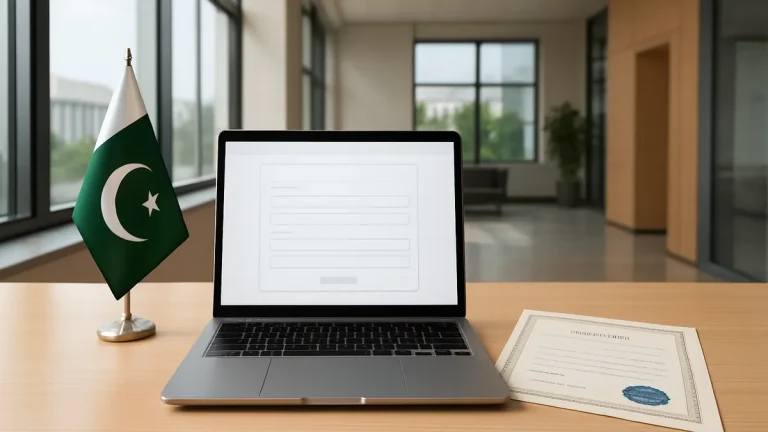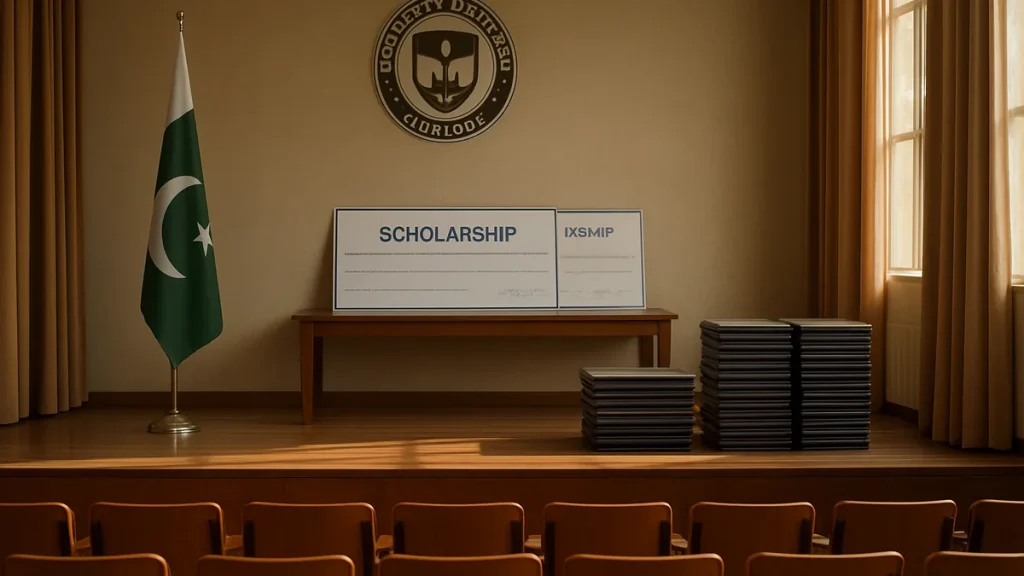

Punjab Chief Minister Maryam Nawaz Sharif said on Friday that the Pakistan Tehreek-e-Insaf (PTI) had brought down its own government in Khyber Pakhtunkhwa. She argued that the party had redirected money meant for public welfare into political protests. She made the remarks in Sahiwal at a ceremony distributing laptops and Honhaar Scholarship cheques at the University of Sahiwal.
Speaking as the PTI-led province remained under emergency rule, Maryam set its record against the development work being carried out in Punjab. “PTI has not been removed from government by anyone. It has brought down its own government,” she said. She described the party’s long march as an effort that ended up weakening the government it led.
She also alleged that billions of rupees allocated to Khyber Pakhtunkhwa over the past 13 years should have gone to students, healthcare, roads, colleges and universities instead of protests. Referring to the deaths of children in a school building collapse in the province, she expressed grief and offered condolences to the families. Her comparison was blunt: “If Punjab is entering the age of AI today, Khyber Pakhtunkhwa is still sitting in the Stone Age.” She further criticised what she called an unprecedented situation in which one province had turned against another province and the federal government.
Punjab expands laptops, scholarships and skills training
Maryam said laptops and scholarships were being given to deserving students purely on merit, without political recommendations or personal influence. She congratulated the recipients and praised their parents and teachers, saying the students had earned the awards through hard work and ability. “Today, recommendations have lost, and merit has won in Punjab,” she said.
According to the chief minister, the provincial government was opening its resources so that capable students would not leave their studies because of money problems. She said students from all political and social backgrounds had been considered without discrimination. Her government, she added, was also upgrading schools by providing drinking water and washrooms, and by setting up artificial intelligence and science, technology, engineering, arts and mathematics laboratories.
She said the government had trained 500,000 young people in various skills over the past two years. Graduates were being offered internships under the “Work for Punjab” initiative, paying between Rs60,000 and Rs65,000 a month. The government was also considering giving graduates of schools, colleges and universities responsibilities that would let them contribute to their communities.
Maryam said vice-chancellors at Punjab’s universities had been appointed on merit after interviews were conducted. She highlighted the Nawaz Sharif Schools of Eminence initiative, which she said aimed to give students from less affluent families facilities comparable to those in leading private schools. She also announced that steps would be taken to build a girls’ hostel at the University of Sahiwal, and directed authorities to work on restoring scholarships for nursing students.
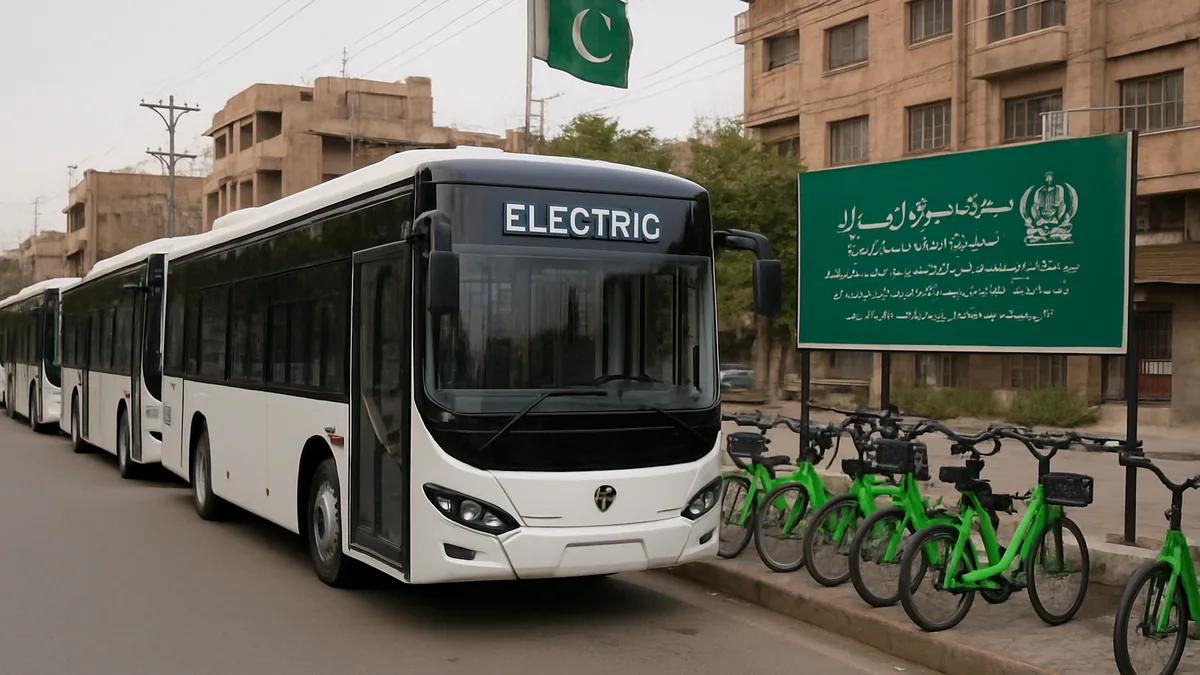
100,000 electric bikes planned for students this year
Maryam said Punjab would distribute 100,000 electric bikes this year, with a larger share going to female students. She said the scheme had drawn more than 1.2 million registrations and over 600,000 applications, which were still being scrutinised. The first distribution was scheduled for November 5.
To keep the bikes affordable, the government had set monthly instalments at Rs3,000, the chief minister said. Students who did not know how to ride would be offered free driving lessons. She urged parents to trust their daughters and asked brothers to support their sisters, arguing that greater independence would let young women pursue their goals without depending on relatives for transport.
She also said students from religious seminaries had been included in the provincial initiatives. A share of the laptop and scholarship schemes, she added, had been reserved for students from other provinces and territories.
Enforcement, farm support and electric bus expansion
Maryam said her government had put law and order first before widening mobility programmes. Referring to a video showing a Punjab Enforcement and Regulatory Authority official slapping a shopkeeper in Rahim Yar Khan, she said she had ordered the official’s arrest after viewing the footage. She acknowledged that the shopkeeper had reopened a sealed shop, but said this did not justify violence. According to Maryam, the official was arrested, granted bail and then arrested again. She said she would not tolerate violations of citizens’ dignity, safety or property rights.
Citizens could report problems by calling the police emergency number 15 or through the Maryam Ko Batain complaint service, she said. She also claimed that livestock theft had fallen by 80% to 90% across Punjab, noting that cattle and other animals were vital sources of income for rural families.
On development, she pointed to road construction, urban beautification, agricultural support and healthcare. She said development should not be confined to Lahore and that cities such as Sahiwal, Okara and Pakpattan also deserved better facilities. The provincial government, she said, had issued one million Kisan Cards to farmers and distributed 30,000 tractors. A housing programme for low-income families was under way, and land was being allotted to people who did not own agricultural holdings.
In health, Maryam said patients were receiving medicines at their doorsteps and mobile clinics were reaching underserved areas. Mobile healthcare for workers, she added, would let them get treatment without losing a day’s pay. She also said the electric bus service was growing. Seven hundred buses were operating in Punjab, and the fleet was expected to reach 3,000 within six to eight months. The standard fare remained Rs20 despite higher fuel prices, she said, while women, students, senior citizens and other eligible groups could ride free. Electric buses would eventually run in all 148 tehsils, she added.