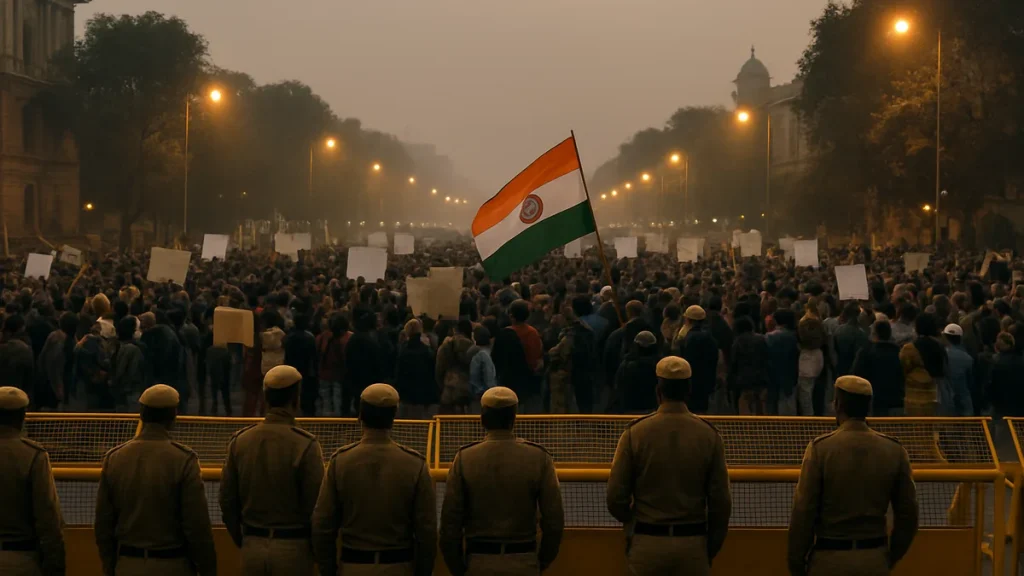

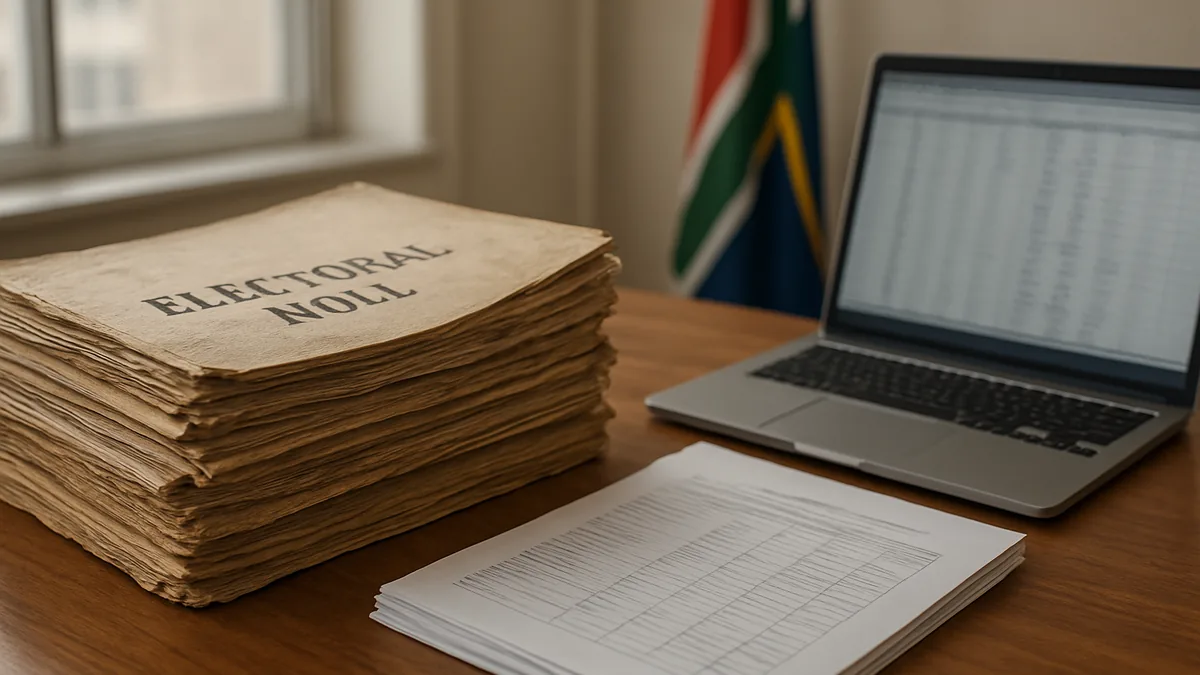
Thousands of protesters who demanded the resignation of India’s chief election commissioner, Gyanesh Kumar, faced mass detentions and a heavy police crackdown in New Delhi over the weekend. The demonstrations brought together youth activists and opposition parties, and they centre on the removal of more than 130 million names from India’s electoral rolls.
The commentary behind the protests, published as an opinion piece, argues that the removals raise serious questions about the health of Indian democracy. The author describes the exercise as a mass voter purge that has led to large-scale disenfranchisement.
How the Special Intensive Revision removed millions of names
The deletions stem from a Special Intensive Revision (SIR) carried out by the Election Commission of India (ECI). The commission routinely updates electoral rolls to add new voters and remove people who have died or permanently moved away. According to the article, the previous intensive revision was completed in 2003-2004.
The author says the current exercise is unprecedented because of its scale, the arbitrariness of its procedures and the disenfranchisement that followed. The ECI first left the government-issued Aadhaar card off the list of documents accepted for verification, saying it was considered “overinclusive”. The article also points to a category called “logical discrepancy”, which it says accounted for 2.7 million of the nearly 9 million names removed from rolls in West Bengal.
Requirements to produce educational certificates, land records, legacy documents and family trees, the author argues, place a heavy burden on poor and marginalised voters. The article adds that the category relies on an AI-enabled application called ERONET, which compares voters’ details with older rolls and flags discrepancies in names and family relationships. Women are particularly exposed, the author writes, because many change their names or addresses after marriage. In Bengal, only 19 specially constituted tribunals were set up to handle more than 3.8 million appeals, which the article says has made the corrective process hard to reach for many excluded voters.
Claims of disproportionate impact on Muslims and women
The article states that the exercise has disproportionately affected Muslims, women, migrants and other marginalised communities. It says that in Bengal, Muslims accounted for about 65 percent of the 2.7 million people removed on grounds of “logical discrepancy”.
In Hyderabad, 1.94 million names were marked for deletion under the “absent, shifted, dead and duplicate” category. The author says an estimated 40.7 percent of those entries appeared to belong to Muslim voters, compared with Muslims’ 30 percent share of the city’s population. In some constituencies in the Old City, Muslims accounted for as much as 80 percent of names marked for deletion.
The article also says nearly one-third of the existing electorate in the National Capital Region, Delhi, was missing from the draft SIR roll. Studies cited in the piece flag especially high rates of exclusion in areas with large minority and migrant populations and among residents of informal and unauthorised settlements. The author concludes that the pattern suggests an ideological alignment between the exercise and the social and political programme of the Hindu right, a characterisation the article presents as its own view.
Electoral effects in Bihar and Bengal and the citizenship debate
The article argues that the SIR has also had political consequences. It cites the 2020 Bihar Assembly elections, in which the Rashtriya Janata Dal (RJD)-led alliance lost to the BJP-led alliance by just 0.03 percentage points in vote share. After the 2025 elections, held following the removal of 6.8 million names and the addition of 2.1 million new voters, the BJP alliance’s lead rose to nearly 9 percentage points.
On Bengal, the author cites analysis of the 2026 Assembly elections that points to a decisive role for SIR deletions. The piece says that in many constituencies won by the BJP, the number of deleted or disputed voters exceeded the party’s margin of victory. It also states that the newly elected BJP governments in Bihar and Bengal moved to deny Public Distribution System benefits to people whose names were removed from the rolls.
The author places the exercise alongside the Supreme Court-supervised National Register of Citizens in Assam, which the article says left 1.9 million residents, mostly Bengali speakers, essentially stateless. It also links the SIR to the Citizenship Amendment Act of 2019 and to a recently established High-Level Committee on Demographic Change. The piece argues that these measures together target groups it describes as considered inimical to a Hindutva vision of the nation. These are the author’s assessments, not findings of any official body.