
More than 560 million people in sub-Saharan Africa have no access to electricity, the World Health Organization (WHO) said. That figure accounts for about 86 percent of the global total, even though the continent holds large reserves of oil, gas and the minerals that feed the global energy transition.
The findings come as energy ministers, investors and oil executives gather in Cape Town for African Energy Week, which runs until October 16. The meeting is centred on investment in oil and gas, energy finance and efforts to end energy poverty. A visual explainer published alongside the event maps where the continent’s oil, gas and critical minerals are located, how its power is generated and who still goes without it.
Uneven electricity access across the continent
Access varies sharply from one country to another. In 2024, six African countries reported universal access: Algeria, Egypt, Mauritius, Morocco, Seychelles and Tunisia. Together they are home to about 215 million people, or roughly 14 percent of the continent’s population.
Elsewhere the picture is much weaker. Only 5.4 percent of people in South Sudan had electricity, while the rate stood at 15.6 percent in Malawi and 22.5 percent in the Democratic Republic of the Congo. The DRC is notable because it generates all of its power from renewable sources.
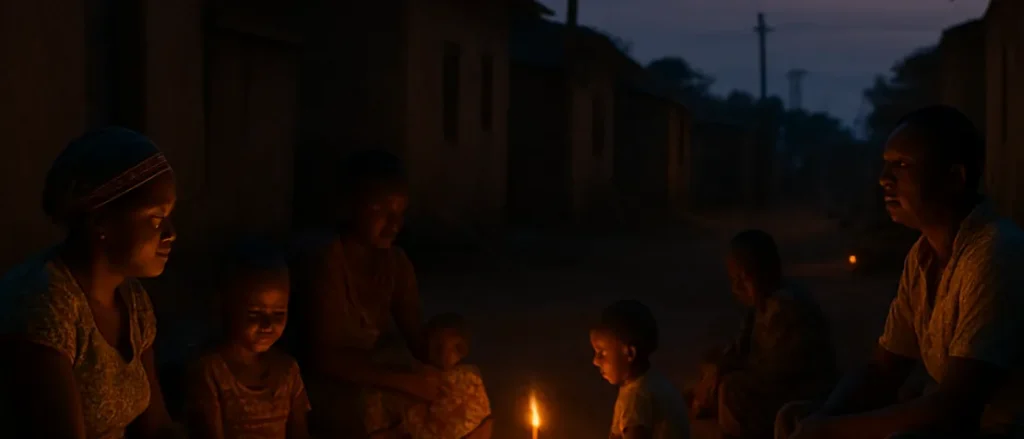
Nigeria, the most populous country in Africa, recorded an access rate of 62.5 percent. That leaves roughly 85 million people without electricity, the largest number of any country in the world. In rural areas, where access is far lower than in cities, many households still use kerosene lamps, candles or torches once night falls.
The source of power also differs widely. Renewables supplied all electricity in Ethiopia and the DRC in 2024, and Uganda, Namibia and Eswatini each generated more than 96 percent from renewables, mostly hydropower. Ethiopia’s power is led by the Grand Ethiopian Renaissance Dam on the Blue Nile, which is Africa’s largest hydroelectric project. It began generating in 2022 and was officially inaugurated in September 2025.
At the other end of the scale, renewables made up less than 5 percent of electricity in Algeria, Libya, Niger and Tunisia. Those countries depend mainly on gas or oil.
Oil reserves and output concentrated in a few nations
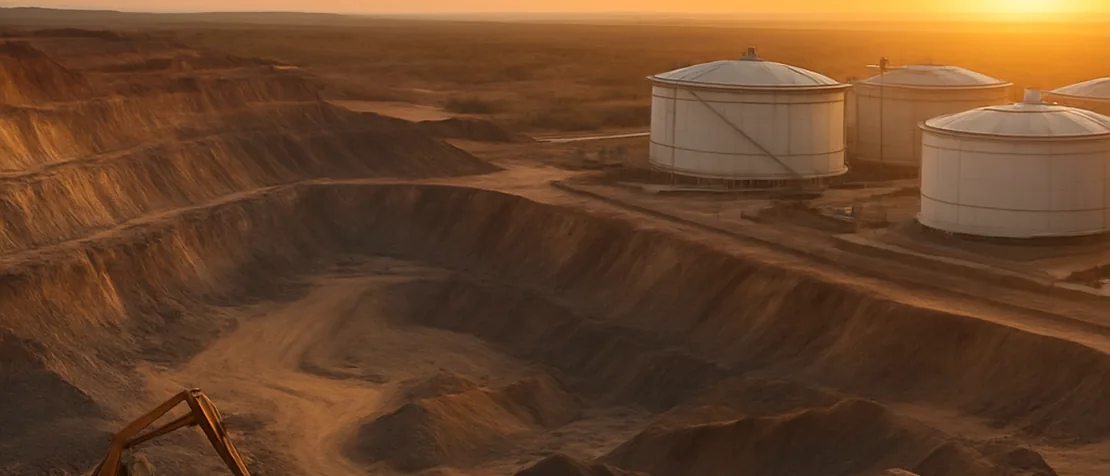
Africa holds about 125 billion barrels of proven crude oil reserves, equal to 7.2 percent of the global total. Proven reserves refer to oil that has been identified and can be commercially extracted with current technology, but which remains underground.
Libya and Nigeria together hold nearly 70 percent of the continent’s reserves, with 48.4 billion and 36.9 billion barrels respectively. Algeria is third with 12.2 billion barrels, followed by Angola with 7.78 billion. South Sudan and Egypt hold 3.75 billion and 3.3 billion barrels.
Production tells a different story. Nigeria was the continent’s biggest producer in 2024, supplying about 23 percent of African output. Algeria and Angola each contributed about 17 percent, and those three countries together produced 56 percent. The top five producers accounted for more than 80 percent, while Africa as a whole supplied 7.6 percent of world crude, a share broadly matching its portion of global reserves.
Libya, despite holding the continent’s largest proven reserves, ranked only fourth in production. Eni of Italy, TotalEnergies of France and Spain’s Repsol are among the foreign firms operating there, and the explainer notes that political disputes and blockades have repeatedly disrupted output.
Gas reserves led by Nigeria and Algeria
At the end of 2023, Africa had almost 18 trillion cubic metres of proven natural gas reserves. Nigeria and Algeria held about 58 percent of that total. Mozambique followed with 2.84 trillion cubic metres, then Egypt with 2.21 trillion and Libya with 1.51 trillion.
Algeria and Nigeria also rank among the continent’s leading gas exporters. Mozambique’s reserves were discovered offshore during the 2010s, but much of that gas remains largely undeveloped.
Critical minerals powering batteries and renewable storage
African countries supply a large share of the minerals used in electric vehicles, batteries and renewable energy technology. In 2025, they accounted for 71.2 percent of global cobalt production and 72.4 percent of manganese output.
Cobalt is used in rechargeable batteries. Manganese is mainly used to strengthen steel, though it also features in some electric vehicle batteries and in batteries that store renewable power. The Democratic Republic of the Congo produces nearly 70 percent of the world’s cobalt. Some of it is dug by hand by artisanal miners, and Amnesty International has documented dangerous and often deadly conditions at some of the country’s mines.
South Africa produces nearly 38 percent of global manganese, with Gabon close behind at nearly 25 percent. Ghana completes the group, and the three countries together account for 72.4 percent of world production.
Zimbabwe, the continent’s largest lithium producer, accounted for 9.6 percent of global lithium output in 2025. Lithium is used in the rechargeable batteries that power electric vehicles and store electricity generated from solar and wind.
Madagascar, Mozambique and Tanzania produced a combined 222,000 tonnes of natural graphite in 2025, or 11.9 percent of the global total. Graphite forms the anodes of most lithium-ion batteries, and it is also used in steel manufacturing, lubricants and pencils.