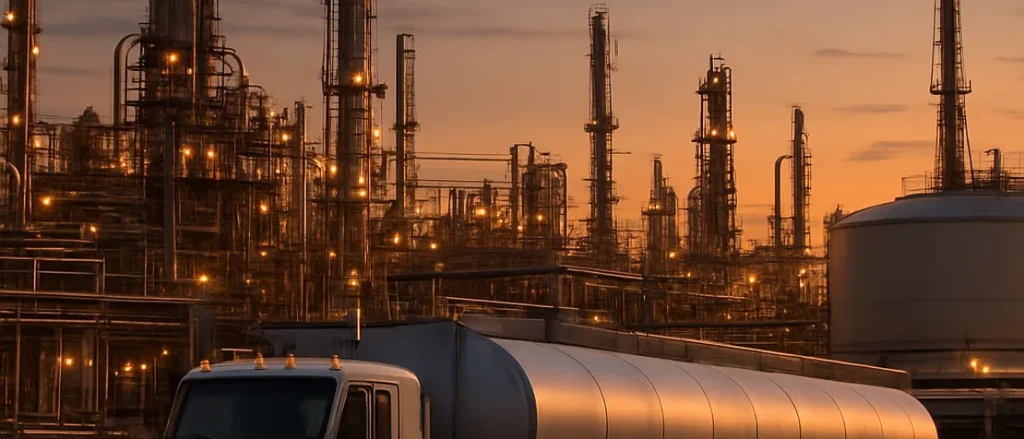

US President Donald Trump announced on Sunday an immediate “energy ceasefire” between Russia and Ukraine, days after easing sanctions on Russian fuel to tackle soaring domestic and global fuel prices. In a post on Truth Social, he said both sides had agreed to stop attacking each other’s energy infrastructure. He gave no further details.
The truce marks another shift in Washington’s approach to Russian energy. The war involving Iran and the United States, along with recent Ukrainian strikes on Russian energy facilities, has disrupted global oil supplies and pushed up fuel prices. Trump has also asked Ukraine not to attack Russian oil facilities, as Moscow remains a major exporter of diesel.
Zelenskyy says he was not aware of the truce
Ukrainian President Volodymyr Zelenskyy said he had not known about the energy truce and described the deal as “news to me”. He nonetheless welcomed the announcement. He said Russian drones kept targeting Ukrainian energy facilities after Trump’s statement, including a power plant in Kharkiv.
Speaking on Monday by video to a security conference in Warsaw, Zelenskyy said Kyiv was waiting for the details of the conditions agreed between the Americans and Russians. He also said he wanted to see a specific step the United States was prepared to take. He argued that the ceasefire could become a major step towards ending the war if Washington stepped in and ensured Russia respected it.
Ukraine has repeatedly targeted Russian oil refineries, arguing that energy revenues help fund Moscow’s war. Russia has in turn attacked Ukraine’s electricity and heating infrastructure throughout the four-year conflict.

Fuel prices and midterms weigh on Trump’s Russia policy
The rise in diesel prices in recent weeks has put pressure on Trump’s Republican Party ahead of the November midterm elections. Surveys show Americans hold the administration responsible for soaring fuel prices, amid what the source describes as the unpopular US war on Iran.
Trump’s decisions have drawn criticism from US politicians and European allies. They warn that allowing Russian fuel back into global markets could give Moscow new revenue to finance its war in Ukraine. In March, the administration issued a sanctions waiver covering Russian seaborne oil.
On Monday, Brent crude, the international benchmark, fell to about $103.04 a barrel after Trump’s ceasefire announcement and the Russian diesel deal. US West Texas Intermediate crude traded at about $90.96. Prices remain high, however, because of the US-Israel war on Iran, which began on February 28, and disruptions in the Strait of Hormuz, a waterway through which one-fifth of the world’s oil supplies flow.
Attacks on Saudi oil installations and airports by Yemen’s Houthis, along with fighting around the Red Sea and Bab al-Mandeb Strait, have added further pressure. Ukrainian strikes on Russian refineries have also compounded diesel shortages, affecting a fuel essential to agriculture and trucking. Last week, the Group of Seven nations agreed to release 100 million barrels of emergency oil and diesel reserves, a decision that came after pressure from Trump.
How US policy on Russian energy has changed since 2022
Washington’s approach to Russian energy has shifted repeatedly since Moscow launched its full-scale invasion of Ukraine in February 2022. Under President Joe Biden, the US banned Russian oil and energy imports in March 2022, seeking to cut off revenue used to finance the war. At the same time, Washington backed a G7 price cap designed to limit Moscow’s earnings without removing too much supply from global markets. The Biden administration also accepted India’s continued purchases of Russian crude to keep global prices from rising.
After returning to power last year, Trump initially increased pressure on Moscow. In August 2025, his administration imposed additional tariffs on Indian goods over New Delhi’s purchases of Russian oil. Two months later, Washington sanctioned the Russian energy giants Rosneft and Lukoil, accusing Moscow of failing to seriously pursue peace talks.
The approach changed sharply this year. On March 5, Washington issued a 30-day waiver allowing India to buy Russian oil stranded at sea, as shipping disruptions in the Strait of Hormuz threatened supplies. A week later, the administration widened the exemption to let countries worldwide buy sanctioned Russian oil and petroleum products already loaded onto tankers. That waiver ran until April 11. In September, Trump urged Ukraine to stop attacking Russian refineries, blaming the strikes for global diesel shortages. On October 9, he announced an agreement with Russian President Vladimir Putin for Moscow to release more than 300,000 tonnes of diesel immediately, with another 1.5 million tonnes to follow.
Analysts question the truce’s scope and motives
Alexey Muriaev, a senior research fellow in Defence and Strategic Studies at Edith Cowan University, urged caution over the announcement. He questioned whether an agreement had actually been reached and, if so, what it involved. “Is it about suspending attacks on oil refineries? And if that’s the case, then the situation would be inadequate, because Ukraine’s oil refineries have already been taken out by Russia’s strikes beforehand,” he said.
Muriaev also linked the announcement to the diesel agreement with Putin, suggesting it could be a signal to Zelenskyy. He said Washington would probably view an attack on Russian refinery capacity as an attack on US economic interests. He pointed to discussions between Russian and American officials in August and September, suggesting that talks over the latest diesel deal may have begun well before the announcement. He also suggested the timing could be politically motivated, allowing Trump to claim a win on energy prices before the midterms.
Susannah Streeter, chief investment strategist at Wealth Club, said Trump was “caught between his geopolitical ambitions and the domestic political consequences of expensive energy”. She said the shift could bring a short-term political gain if supplies rise and prices ease, but could carry a longer-term diplomatic cost. She added that the benefits appeared limited while the Middle East war continued.
The crisis has also had mixed effects on American businesses. Higher oil prices can boost revenues for US energy producers but raise costs for fuel-dependent firms. Streeter said cheaper diesel could help trucking companies, farmers and manufacturers, although extra Russian supplies were unlikely to make a major difference while Middle East disruptions continued. She also warned that frequent changes to sanctions could create uncertainty for companies making long-term investment and supply-chain decisions.