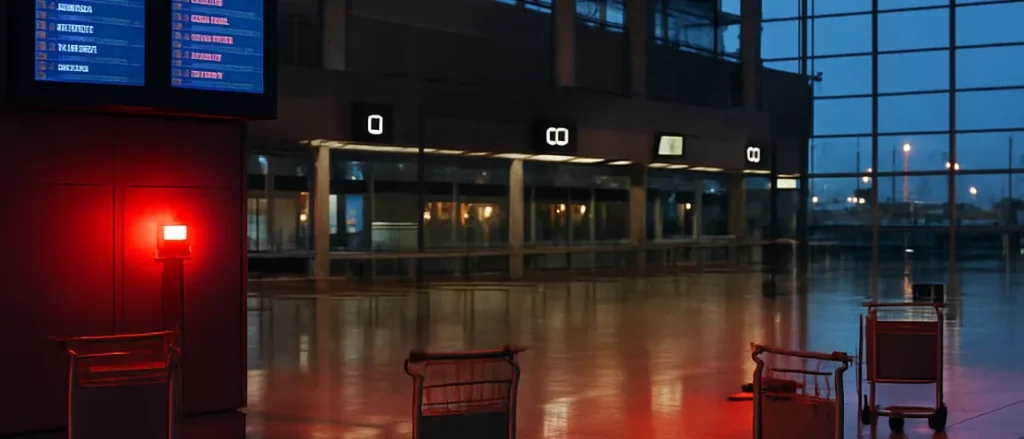

Saudi Arabia has vowed to “firmly” retaliate after an attack on King Khalid International Airport in Riyadh on Saturday left at least 12 people dead. US President Donald Trump called the attack “terrible” as international condemnation grew.
The Saudi-led military coalition blamed Yemen’s Iran-backed Houthi group for the strike, describing it as a “full-fledged war crime” in a statement on Sunday. The Houthis, also known as Ansar Allah, have not claimed responsibility for the attack. The group has, however, renewed its warning to airlines, airport workers and travellers against using Saudi airports.
Casualties and the coalition’s response
According to Saudi Arabia’s civil aviation authority, the strike hit the Riyadh airport on Saturday and wounded at least 309 other people, some of them critically. The authority’s figures were cited as the latest available at the time of reporting.
Officials said the dead included four Saudi nationals, two Bangladeshis, and one citizen each from the United States, Egypt, Jordan, Syria, Palestine and Sudan. The attack was described as the deadliest on the kingdom in more than a decade.
Coalition spokesman Major General Turki al-Malki said in a post on X that the “cowardly terrorist attack” by the Houthi militia had killed and injured civilian passengers and airport staff. Military spokesperson Yahya Saree said on X that Saudi Arabia was responsible for “any failed interceptions” and urged people to take the group’s warnings seriously.
Airport operations were suspended, with flights cancelled or diverted. Schools across Riyadh were ordered to switch to remote learning for a week. Several airlines suspended services to Saudi destinations, disrupting international travel.
Attacks on Saudi airports, oil sites and border areas
The coalition also said a projectile had fallen near King Fahd International Airport in Dammam, in the country’s east, later on Saturday. The Iran-aligned Houthis have launched a series of missile and drone attacks on airports, military installations and oil facilities across Saudi Arabia, including areas near the border with Yemen.
On Monday, attacks on King Abdullah bin Abdulaziz Airport in the southwestern city of Jazan and on Najran international airport wounded three people and caused material damage, according to the civil aviation authority. On Tuesday, attacks on Abha airport and King Khalid airport in Riyadh killed three people and wounded 36 others, Saudi authorities said.
The Houthis also claimed they had hit an Aramco oil refinery in Rabigh, on the Red Sea coast, with missiles and drones, saying the strike caused a fire. Saudi authorities did not immediately confirm the claim. The group imposed a maritime embargo on Saudi Arabia in July, at the start of the latest round of fighting.
Analysts quoted in the report said the Houthis were seeking to apply pressure on Riyadh. Dania Thafer, executive director at the Gulf International Forum, said Saudi Arabia would likely hit back “pretty hard”, but added: “I still think that the Saudis probably want de-escalation.” She said the Houthis were also a threat to international maritime security, and that “this battle is much bigger than just a tit-for-tat.”
Yemen fighting widens as government forces push back
The attack comes amid escalating fighting between the Houthis and Saudi-backed Yemeni government forces, following the collapse of a UN-brokered ceasefire that had been largely in place since 2022. The fighting has raised fears of a wider regional confrontation.
Government forces launched the Dawn of Yemen offensive on October 4 to recapture Houthi-held territory, including the port city of Mocha and the island of Mayun. The government said it had retaken Mocha and the Dhubab district near the strait, but the Houthis have disputed those claims.
Yasmeen Al Eryani, executive director for knowledge production at the Sanaa Center, said the Houthis were trying to put “maximum pressure” on Saudi Arabia while also mobilising on internal front lines, including Taiz and more densely populated areas. Her think tank is based in government-controlled Aden. The group has also tightened its siege of Taiz after capturing territory south of the city earlier this month.
Fighting has also spread to Marib and al-Jawf, two governorates east of Sanaa, where government forces have reported advances. Colonel Majed Abdullah al-Nazili, spokesman for the government forces, said on Saturday that at least 1,150 Houthis had been killed in almost 2,000 targeted operations. was not able to independently verify the competing claims.
Washington, the UN and regional allies respond
US Secretary of State Marco Rubio confirmed that an American was among those killed. He said: “These reprehensible attacks demonstrate a blatant disregard for innocent civilian life. They must stop now.” UN Secretary-General Antonio Guterres also condemned the strike, stressing that attacks on civilians and civilian infrastructure violate international law.
The United States, Canada, Germany and several other countries issued travel warnings, and some diplomatic missions restricted staff movements through the airport. Pakistan’s Prime Minister Shehbaz Sharif described the attack as “heinous” and reaffirmed Islamabad’s commitment to Saudi security.
On October 5, Turkiye, Pakistan and Saudi Arabia agreed to activate “deterrence measures” under a mutual defence pact and to deploy forces rapidly to the kingdom to counter Houthi attacks. The agreement followed the three countries’ signing of the Mecca Strategic Mutual Defence Agreement weeks earlier.
Trump has not ruled in or out US military involvement. “We may. We’re going to look at it,” he told reporters on Saturday. He said he planned to speak with Saudi Crown Prince Mohammed bin Salman and described the attack as “not acceptable”. US media reports said Washington had already provided intelligence sharing, target identification and planning assistance for the latest Saudi-backed offensive.